Institut de Biologie de l'Ecole Normale Supérieure (IBENS), Ecole Normale Supérieure, CNRS, INSERM, Université PSL, 75005 Paris, France.
Blizard Institute, Faculty of Medicine and Dentistry, Queen Mary University of London, London E1 2AT, United Kingdom.
Genome Res. 2023 Sep;33(9):1513-1526. doi: 10.1101/gr.277715.123. Epub 2023 Aug 25.
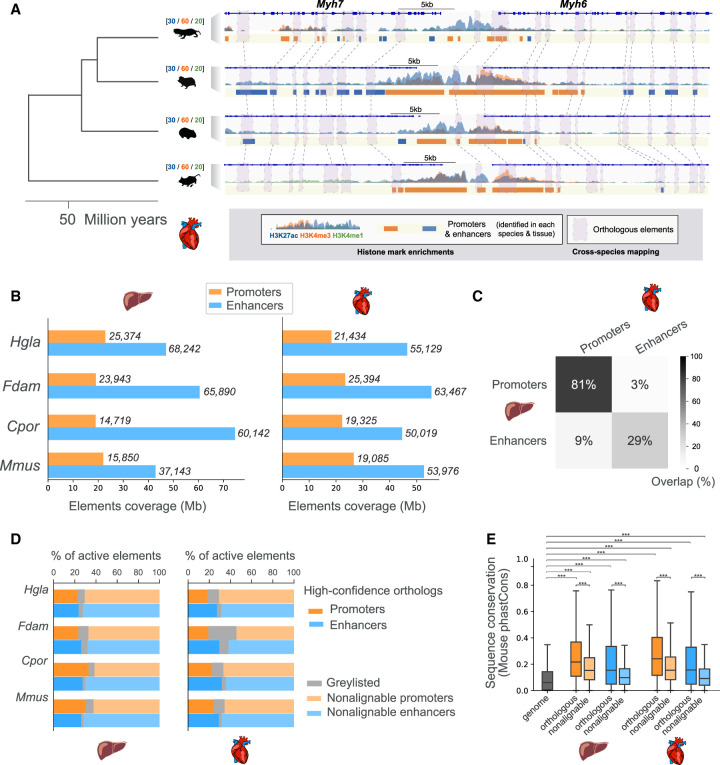
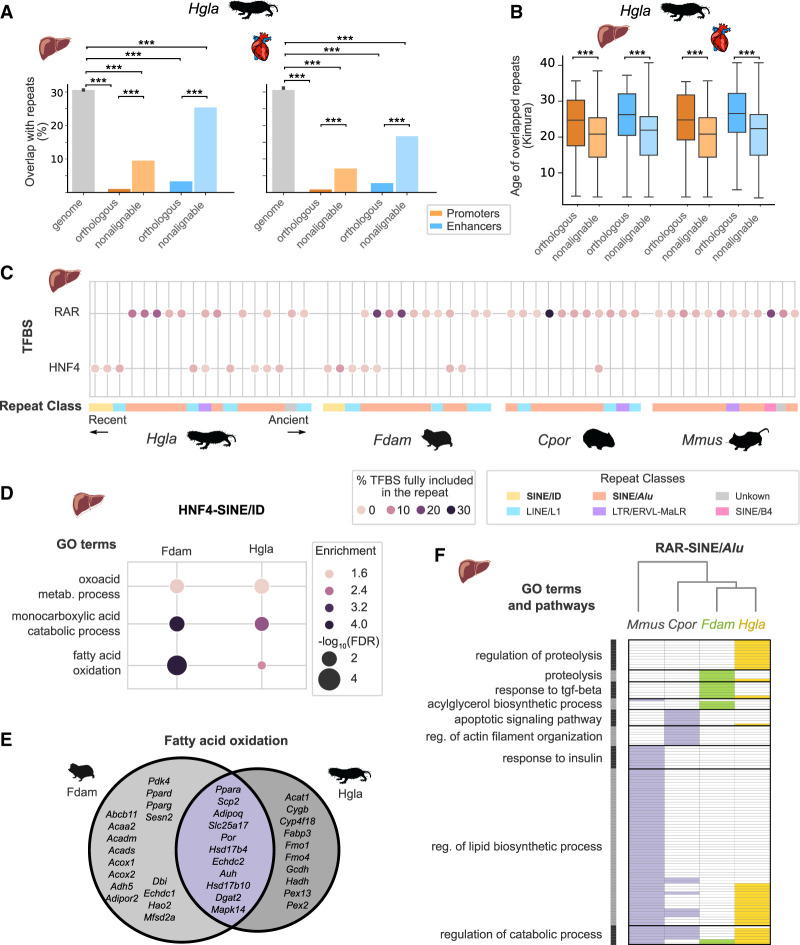
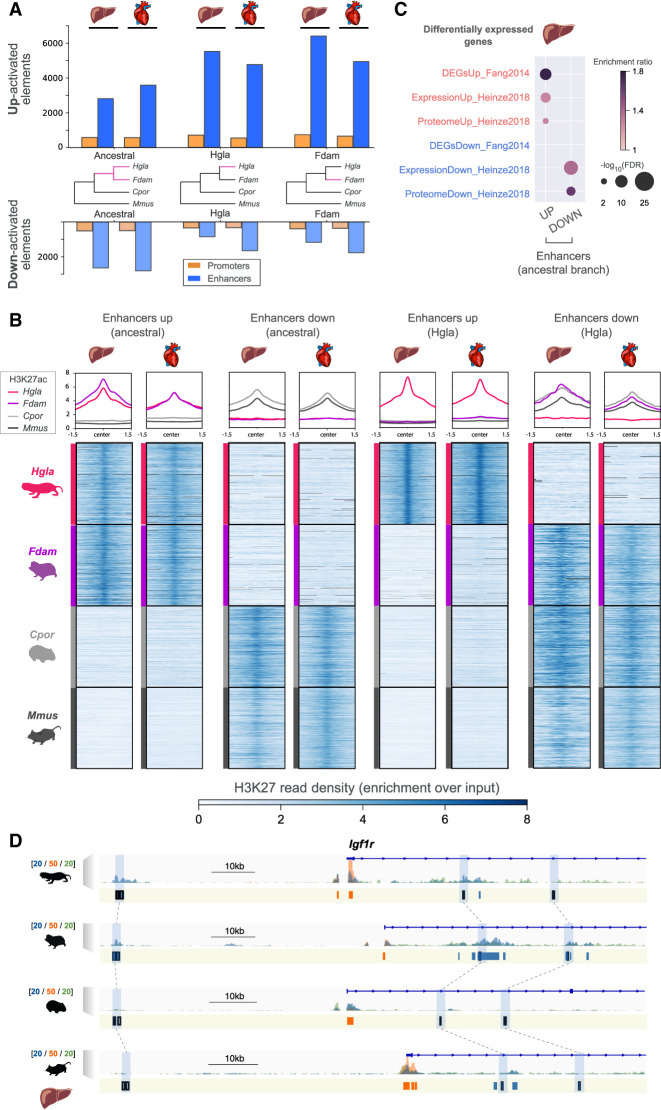
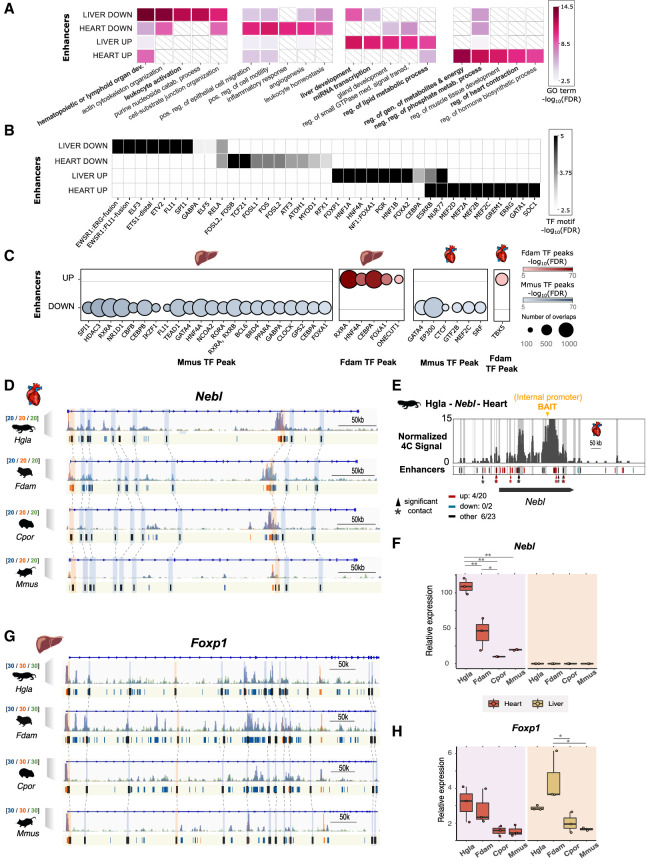
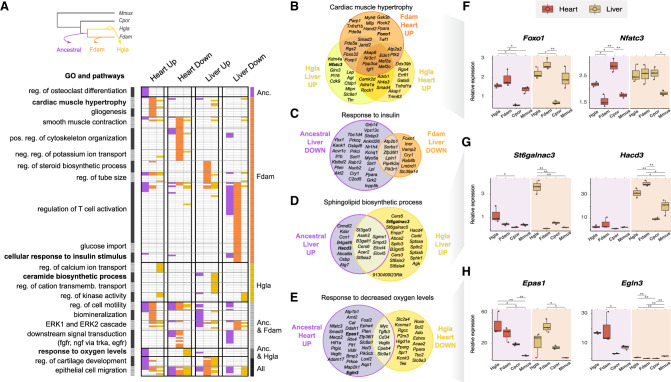
Changes in gene regulation are thought to underlie most phenotypic differences between species. For subterranean rodents such as the naked mole-rat, proposed phenotypic adaptations include hypoxia tolerance, metabolic changes, and cancer resistance. However, it is largely unknown what regulatory changes may associate with these phenotypic traits, and whether these are unique to the naked mole-rat, the mole-rat clade, or are also present in other mammals. Here, we investigate regulatory evolution in the heart and liver from two African mole-rat species and two rodent outgroups using genome-wide epigenomic profiling. First, we adapted and applied a phylogenetic modeling approach to quantitatively compare epigenomic signals at orthologous regulatory elements and identified thousands of promoter and enhancer regions with differential epigenomic activity in mole-rats. These elements associate with known mole-rat adaptations in metabolic and functional pathways and suggest candidate genetic loci that may underlie mole-rat innovations. Second, we evaluated ancestral and species-specific regulatory changes in the study phylogeny and report several candidate pathways experiencing stepwise remodeling during the evolution of mole-rats, such as the insulin and hypoxia response pathways. Third, we report nonorthologous regulatory elements overlap with lineage-specific repetitive elements and appear to modify metabolic pathways by rewiring of HNF4 and RAR/RXR transcription factor binding sites in mole-rats. These comparative analyses reveal how mole-rat regulatory evolution informs previously reported phenotypic adaptations. Moreover, the phylogenetic modeling framework we propose here improves upon the state of the art by addressing known limitations of inter-species comparisons of epigenomic profiles and has broad implications in the field of comparative functional genomics.
基因调控的变化被认为是物种间大多数表型差异的基础。对于地下啮齿动物,如裸鼹鼠,提出的表型适应包括耐缺氧、代谢变化和抗癌。然而,很大程度上不清楚哪些调节变化可能与这些表型特征相关,以及这些变化是否仅存在于裸鼹鼠、鼹鼠类群中,还是也存在于其他哺乳动物中。在这里,我们使用全基因组表观基因组谱分析研究了来自两种非洲鼹鼠物种和两种啮齿动物外群的心脏和肝脏中的调节进化。首先,我们适应并应用了一种系统发育建模方法来定量比较同源调节元件的表观基因组信号,并鉴定了数千个在鼹鼠中具有差异表观基因组活性的启动子和增强子区域。这些元件与代谢和功能途径中的已知鼹鼠适应相关,并提出了可能是鼹鼠创新的候选遗传基因座。其次,我们评估了研究系统发育中的祖先和物种特异性调节变化,并报告了几个候选途径在鼹鼠进化过程中经历逐步重塑的途径,如胰岛素和缺氧反应途径。第三,我们报告了非同源调节元件与谱系特异性重复元件重叠,并通过在鼹鼠中重新布线 HNF4 和 RAR / RXR 转录因子结合位点来修饰代谢途径。这些比较分析揭示了鼹鼠调节进化如何为先前报道的表型适应提供信息。此外,我们在这里提出的系统发育建模框架通过解决比较基因组图谱的种间比较的已知限制,改进了现有技术,并在比较功能基因组学领域具有广泛的意义。