School of Chemical and Pharmaceutical Engineering, Hebei University of Science and Technology, Shijiazhuang 050018, China.
Int J Mol Sci. 2023 Aug 8;24(16):12565. doi: 10.3390/ijms241612565.
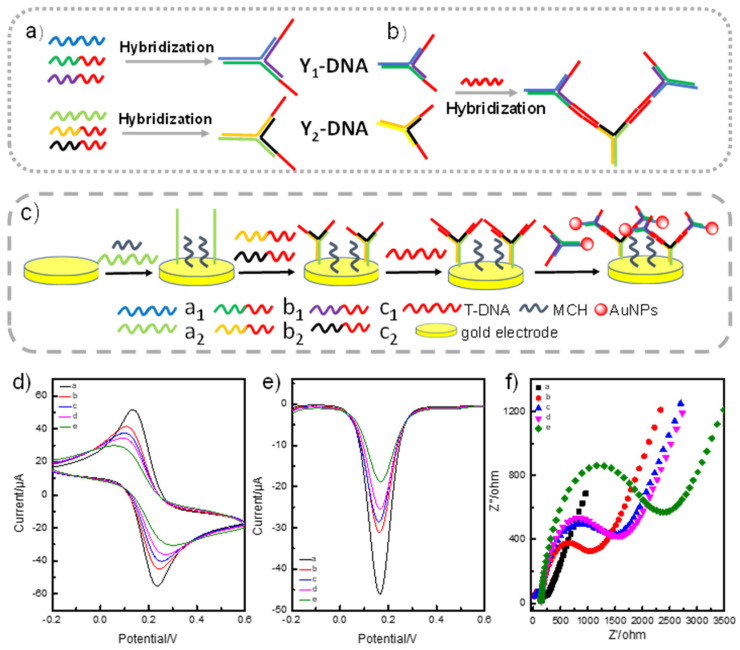
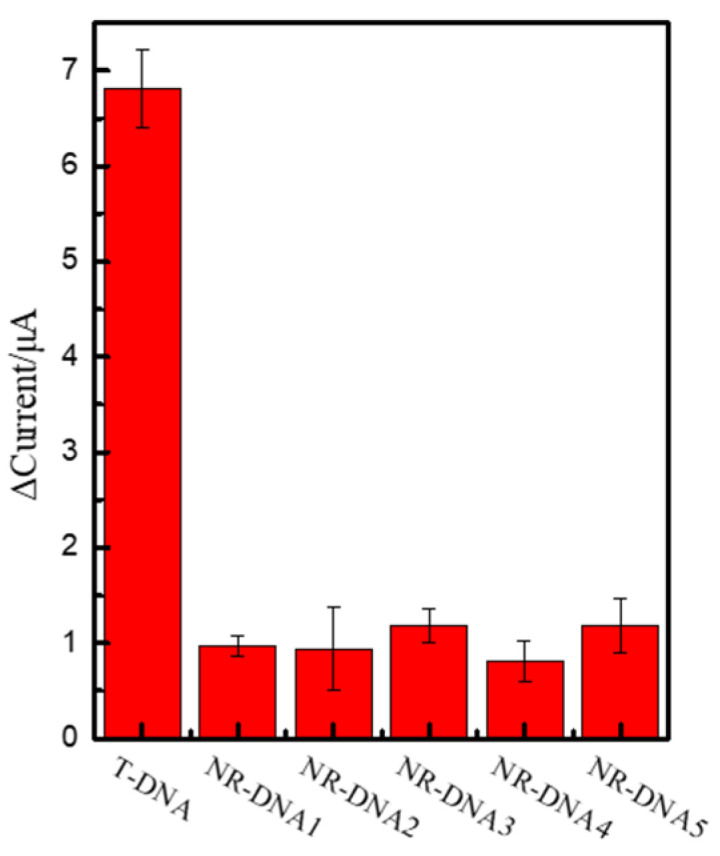
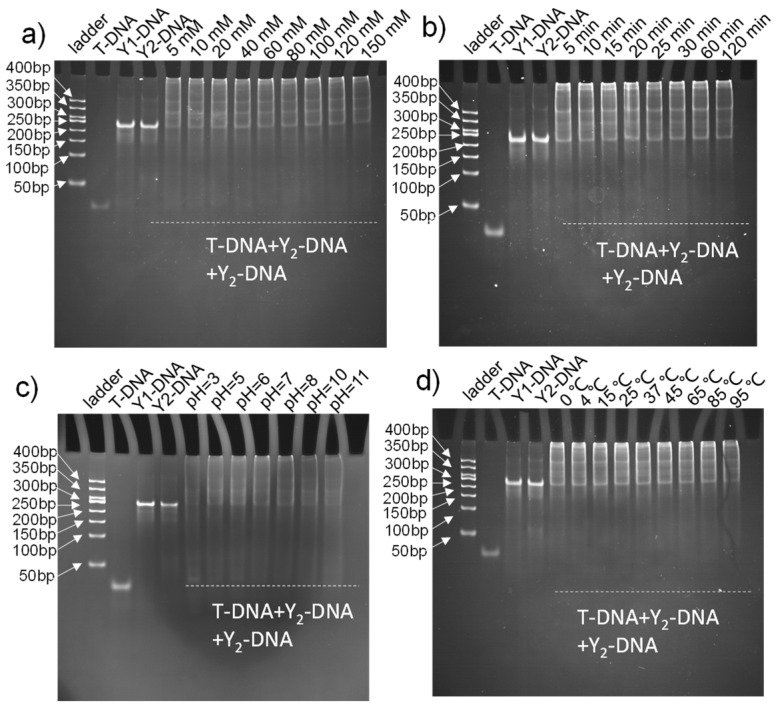
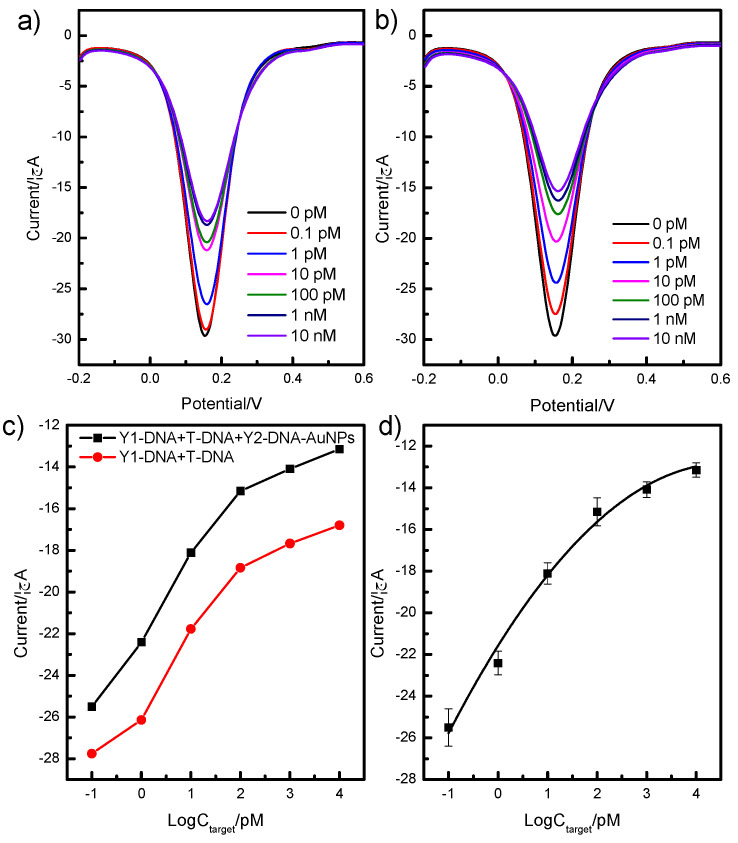
A branched DNA-based electrochemical biosensor was designed to sensitively detect specific nucleic acids. On this platform, novel a branched DNA with three sticky ends could be used as a biosensor to sensitively and specifically detect nucleic acids. Meanwhile, we also employed branched DNA-modified AuNPs as a signal amplifier to further improve the sensitivity. Branched DNA sensors, target DNA, and DNA-modified AuNPs formed a sandwich structure to produce an electronic signal for target DNA detection. The reaction primarily involved DNA hybridization without bulky thermal cyclers and enzymes. We proved that the hybridization reaction easily occurred under different conditions, such as the NaCl concentration, reaction time, pH, and temperature, except for a pH lower than 4. The limit of detection could go as low as 0.09 pM (S/N = 3) with excellent specificity and selectivity. There was a correlation curve relationship between the peak current and the logarithm of the target DNA concentration (0.10 pM to 10 nM). The correlation coefficient reached 0.987. The electrochemical platform enables a branched DNA nanostructure to determine nucleic acids for disease diagnosis.
设计了一种基于分支 DNA 的电化学生物传感器来灵敏地检测特定的核酸。在这个平台上,新型的带有三个粘性末端的分支 DNA 可以用作生物传感器,灵敏且特异地检测核酸。同时,我们还采用了分支 DNA 修饰的 AuNPs 作为信号放大器,以进一步提高灵敏度。分支 DNA 传感器、靶 DNA 和 DNA 修饰的 AuNPs 形成三明治结构,产生电子信号以用于靶 DNA 的检测。该反应主要涉及 DNA 杂交,而无需庞大的热循环仪和酶。我们证明,除了 pH 值低于 4 之外,杂交反应可以在不同的条件下轻松发生,例如 NaCl 浓度、反应时间、pH 值和温度。检测限可低至 0.09 pM(S/N = 3),具有出色的特异性和选择性。峰电流与靶 DNA 浓度的对数(0.10 pM 至 10 nM)之间存在相关曲线关系。相关系数达到 0.987。电化学平台使分支 DNA 纳米结构能够用于疾病诊断中的核酸测定。