Postgraduate Program "Emergency and Intensive Care in Children Adolescents and Young Adults", School of Medicine, University of Crete, 71003 Heraklion, Greece.
Department of Neonatology/Neonatal Intensive Care Unit, University Hospital of Heraklion, School of Medicine, University of Crete, 71500 Heraklion, Greece.
Nutrients. 2023 Aug 11;15(16):3556. doi: 10.3390/nu15163556.
Nutritional support of preterm infants remains a field of debate in the literature and clinical practice varies significantly. Adequate nutrition should promote growth and aim for optimal later neurodevelopment. However, it is often impaired by prematurity-associated morbidity and the physiologic immaturity of preterm infants. This study assessed the impact of energy and macronutrient provision on growth velocity and outcome and explored differences attributed to the heterogeneity of the preterm population.
We retrospectively collected clinical and nutritional data from neonates hospitalized in two separate Neonatal Intensive Care Units (NICUs). Estimated energy and protein balance were calculated based on the ESPGHAN guidelines and their association with the growth outcome was explored. Growth assessment was based on somatometry Delta (Δ) z-scores at discharge.
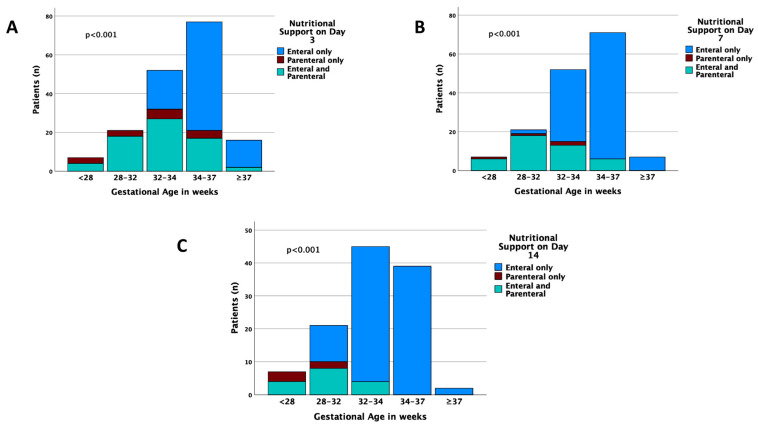
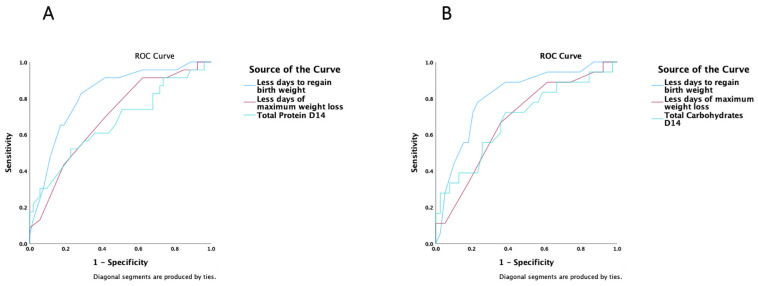
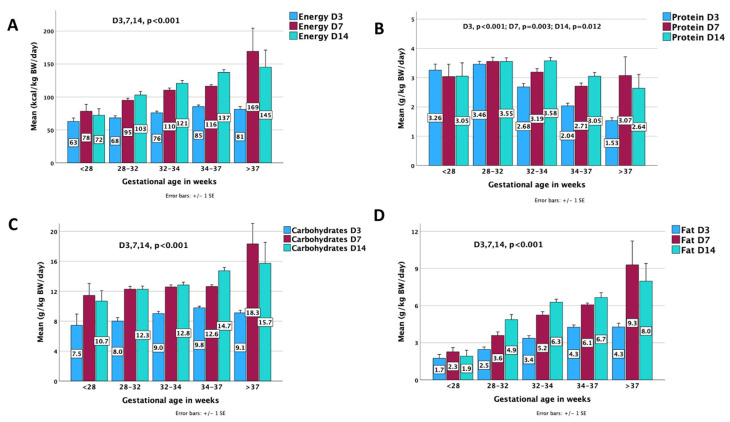
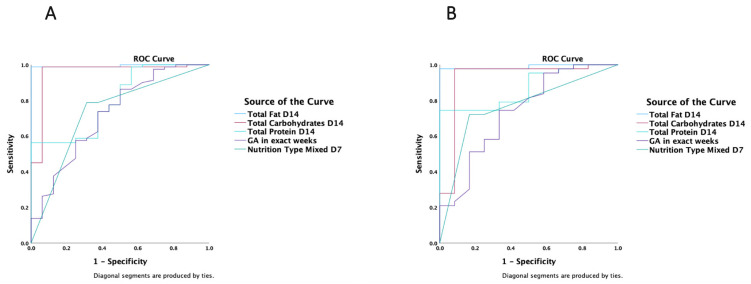
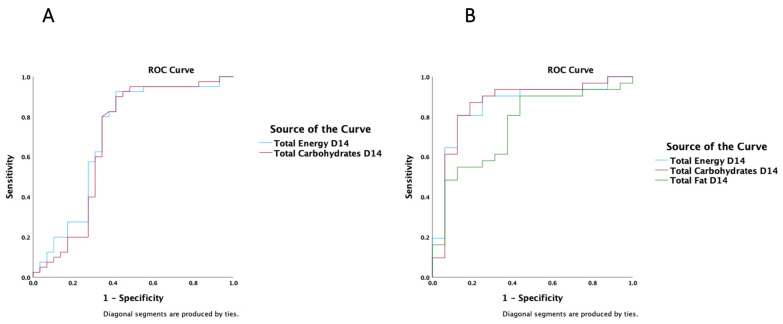
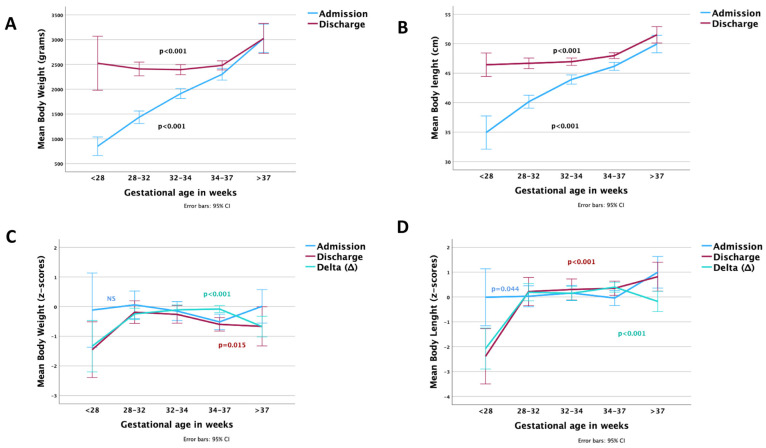
In total, 174 neonates were included in the study. By day 14, most preterm infants were exclusively enterally fed, whereas there were infants in the <28 and 28-31 subgroups fed exclusively parenterally. Energy balance was positive for all gestational age (GA) subgroups except for those born <28 weeks. Protein balance was consistently positive for extremely premature but negative for late preterms. Cumulative substrates provisions were strong predictors of a positive energy or protein balance in the <34 weeks GA preterms on days 14 (ROC analyses, < 0.001) and 7 ( < 0.05). A higher GA ( = 0.013) and enteral nutrition ( = 0.005) were additional predictors of a positive energy balance. All GA subgroups had a negative Δ z-score of weight at discharge. In the <34 GA subcohorts, a positive protein balance on day 14 ( = 0.009) and a short time to regain birth weight (exp(B) 3.1 ( = 0.004)) were independently associated with a positive Δ z-score of weight at discharge.
Early achievement of a positive energy and protein balance, based on the ESPGHAN guidelines, is crucial to ensure optimal postnatal growth and prevent extrauterine growth restriction, a relatively common occurrence in preterm infants.
早产儿的营养支持仍然是文献和临床实践中争论的领域,差异很大。适当的营养应该促进生长,目标是最佳的后期神经发育。然而,早产儿相关发病率和早产儿生理不成熟常常会对其产生影响。本研究评估了能量和宏量营养素供给对生长速度和结局的影响,并探讨了归因于早产儿人群异质性的差异。
我们回顾性地收集了在两个独立新生儿重症监护病房(NICU)住院的新生儿的临床和营养数据。根据 ESPGHAN 指南计算了估计的能量和蛋白质平衡,并探讨了其与生长结局的关系。生长评估基于出院时的体成分 Δz 分数。
共有 174 名新生儿纳入研究。到第 14 天,大多数早产儿仅经肠内喂养,而在<28 周和 28-31 周亚组中,有婴儿仅经肠外喂养。除了出生<28 周的早产儿,所有胎龄(GA)亚组的能量平衡均为正。极早产儿的蛋白质平衡始终为正,而晚期早产儿的蛋白质平衡为负。在<34 周 GA 的早产儿中,第 14 天(ROC 分析,<0.001)和第 7 天(<0.05),累积底物供给是能量或蛋白质正平衡的强预测因子。GA 较高(=0.013)和肠内营养(=0.005)是能量平衡正的另外预测因子。所有 GA 亚组在出院时体重的 z 分数均为负。在<34GA 亚组中,第 14 天的蛋白质平衡为正(=0.009),体重恢复至出生体重的时间较短(EXP(B)3.1(=0.004)),与出院时体重的 z 分数为正独立相关。
根据 ESPGHAN 指南,早期实现正的能量和蛋白质平衡对于确保最佳的产后生长和预防宫外生长受限至关重要,宫外生长受限在早产儿中较为常见。