Bolat Faik, Ghitman Jana, Necolau Madalina Ioana, Vasile Eugeniu, Iovu Horia
Advanced Polymer Materials Group, National University of Science and Technology Politehnica Bucharest, 1-7 Gh. Polizu Street, 011061 Bucharest, Romania.
Department of Oxide Materials Science and Engineering, National University of Science and Technology Politehnica Bucharest, 1-7 Gh. Polizu, 060042 Bucharest, Romania.
Polymers (Basel). 2023 Aug 18;15(16):3446. doi: 10.3390/polym15163446.
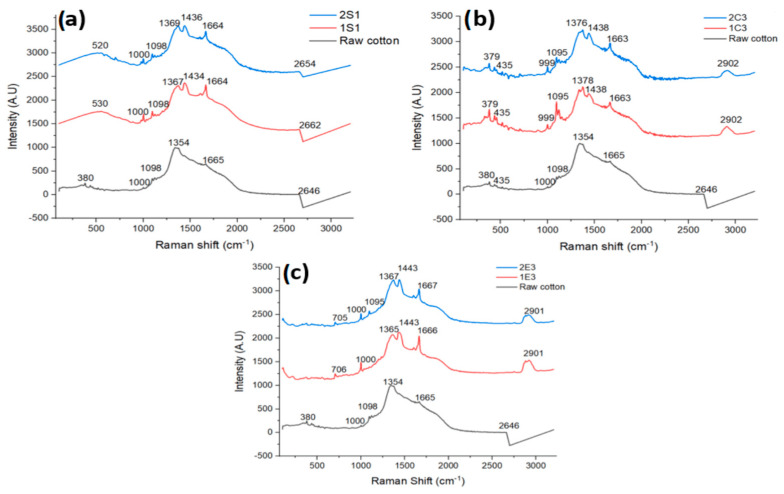
Due to environmental concerns, as well as its exceptional physical and mechanical capabilities, biodegradability, and optical and barrier qualities, nanocellulose has drawn a lot of interest as a source of reinforcing materials that are nanometer sized. This article focuses on how to manufacture cellulose nanomaterials from cotton by using different types of acids such as HSO and HCI in different concentrations and in the presence of enzymes such as cellulase and xylanase. Two different types of bleaching methods were used before acid and enzyme hydrolysis. In the first method, cellulose was extracted by bleaching the cotton with HO. In the second method, NaOCl was utilized. For both methods, different concentrations of acids and enzymes were used to isolate nanocellulose materials, cellulose nanocrystals (CNC), and cellulose nanofibrils (CNF) at different temperatures. All obtained nanocellulose materials were analyzed through different techniques such as FT-IR, Zeta potentials, DLS, Raman spectroscopy, TGA, DSC, XRD, and SEM. The characteristic signals related to cellulose nanocrystals (CNC) were confirmed with the aid of Raman and FT-IR spectroscopy. According to the XRD results, the samples' crystallinity percentages range from 54.1% to 63.2%. The SEM image showed that long fibers break down into small fibers and needle-like features are seen on the surface of the fibers. Using different types of bleaching has no significant effect on the thermal stability of samples. The results demonstrate a successful method for synthesizing cellulose nanofibrils (CNF) from cotton through enzymatic hydrolysis, but the results also demonstrated that the choice of bleaching method has a significant impact on the hydrodynamic properties and crystallinity of both CNC and CNF samples.
由于环境问题,以及其卓越的物理和机械性能、生物降解性、光学和阻隔性能,纳米纤维素作为一种纳米级增强材料来源引起了广泛关注。本文重点介绍如何通过使用不同浓度的硫酸(HSO)和盐酸(HCI)等不同类型的酸,并在纤维素酶和木聚糖酶等酶的存在下,从棉花中制备纤维素纳米材料。在酸和酶水解之前使用了两种不同类型的漂白方法。在第一种方法中,通过用过氧化氢(HO)漂白棉花来提取纤维素。在第二种方法中,使用了次氯酸钠(NaOCl)。对于这两种方法,在不同温度下使用不同浓度的酸和酶来分离纳米纤维素材料、纤维素纳米晶体(CNC)和纤维素纳米纤维(CNF)。所有获得的纳米纤维素材料都通过傅里叶变换红外光谱(FT-IR)、Zeta电位、动态光散射(DLS)、拉曼光谱、热重分析(TGA)、差示扫描量热法(DSC)、X射线衍射(XRD)和扫描电子显微镜(SEM)等不同技术进行了分析。借助拉曼光谱和傅里叶变换红外光谱确认了与纤维素纳米晶体(CNC)相关的特征信号。根据X射线衍射结果,样品的结晶度百分比范围为54.1%至63.2%。扫描电子显微镜图像显示长纤维分解成小纤维,并且在纤维表面可见针状特征。使用不同类型的漂白对样品的热稳定性没有显著影响。结果表明了一种通过酶水解从棉花合成纤维素纳米纤维(CNF)的成功方法,但结果也表明漂白方法的选择对CNC和CNF样品的流体动力学性质和结晶度有重大影响。