Department of Pharmacology and Chemical Biology, University of Pittsburgh, Pittsburgh, PA, USA; Women's Cancer Research Center, UPMC Hillman Cancer Center, Magee-Women's Research Institute, Pittsburgh, PA, USA.
Department of Pharmacology and Chemical Biology, University of Pittsburgh, Pittsburgh, PA, USA; Women's Cancer Research Center, UPMC Hillman Cancer Center, Magee-Women's Research Institute, Pittsburgh, PA, USA; School of Medicine, Tsinghua University, Beijing, China.
Redox Biol. 2023 Oct;66:102856. doi: 10.1016/j.redox.2023.102856. Epub 2023 Aug 19.
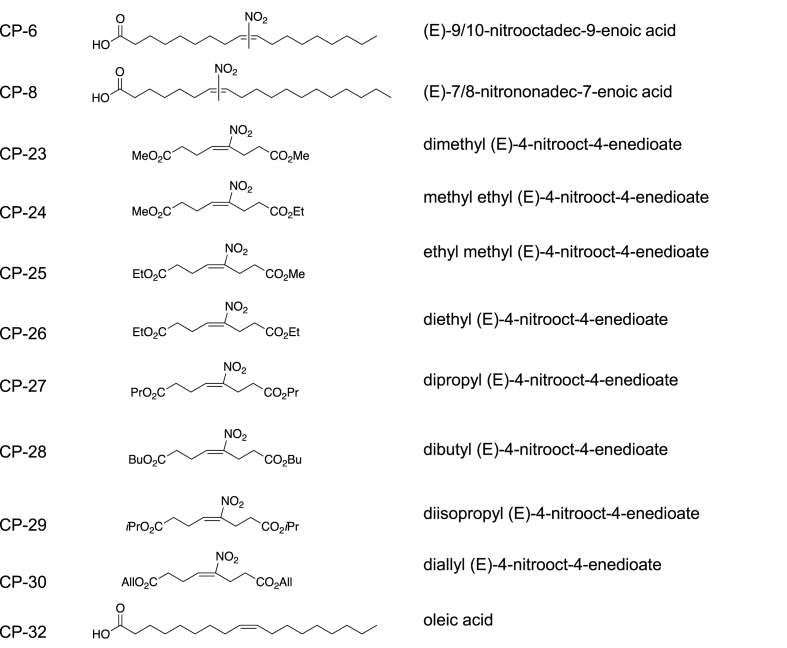
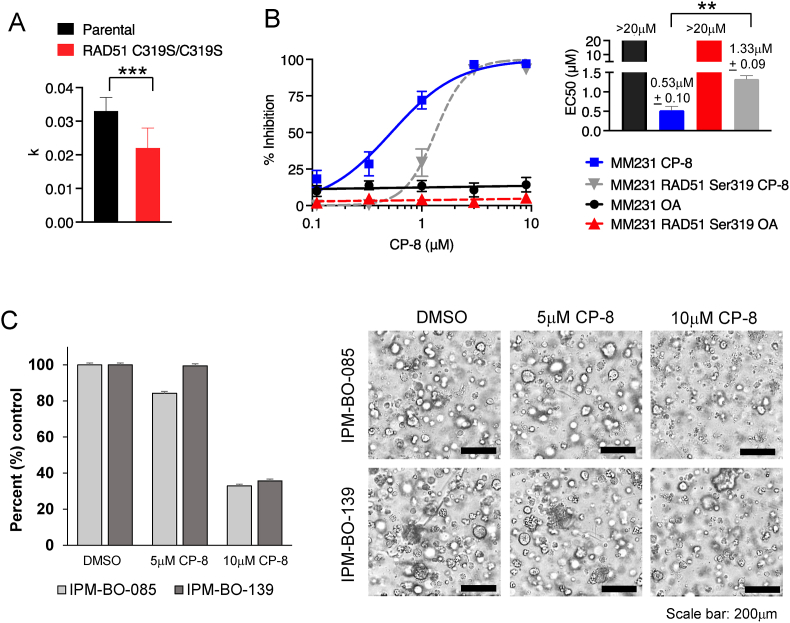
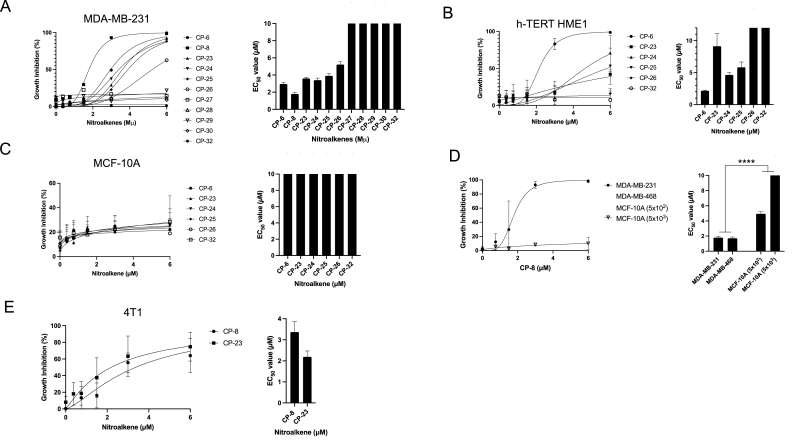
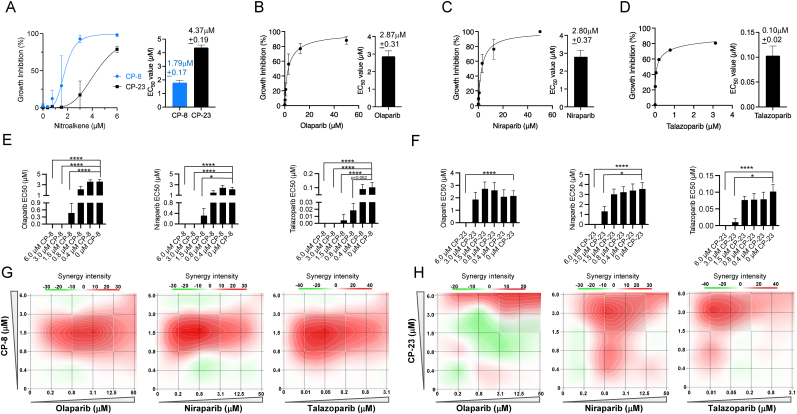
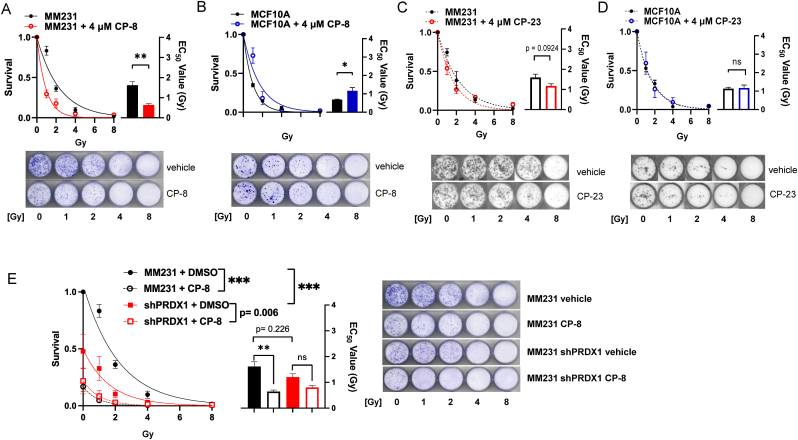
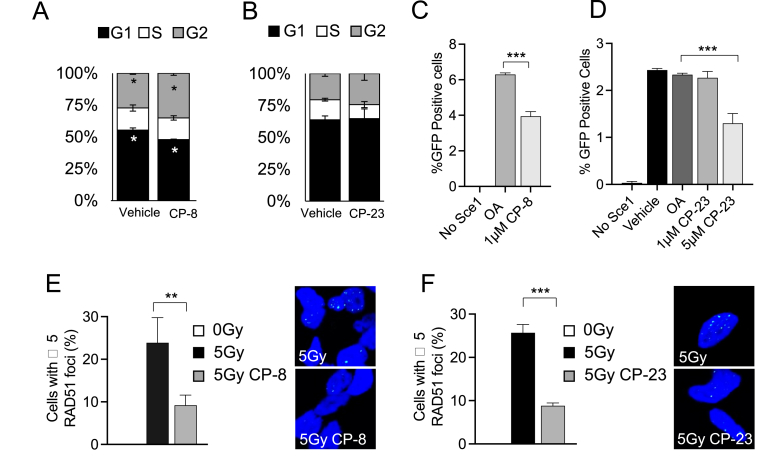
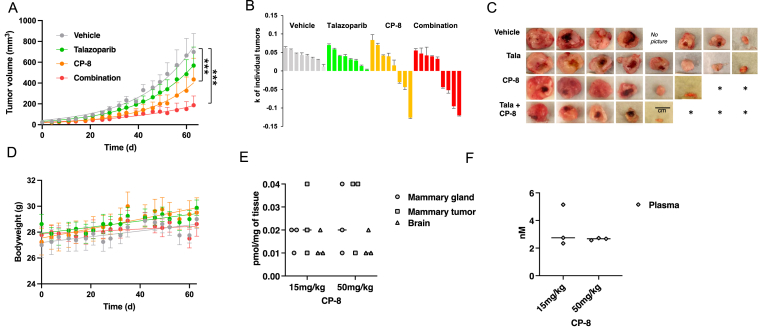
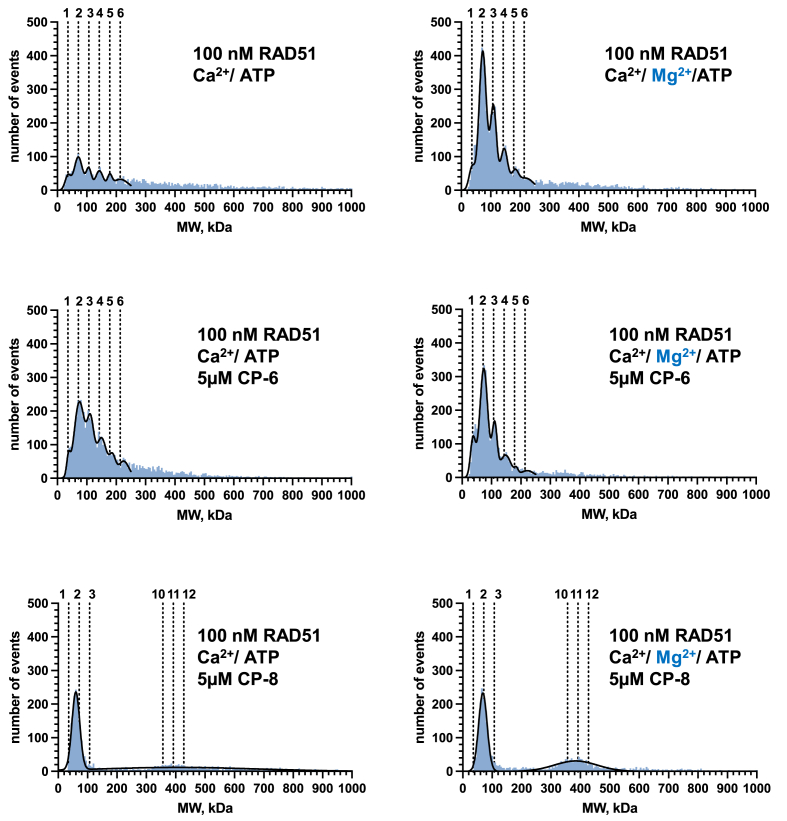
Nitro fatty acids (NO-FAs) are endogenously generated lipid signaling mediators from metabolic and inflammatory reactions between conjugated diene fatty acids and nitric oxide or nitrite-derived reactive species. NO-FAs undergo reversible Michael addition with hyperreactive protein cysteine thiolates to induce posttranslational protein modifications that can impact protein function. Herein, we report a novel mechanism of action of natural and non-natural nitroalkenes structurally similar to (E) 10-nitro-octadec-9-enoic acid (CP-6), recently de-risked by preclinical Investigational New Drug-enabling studies and Phase 1 and Phase 2 clinical trials and found to induce DNA damage in a TNBC xenograft by inhibiting homologous-recombination (HR)-mediated repair of DNA double-strand breaks (DSB). CP-6 specifically targets Cys319, essential in RAD51-controlled HR-mediated DNA DSB repair in cells. A nitroalkene library screen identified two structurally different nitroalkenes, a non-natural fatty acid [(E) 8-nitro-nonadec-7-enoic acid (CP-8)] and a dicarboxylate ester [dimethyl (E)nitro-oct-4-enedioate (CP-23)] superior to CP-6 in TNBC cells killing, synergism with three different inhibitors of the poly ADP-ribose polymerase (PARP) and γ-IR. CP-8 and CP-23 effectively inhibited γ-IR-induced RAD51 foci formation and HR in a GFP-reported assay but did not affect benign human epithelial cells or cell cycle phases. In vivo, CP-8 and CP-23's efficacies diverged as only CP-8 showed promising anticancer activities alone and combined with the PARP inhibitor talazoparib in an HR-proficient TNBC mouse model. As preliminary preclinical toxicology analysis also suggests CP-8 as safe, our data endorse CP-8 as a novel anticancer molecule for treating cancers sensitive to homologous recombination-mediated DNA repair inhibitors.
硝酰脂肪酸(NO-FAs)是共轭二烯脂肪酸和一氧化氮或亚硝酸盐衍生的活性物质之间的代谢和炎症反应中内源性产生的脂质信号介质。NO-FAs 与超反应蛋白半胱氨酸硫醇发生可逆的迈克尔加成,诱导可影响蛋白质功能的翻译后蛋白质修饰。在此,我们报告了一种新型作用机制,即结构上类似于(E)10-硝基-十八-9-烯酸(CP-6)的天然和非天然硝烯的作用机制,最近通过临床前研究新药授权研究以及 I 期和 II 期临床试验进行了风险降低,并发现通过抑制同源重组(HR)介导的 DNA 双链断裂(DSB)修复,在三阴性乳腺癌异种移植模型中诱导 DNA 损伤。CP-6 特异性靶向细胞中 RAD51 控制的 HR 介导的 DNA DSB 修复所必需的半胱氨酸 319。硝烯文库筛选鉴定出两种结构不同的硝烯,一种非天然脂肪酸[(E)8-硝基-十九-7-烯酸(CP-8)]和一种二羧酸酯[二甲基(E)硝基-辛-4-烯二酸酯(CP-23)],在三阴性乳腺癌细胞杀伤方面优于 CP-6,与三种不同的聚 ADP-核糖聚合酶(PARP)和 γ-IR 抑制剂具有协同作用。CP-8 和 CP-23 有效地抑制了 GFP 报告测定中 γ-IR 诱导的 RAD51 焦点形成和 HR,但不影响良性人上皮细胞或细胞周期相。在体内,CP-8 和 CP-23 的疗效不同,只有 CP-8 单独具有抗肿瘤活性,并在 HR 功能良好的三阴性乳腺癌小鼠模型中与 PARP 抑制剂他拉唑帕尼联合使用具有抗肿瘤活性。由于初步的临床前毒理学分析也表明 CP-8 是安全的,我们的数据支持 CP-8 作为一种新型的抗癌分子,用于治疗对同源重组介导的 DNA 修复抑制剂敏感的癌症。