Novartis Institutes for Biomedical Research, Basel, Switzerland.
Recludix Pharma, San Diego, USA.
J Neuroinflammation. 2023 Aug 26;20(1):194. doi: 10.1186/s12974-023-02877-9.
Bruton's tyrosine kinase (BTK) is a key signaling node in B cell receptor (BCR) and Fc receptor (FcR) signaling. BTK inhibitors (BTKi) are an emerging oral treatment option for patients suffering from multiple sclerosis (MS). Remibrutinib (LOU064) is a potent, highly selective covalent BTKi with a promising preclinical and clinical profile for MS and other autoimmune or autoallergic indications.
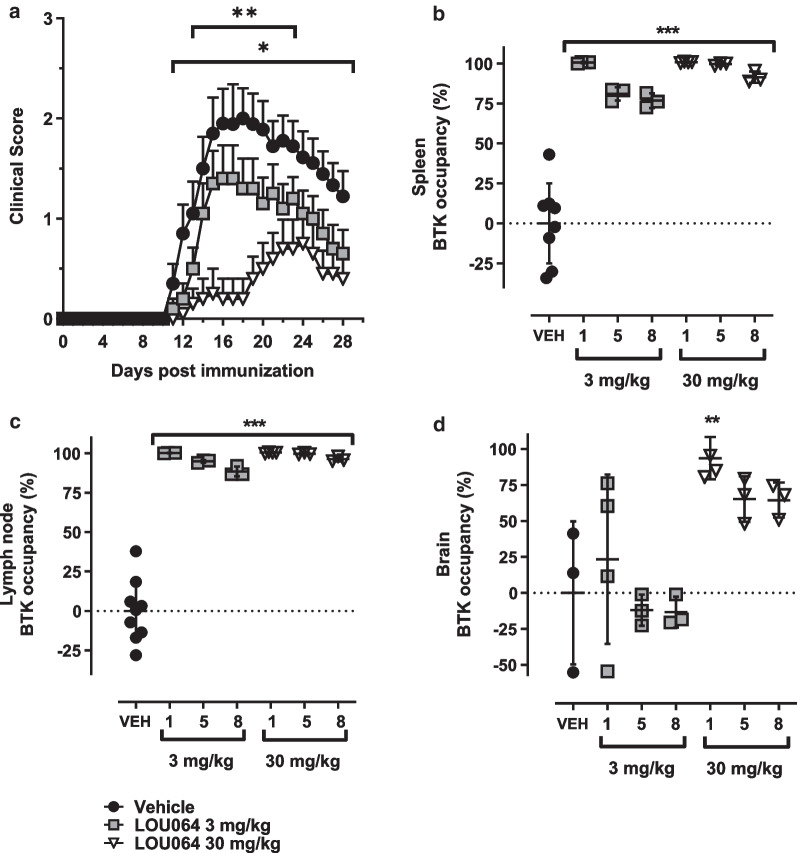
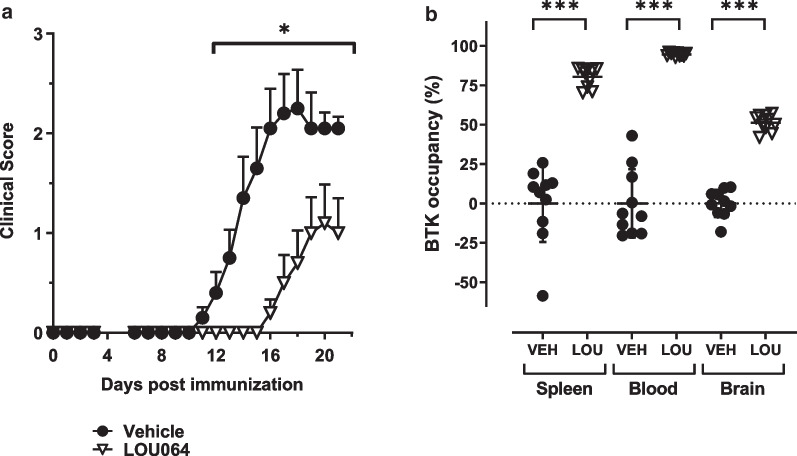
The efficacy and mechanism of action of remibrutinib was assessed in two different experimental autoimmune encephalomyelitis (EAE) mouse models for MS. The impact of remibrutinib on B cell-driven EAE pathology was determined after immunization with human myelin oligodendrocyte glycoprotein (HuMOG). The efficacy on myeloid cell and microglia driven neuroinflammation was determined in the RatMOG EAE. In addition, we assessed the relationship of efficacy to BTK occupancy in tissue, ex vivo T cell response, as well as single cell RNA-sequencing (scRNA-seq) in brain and spinal cord tissue.
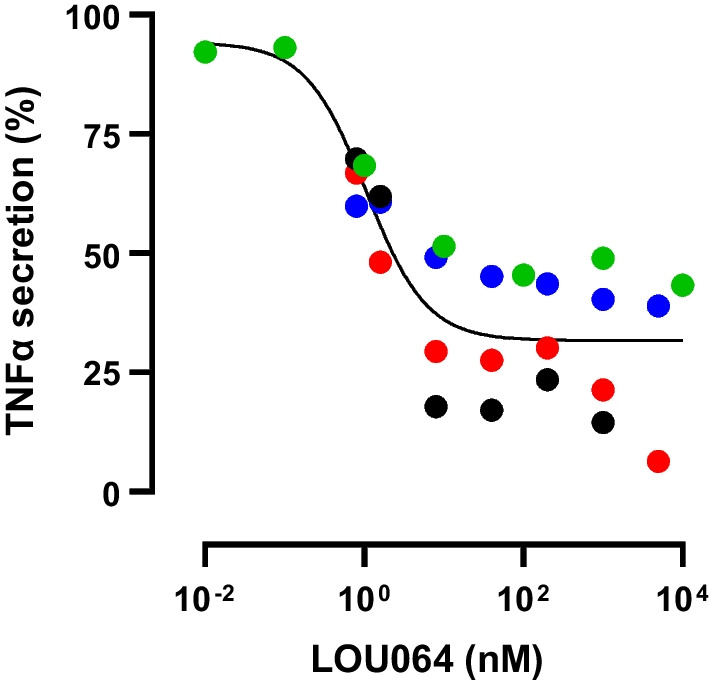
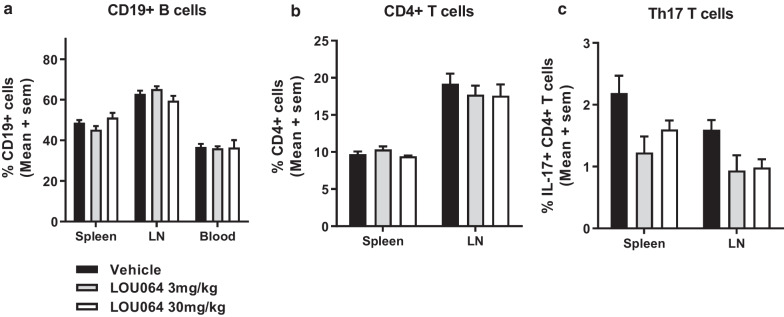
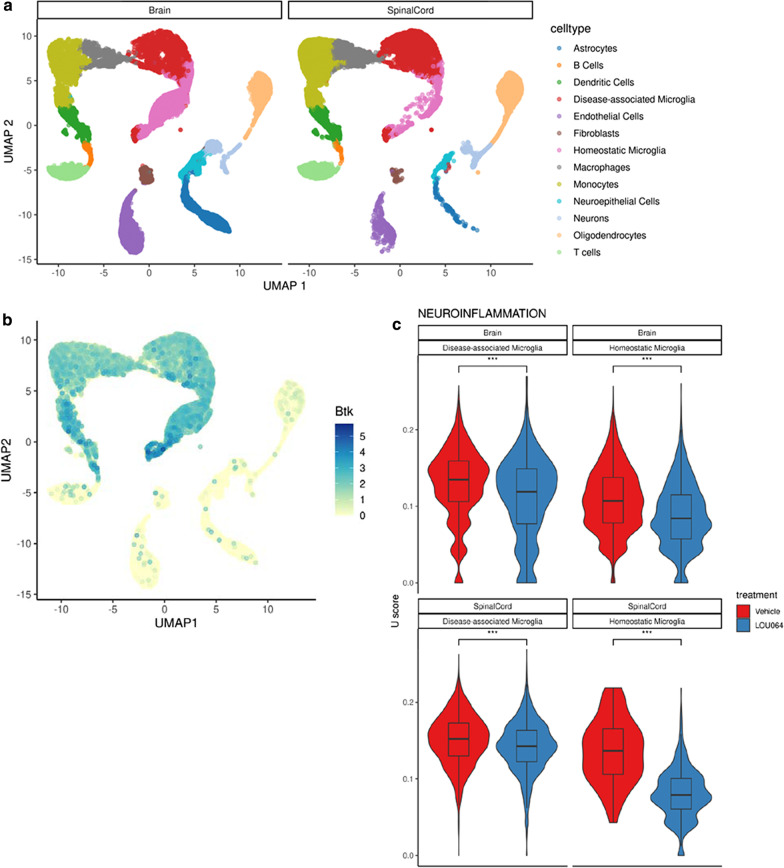
Remibrutinib inhibited B cell-dependent HuMOG EAE in dose-dependent manner and strongly reduced neurological symptoms. At the efficacious oral dose of 30 mg/kg, remibrutinib showed strong BTK occupancy in the peripheral immune organs and in the brain of EAE mice. Ex vivo MOG-specific T cell recall response was reduced, but not polyclonal T cell response, indicating absence of non-specific T cell inhibition. Remibrutinib also inhibited RatMOG EAE, suggesting that myeloid cell and microglia inhibition contribute to its efficacy in EAE. Remibrutinib did not reduce B cells, total Ig levels nor MOG-specific antibody response. In brain and spinal cord tissue a clear anti-inflammatory effect in microglia was detected by scRNA-seq. Finally, remibrutinib showed potent inhibition of in vitro immune complex-driven inflammatory response in human microglia.
Remibrutinib inhibited EAE models by a two-pronged mechanism based on inhibition of pathogenic B cell autoreactivity, as well as direct anti-inflammatory effects in microglia. Remibrutinib showed efficacy in both models in absence of direct B cell depletion, broad T cell inhibition or reduction of total Ig levels. These findings support the view that remibrutinib may represent a novel treatment option for patients with MS.
布鲁顿酪氨酸激酶(BTK)是 B 细胞受体(BCR)和 Fc 受体(FcR)信号转导的关键信号节点。BTK 抑制剂(BTKi)是一种新兴的口服治疗选择,可用于治疗多发性硬化症(MS)患者。瑞米布替尼(LOU064)是一种强效、高度选择性的共价 BTKi,具有有前途的 MS 和其他自身免疫或自身过敏适应症的临床前和临床特征。
在两种不同的多发性硬化症实验性自身免疫性脑脊髓炎(EAE)小鼠模型中评估了瑞米布替尼的疗效和作用机制。通过用人类髓鞘少突胶质细胞糖蛋白(HuMOG)免疫来确定瑞米布替尼对 B 细胞驱动的 EAE 病理学的影响。在 RatMOG EAE 中评估了瑞米布替尼对髓样细胞和小胶质细胞驱动的神经炎症的疗效。此外,我们还评估了疗效与组织中的 BTK 占有率、体外 T 细胞反应以及脑和脊髓组织中的单细胞 RNA 测序(scRNA-seq)之间的关系。
瑞米布替尼以剂量依赖性方式抑制 B 细胞依赖性 HuMOG EAE,并强烈减轻神经症状。在有效口服剂量 30mg/kg 时,瑞米布替尼在 EAE 小鼠的外周免疫器官和大脑中表现出强烈的 BTK 占有率。体外 MOG 特异性 T 细胞回忆反应减少,但非多克隆 T 细胞反应没有减少,表明不存在非特异性 T 细胞抑制。瑞米布替尼还抑制了 RatMOG EAE,这表明髓样细胞和小胶质细胞抑制有助于其在 EAE 中的疗效。瑞米布替尼并未减少 B 细胞、总 Ig 水平或 MOG 特异性抗体反应。通过 scRNA-seq 在脑和脊髓组织中检测到小胶质细胞中明显的抗炎作用。最后,瑞米布替尼在体外免疫复合物驱动的炎症反应中对人小胶质细胞表现出强大的抑制作用。
瑞米布替尼通过基于抑制致病性 B 细胞自身反应性的双管齐下的机制抑制 EAE 模型,以及直接在小胶质细胞中发挥抗炎作用。在没有直接 B 细胞耗竭、广泛的 T 细胞抑制或总 Ig 水平降低的情况下,瑞米布替尼在两种模型中均显示出疗效。这些发现支持瑞米布替尼可能成为 MS 患者的一种新的治疗选择的观点。