Heart and Vascular Center, Semmelweis University, 68 Városmajor Street, Budapest, 1122, Hungary.
University of Padova, Padua, Italy.
Sci Rep. 2023 Aug 26;13(1):13978. doi: 10.1038/s41598-023-40821-2.
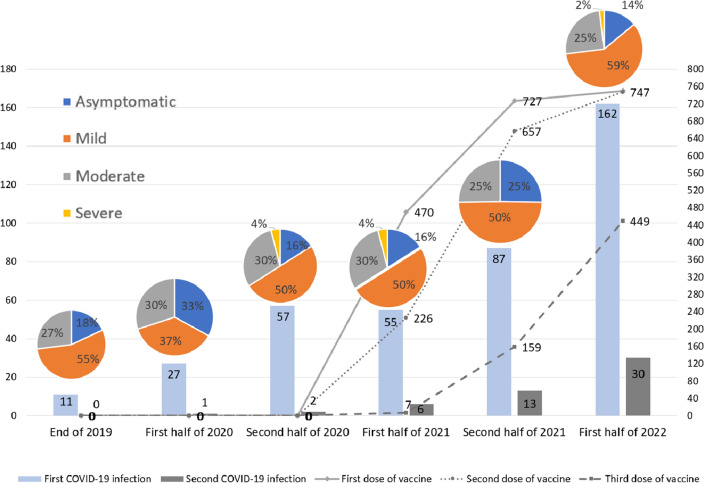
This study assessed the experiences of elite aquatic athletes with coronavirus disease 2019 (COVID-19) during the first World Championship conducted without social distancing and an isolation "bubble". An online questionnaire was completed by 812 athletes (22.7 ± 5.9 years, 467 females) to provide data on demographics, sports activity, severe acute respiratory syndrome coronavirus 2 (SARS-CoV-2) infection rates, symptoms, reinfection, vaccination status, and psychological aspects. The answers revealed that 49.4% of athletes had experienced SARS-CoV-2 infection. The infection rates varied significantly across different aquatic sports, with open water swimmers having the lowest (28%) and water polo players (67%) and artistic swimmers (61%) having the highest infection rates (p < 0.0001). The majority reported mild (51%) or moderate (27%) symptoms, while 16% remained asymptomatic. Reinfection occurred in 13%, and 10% of initial infections led to long COVID, with fatigue (65%) and shortness of breath (48%) being the most common long-term symptoms. Significantly, 92% of athletes received at least two vaccine doses and reported a positive vaccination experience (median score of 8 out of 10 for each shot). Mood changes and subjective performance drops significantly correlated with the overall experience scores (rho: 0.617, p < 0.0001, and rho: 0.466, p < 0.0001, respectively). In conclusion, most athletes experienced a benign disease course despite a relatively high infection rate. This study provides valuable insights into the COVID-19 experiences of elite aquatic athletes. The findings emphasize the importance of vaccination initiatives, monitoring psychological well-being and the need to fortify athletes' resilience in the face of future health challenges.
这项研究评估了在没有社交距离和隔离“泡泡”的情况下举办的第一届世界锦标赛中,精英水上运动员感染 2019 年冠状病毒病(COVID-19)的经历。812 名运动员(22.7±5.9 岁,467 名女性)完成了在线问卷,提供了人口统计学、运动活动、严重急性呼吸系统综合症冠状病毒 2(SARS-CoV-2)感染率、症状、再感染、疫苗接种状况和心理方面的数据。答案显示,49.4%的运动员感染了 SARS-CoV-2。不同水上运动的感染率差异显著,公开水域游泳者感染率最低(28%),水球运动员(67%)和艺术游泳运动员(61%)感染率最高(p<0.0001)。大多数人报告有轻度(51%)或中度(27%)症状,而 16%的人无症状。13%的人发生再感染,10%的初始感染导致长 COVID,最常见的长期症状是疲劳(65%)和呼吸急促(48%)。重要的是,92%的运动员至少接种了两剂疫苗,并报告了积极的接种体验(每剂疫苗的中位数评分为 8 分)。情绪变化和主观表现显著与总体体验评分相关(rho:0.617,p<0.0001,和 rho:0.466,p<0.0001,分别)。总之,尽管感染率相对较高,但大多数运动员的疾病过程都较为良性。本研究为精英水上运动员的 COVID-19 经历提供了有价值的见解。研究结果强调了疫苗接种计划的重要性、监测心理健康以及在面对未来健康挑战时增强运动员韧性的必要性。