Stanford University School of Medicine, Stanford, USA.
Infectious Diseases Research Collaboration, Kampala, Uganda.
EBioMedicine. 2023 Sep;95:104772. doi: 10.1016/j.ebiom.2023.104772. Epub 2023 Aug 25.
Malaria in pregnancy (MIP) causes higher morbidity in primigravid compared to multigravid women; however, the correlates and mechanisms underlying this gravidity-dependent protection remain incompletely understood. We aimed to compare the cellular immune response between primigravid and multigravid women living in a malaria-endemic region and assess for correlates of protection against MIP.
We characterised the second trimester cellular immune response among 203 primigravid and multigravid pregnant women enrolled in two clinical trials of chemoprevention in eastern Uganda, utilizing RNA sequencing, flow cytometry, and functional assays. We compared responses across gravidity and determined associations with parasitaemia during pregnancy and placental malaria.
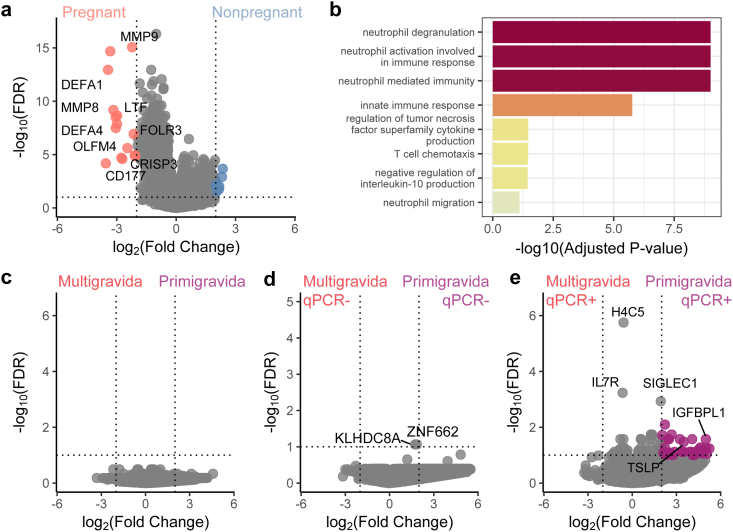
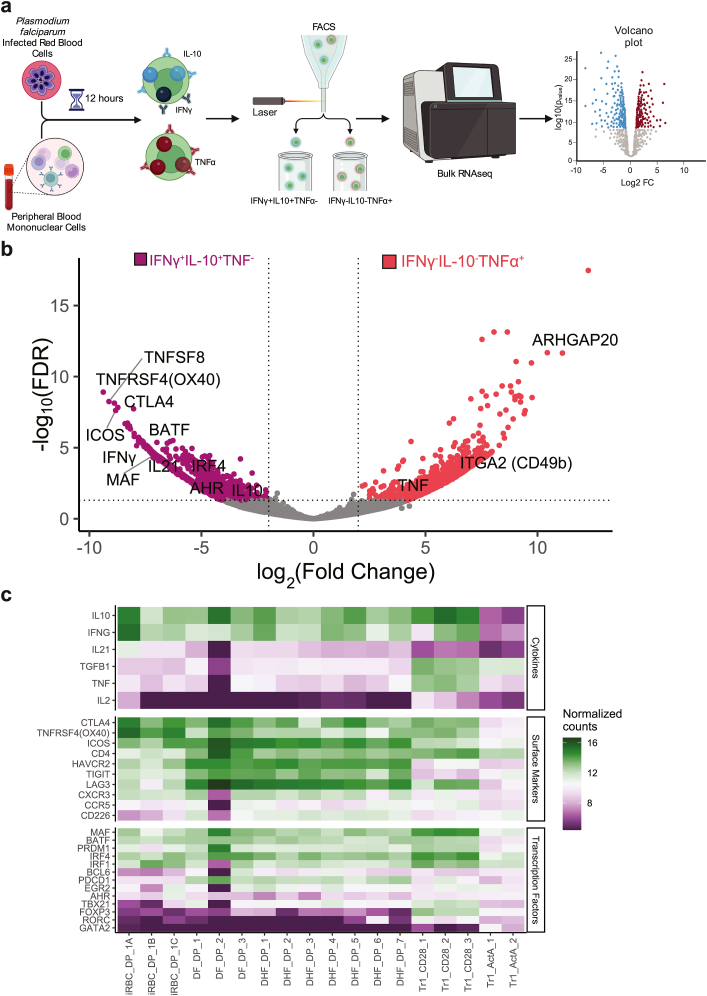
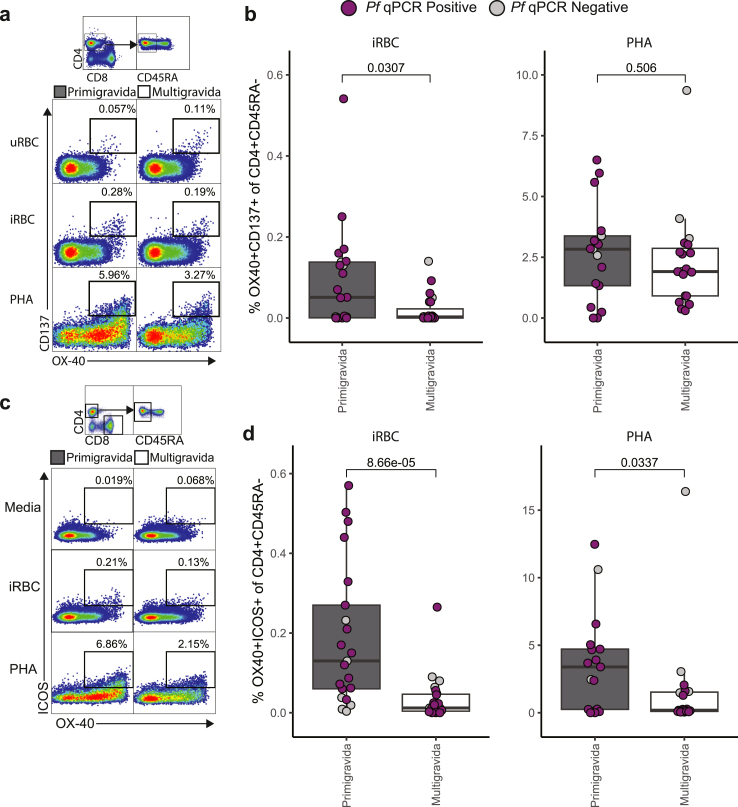
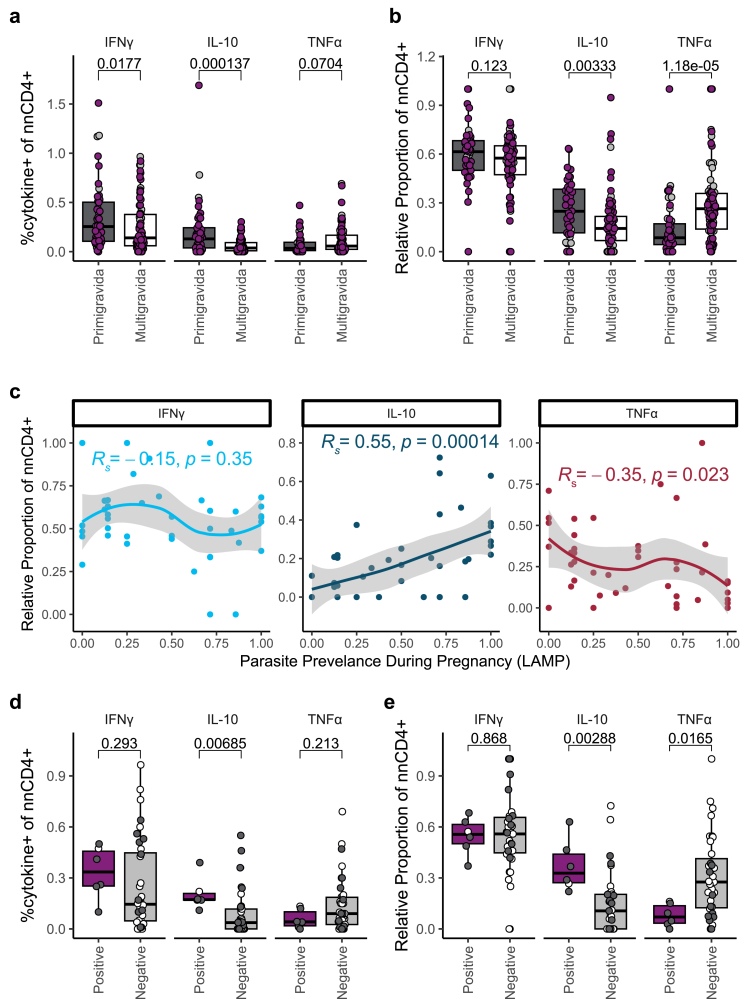
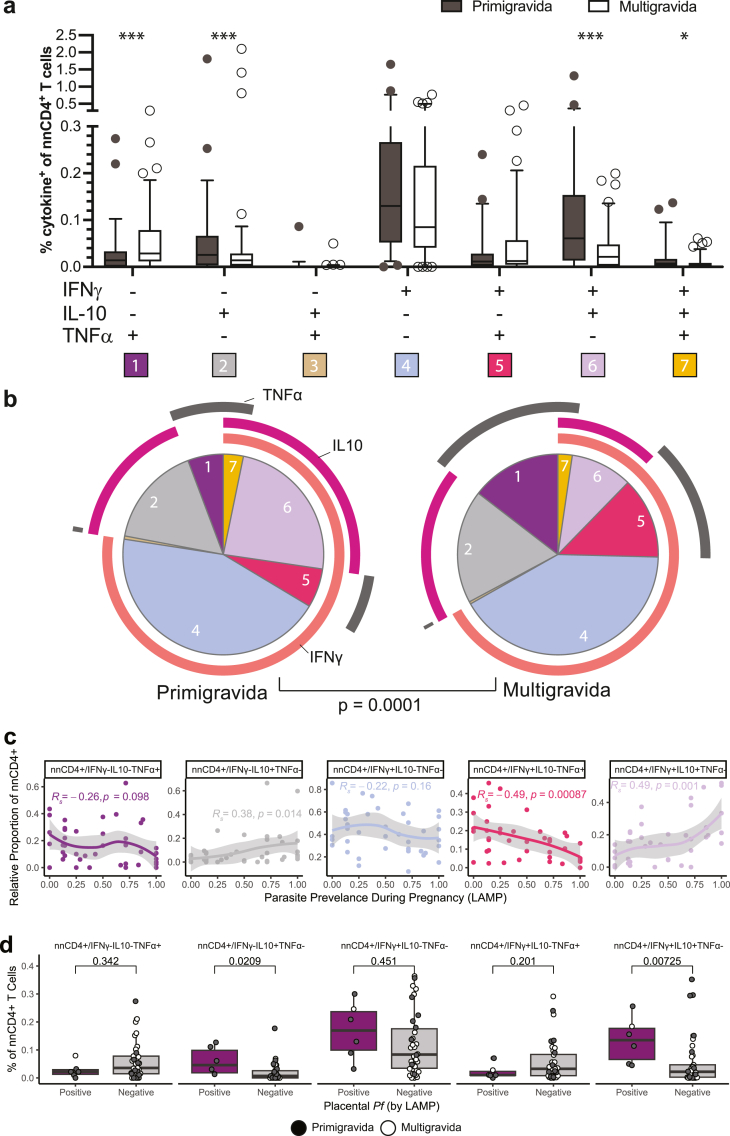
Using whole blood RNA sequencing, no significant differentially expressed genes were identified between primigravid (n = 12) and multigravid (n = 11) women overall (log 2(FC) > 2, FDR < 0.1). However, primigravid (n = 49) women had higher percentages of malaria-specific, non-naïve CD4 T cells that co-expressed IL-10 and IFNγ compared with multigravid (n = 85) women (p = 0.000023), and higher percentages of these CD4 T cells were associated with greater risks of parasitaemia in pregnancy (R = 0.49, p = 0.001) and placental malaria (p = 0.0073). These IL-10 and IFNγ co-producing CD4 T cells had a genomic signature of Tr1 cells, including expression of transcription factors cMAF and BATF and cell surface makers CTLA4 and LAG-3.
Malaria-specific Tr1 cells were highly prevalent in primigravid Ugandan women, and their presence correlated with a higher risk of malaria in pregnancy. Understanding whether suppression of Tr1 cells plays a role in naturally acquired gravidity-dependent immunity may aid the development of new vaccines or treatments for MIP.
This work was funded by NIH (PO1 HD059454, U01 AI141308, U19 AI089674, U01 AI155325, U01 AI150741), the March of Dimes (Basil O'Connor award), and the Bill and Melinda Gates Foundation (OPP 1113682).
与多胎妊娠女性相比,初产妇妊娠疟疾(MIP)导致更高的发病率;然而,这种妊娠依赖性保护的相关因素和机制仍不完全清楚。我们旨在比较生活在疟疾流行地区的初产妇和多胎妊娠女性的细胞免疫反应,并评估其对 MIP 的保护相关性。
我们利用 RNA 测序、流式细胞术和功能测定,对乌干达东部两项化学预防临床试验中招募的 203 名初产妇和多胎妊娠孕妇的妊娠中期细胞免疫反应进行了描述。我们比较了妊娠次数之间的反应,并确定了与妊娠期间寄生虫血症和胎盘疟疾的关联。
使用全血 RNA 测序,总体上未发现初产妇(n=12)和多胎妊娠女性(n=11)之间有显著差异表达的基因(log 2(FC)>2,FDR<0.1)。然而,与多胎妊娠女性(n=85)相比,初产妇(n=49)女性具有更高比例的表达白细胞介素-10(IL-10)和干扰素-γ(IFNγ)的疟疾特异性非幼稚 CD4 T 细胞(p=0.000023),并且这些 CD4 T 细胞的比例与妊娠期间寄生虫血症的风险增加相关(R=0.49,p=0.001)和胎盘疟疾(p=0.0073)。这些产生 IL-10 和 IFNγ 的 CD4 T 细胞具有 Tr1 细胞的基因组特征,包括转录因子 cMAF 和 BATF 的表达以及细胞表面标志物 CTLA4 和 LAG-3。
在乌干达初产妇中,疟疾特异性 Tr1 细胞高度普遍存在,其存在与妊娠期间疟疾风险增加相关。了解 Tr1 细胞的抑制是否在自然获得的妊娠依赖性免疫中发挥作用,可能有助于开发针对 MIP 的新疫苗或治疗方法。
本工作由美国国立卫生研究院(PO1 HD059454、U01 AI141308、U19 AI089674、U01 AI155325、U01 AI150741)、March of Dimes(Basil O'Connor 奖)和比尔和梅琳达盖茨基金会(OPP 1113682)资助。