The Ragon Institute of Mass General, The Massachusetts Institute of Technology and Harvard University, 400 Technology Square, Cambridge, MA, 02139, USA.
Bristol-Myers Squibb, 700 Bay Rd, Redwood City, CA, 94063-2478, USA.
Nat Commun. 2023 Aug 28;14(1):5249. doi: 10.1038/s41467-023-40918-2.
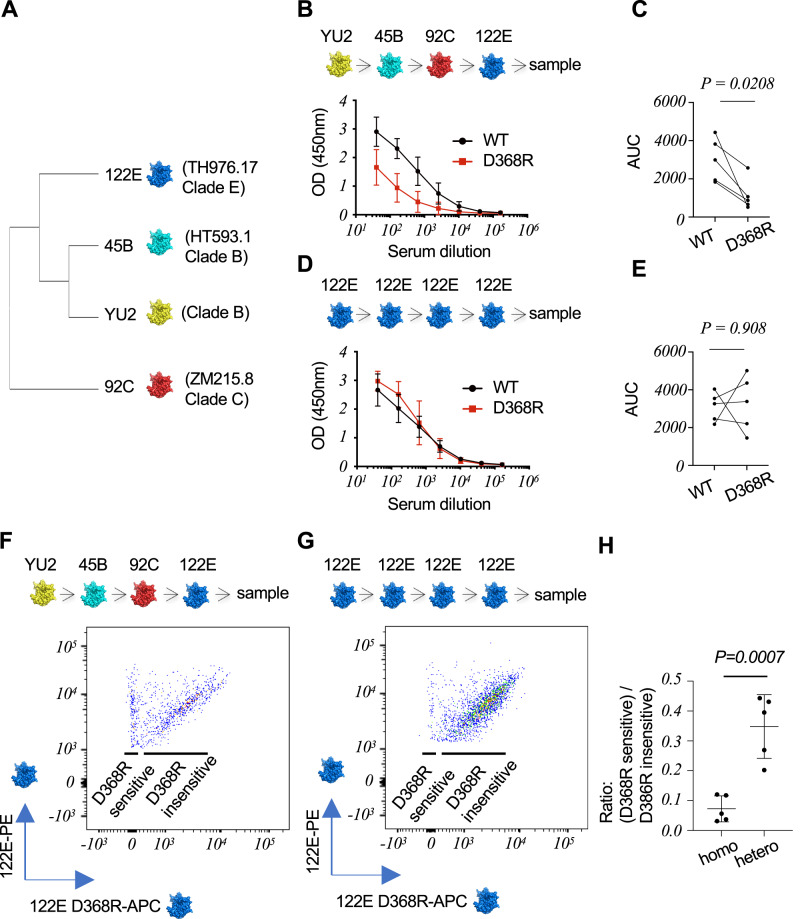
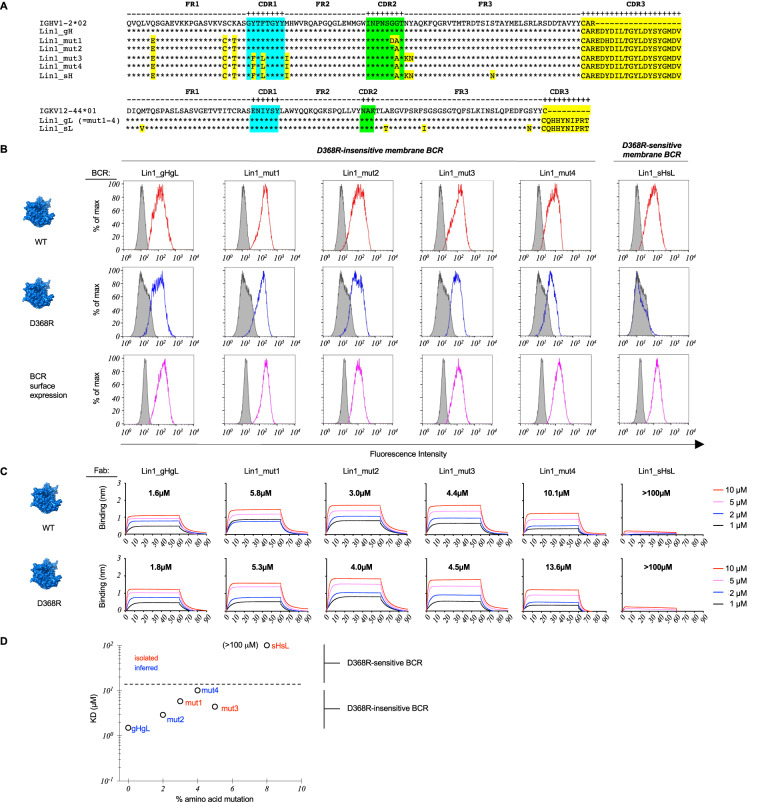
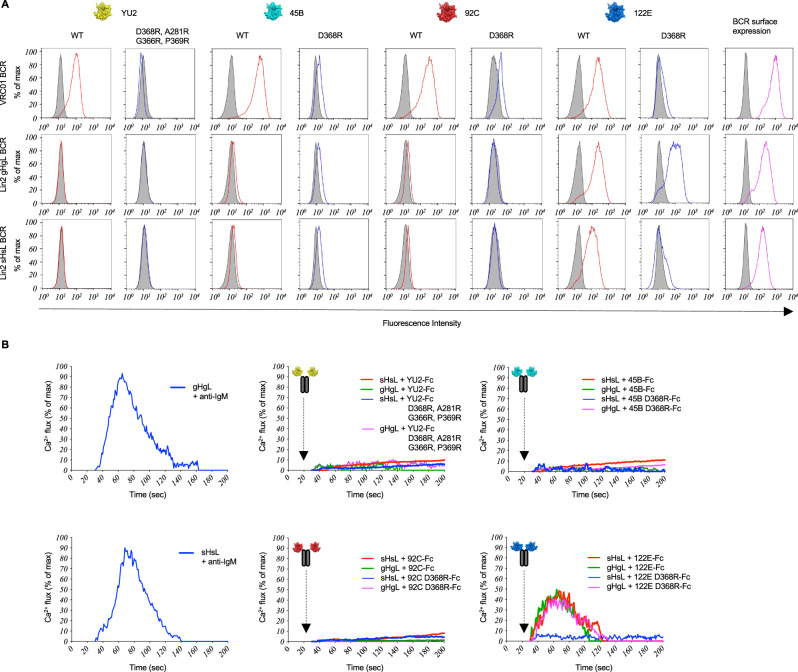
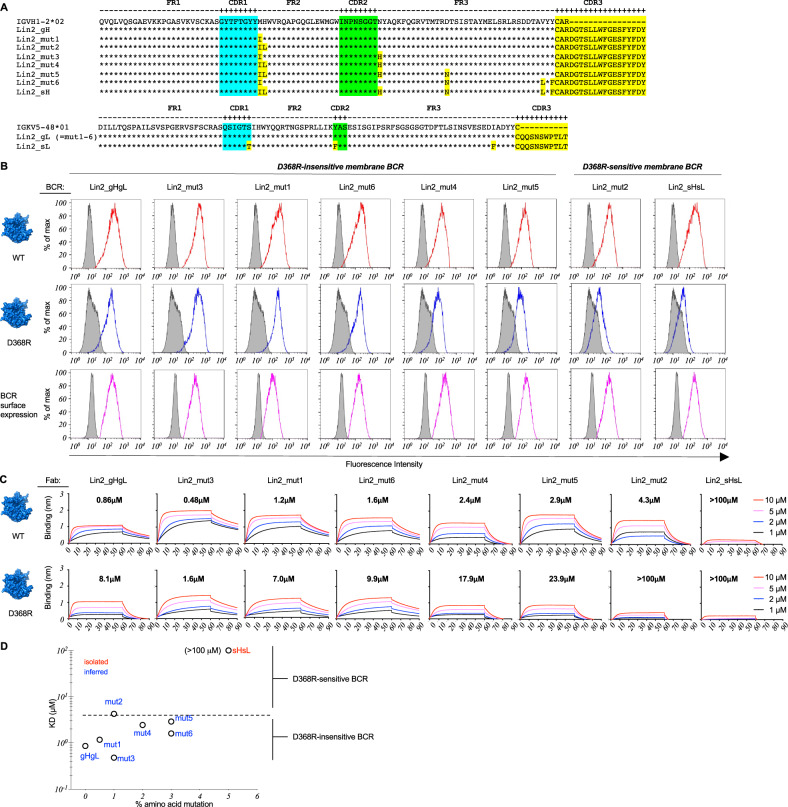
Low affinity is common for germline B cell receptors (BCR) seeding development of broadly neutralizing antibodies (bnAbs) that engage hypervariable viruses, including HIV. Antibody affinity selection is also non-homogenizing, insuring the survival of low affinity B cell clones. To explore whether this provides a natural window for expanding human B cell lineages against conserved vaccine targets, we deploy transgenic mice mimicking human antibody diversity and somatic hypermutation (SHM) and immunize with simple monomeric HIV glycoprotein envelope immunogens. We report an immunization regimen that focuses B cell memory upon the conserved CD4 binding site (CD4bs) through both conventional affinity maturation and reproducible expansion of low affinity BCR clones with public patterns in SHM. In the latter instance, SHM facilitates target acquisition by decreasing binding strength. This suggests that permissive B cell selection enables the discovery of antibody epitopes, in this case an HIV bnAb site.
低亲和力是生发广泛中和抗体(bnAb)的生发细胞受体(BCR)的常见特征,这些 bnAb 能与包括 HIV 在内的高变异病毒结合。抗体亲和力选择也不是同质化的,能确保低亲和力 B 细胞克隆的存活。为了探索这是否为针对保守疫苗靶点的人类 B 细胞谱系扩展提供了一个自然窗口,我们利用模拟人类抗体多样性和体细胞超突变(SHM)的转基因小鼠,并使用简单的 HIV 糖蛋白包膜免疫原进行免疫。我们报告了一种免疫方案,该方案通过常规亲和力成熟和可重复的低亲和力 BCR 克隆扩展,将 B 细胞记忆集中在保守的 CD4 结合位点(CD4bs)上,SHM 中具有公共模式。在后一种情况下,SHM 通过降低结合强度来促进靶标获取。这表明允许性 B 细胞选择能够发现抗体表位,在这种情况下是 HIV bnAb 位点。