Department of General Surgery, The First Medical Center, Chinese PLA General Hospital, Beijing, China.
The Sixth Medical Center, Chinese PLA General Hospital, Beijing, China.
World J Surg Oncol. 2023 Aug 30;21(1):273. doi: 10.1186/s12957-023-03163-x.
Using grip strength as a predictor of nutritional risk and early ambulation for gastrointestinal tumor surgery and determining its critical value have not been reported. This study was designed to explore the influencing factors of early postoperative ambulation ability for patients with gastrointestinal tumors who underwent laparoscopic surgery.
Four-hundred twenty-seven patients with gastrointestinal tumors who underwent laparoscopic surgery at three tertiary A hospitals in Beijing were prospectively enrolled. Subsequently, logistic regression analysis was conducted to determine the independent predictors of early postoperative ambulation. Logistic regression analyses for the different gender were also performed. In addition, the effectiveness of preoperative grip strength measurement in nutritional risk assessment was analyzed by using nutritional risk score 2002 (NRS 2002) as a control.
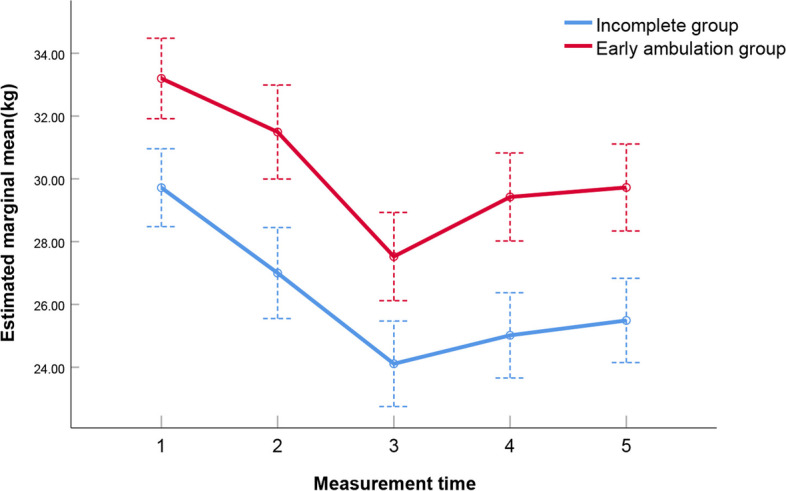
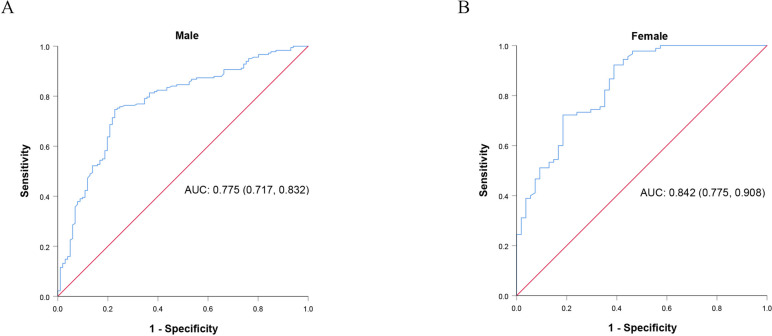
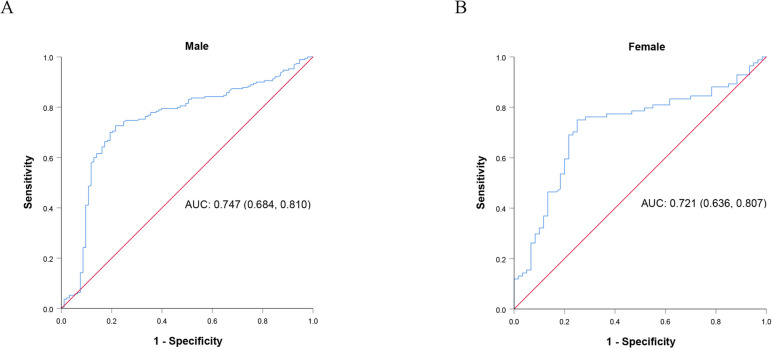
The included cases were comprised of 283 male and 144 female patients, with an age of 59.35 ± 11.70 years. Gender, preoperative grip strength, operative time, and number of indwelling tubes were independent predictors of early postoperative ambulation. In the male group, lower preoperative grip strength and more indwelling tubes were independent risk factors for early postoperative ambulation. In the female group, lower preoperative grip strength and extended operating time were independent risk factors. Moreover, preoperative grip strength (male < 32 kg, female < 21 kg) can be used as a risk predictor for both preoperative nutritional risk and early postoperative ambulation.
As a simple and objective measure of muscle strength, grip strength measurement is expected to be an effective predictor for both early postoperative ambulation ability and nutritional status of patients.
使用握力作为胃肠道肿瘤手术的营养风险和早期活动的预测指标,以及确定其临界值尚未见报道。本研究旨在探讨腹腔镜胃肠肿瘤手术后患者早期术后活动能力的影响因素。
前瞻性纳入北京 3 家三级 A 医院的 427 例腹腔镜胃肠肿瘤手术患者。然后,进行逻辑回归分析以确定腹腔镜胃肠肿瘤手术后患者早期术后活动的独立预测因素。还对不同性别进行了逻辑回归分析。此外,使用营养风险评分 2002(NRS 2002)作为对照,分析术前握力测量在营养风险评估中的有效性。
纳入的病例包括 283 例男性和 144 例女性患者,年龄为 59.35±11.70 岁。性别、术前握力、手术时间和留置管数量是早期术后活动的独立预测因素。在男性组中,较低的术前握力和更多的留置管是早期术后活动的独立危险因素。在女性组中,较低的术前握力和延长的手术时间是独立的危险因素。此外,术前握力(男性<32kg,女性<21kg)可作为术前营养风险和早期术后活动的风险预测因子。
握力测量作为一种简单客观的肌肉力量测量方法,有望成为预测患者术后早期活动能力和营养状况的有效指标。