Nadel Cory M, Wucherer Kristin, Oehler Abby, Thwin Aye C, Basu Koli, Callahan Matthew D, Southworth Daniel R, Mordes Daniel A, Craik Charles S, Gestwicki Jason E
Department of Pharmaceutical Chemistry, University of California San Francisco, San Francisco, CA 94158.
Institute for Neurodegenerative Diseases, University of California San Francisco, San Francisco, CA 94158.
bioRxiv. 2023 Aug 16:2023.08.16.553575. doi: 10.1101/2023.08.16.553575.
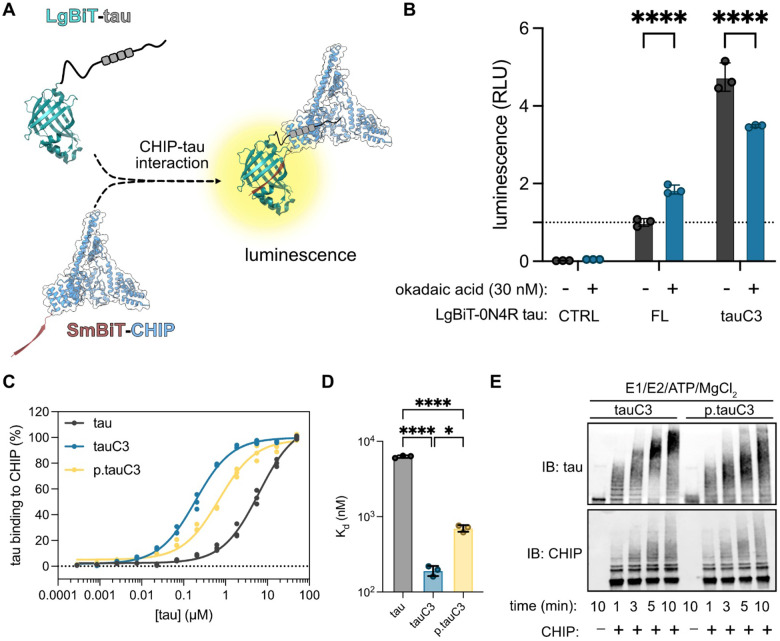
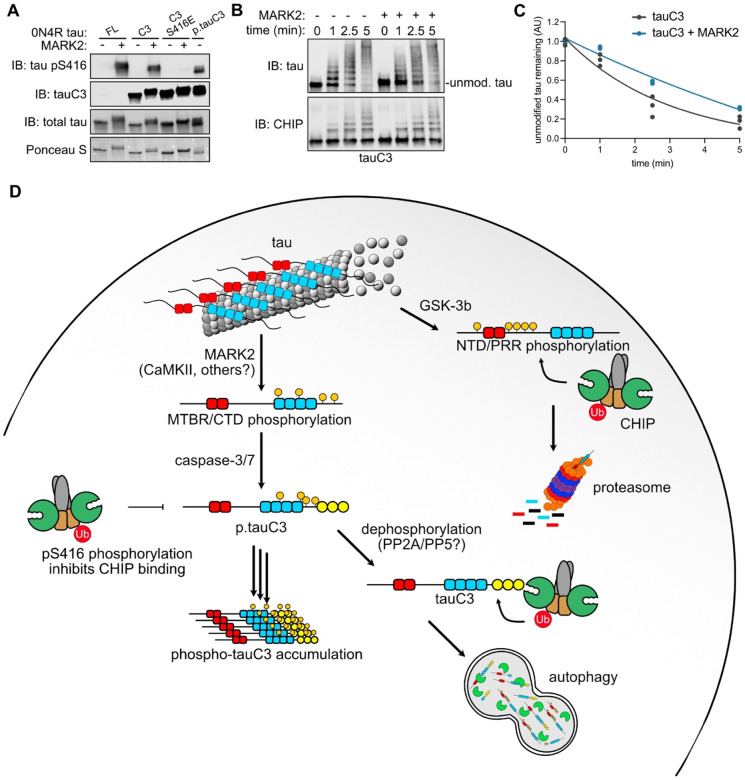
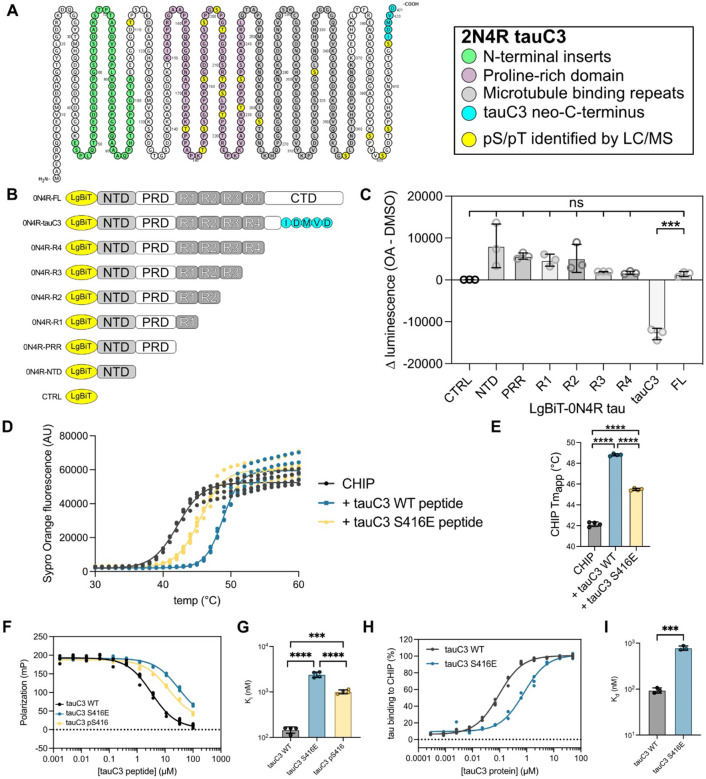
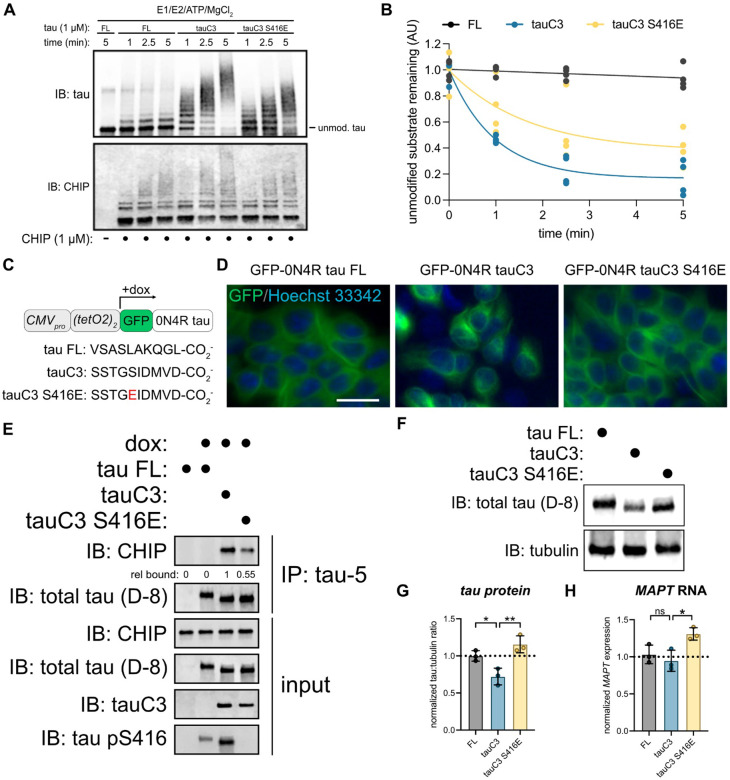
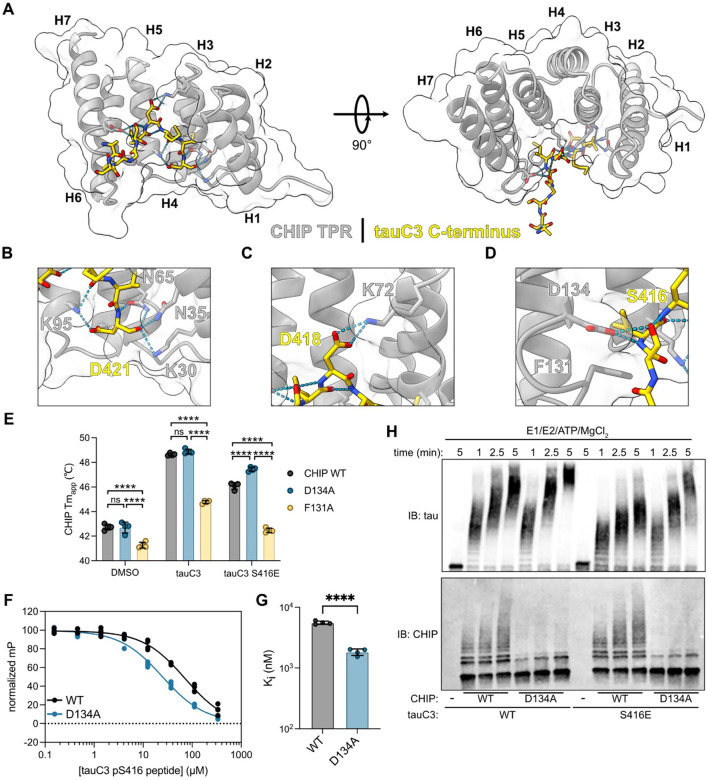
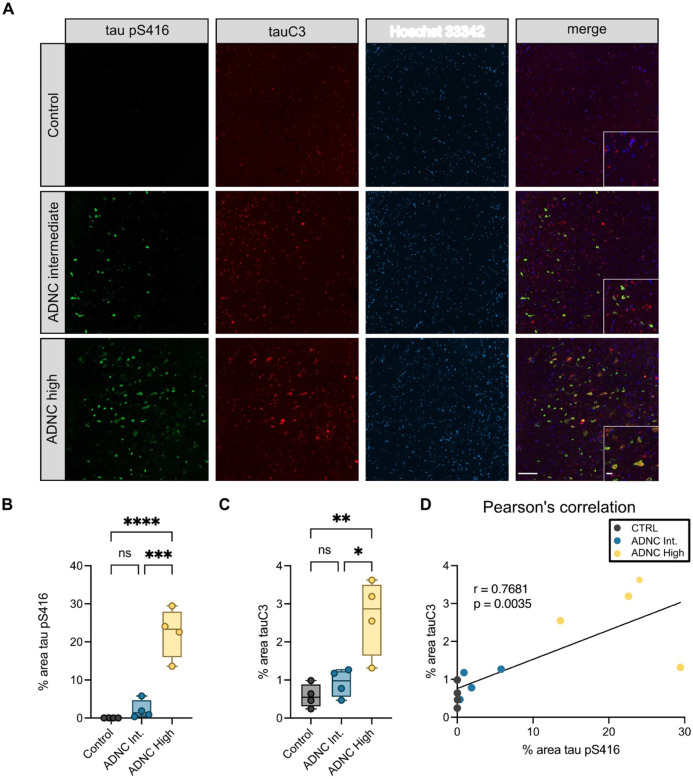
Microtubule-associated protein tau (MAPT/tau) accumulates in a family of neurodegenerative diseases, including Alzheimer's disease (AD). In disease, tau is aberrantly modified by post-translational modifications (PTMs), including hyper-phosphorylation. However, it is often unclear which of these PTMs contribute to tau's accumulation or what mechanisms might be involved. To explore these questions, we focused on a cleaved proteoform of tau (tauC3), which selectively accumulates in AD and was recently shown to be degraded by its direct binding to the E3 ubiquitin ligase, CHIP. Here, we find that phosphorylation of tauC3 at a single residue, pS416, is sufficient to block its interaction with CHIP. A co-crystal structure of CHIP bound to the C-terminus of tauC3 revealed the mechanism of this clash and allowed design of a mutation (CHIP) that partially restores binding and turnover of pS416 tauC3. We find that pS416 is produced by the known AD-associated kinase, MARK2/Par-1b, providing a potential link to disease. In further support of this idea, an antibody against pS416 co-localizes with tauC3 in degenerative neurons within the hippocampus of AD patients. Together, these studies suggest a discrete molecular mechanism for how phosphorylation at a specific site contributes to accumulation of an important tau proteoform.
微管相关蛋白tau(MAPT/tau)在包括阿尔茨海默病(AD)在内的一系列神经退行性疾病中积累。在疾病状态下,tau会发生异常的翻译后修饰(PTM),包括过度磷酸化。然而,通常不清楚这些PTM中的哪些导致了tau的积累,或者可能涉及哪些机制。为了探索这些问题,我们聚焦于tau的一种裂解蛋白形式(tauC3),它在AD中选择性积累,并且最近显示通过直接结合E3泛素连接酶CHIP而被降解。在这里,我们发现tauC3在单个残基pS416处的磷酸化足以阻断其与CHIP的相互作用。CHIP与tauC3 C末端结合的共晶体结构揭示了这种冲突的机制,并允许设计一种突变(CHIP),该突变部分恢复pS416 tauC3的结合和周转。我们发现pS416是由已知的与AD相关的激酶MARK2/Par-1b产生的,这提供了与疾病的潜在联系。进一步支持这一观点的是,针对pS416的抗体与tauC3在AD患者海马体中的退化神经元中共定位。总之,这些研究揭示了一个特定位点的磷酸化如何导致一种重要的tau蛋白形式积累的离散分子机制。