Princess Margaret Cancer Centre, University Health Network, Toronto, ON, Canada; Department of Immunology, University of Toronto, Toronto, ON, Canada.
Princess Margaret Cancer Centre, University Health Network, Toronto, ON, Canada.
Cell Rep. 2023 Sep 26;42(9):113047. doi: 10.1016/j.celrep.2023.113047. Epub 2023 Aug 30.
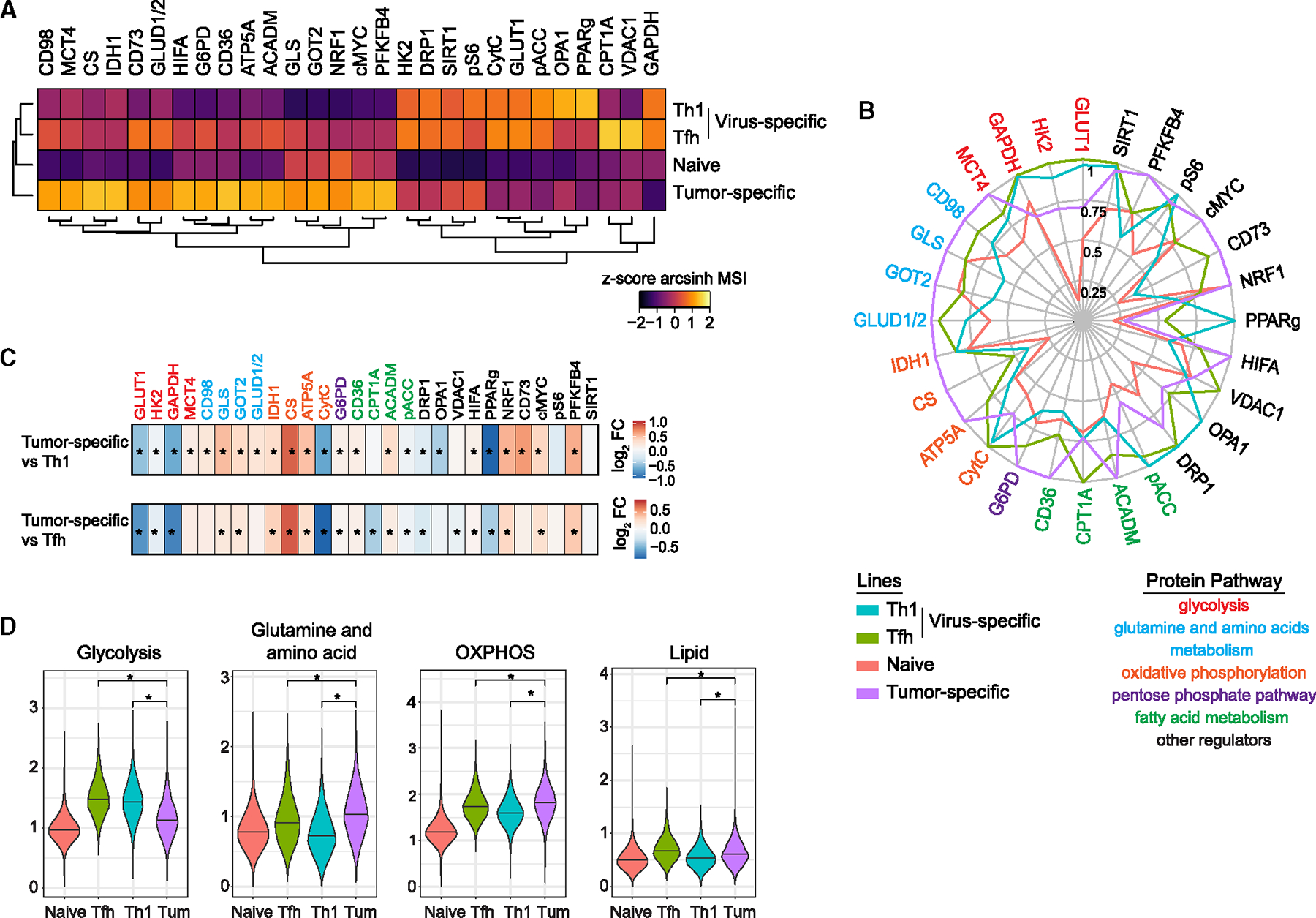
CD4 T cells are central effectors of anti-cancer immunity and immunotherapy, yet the regulation of CD4 tumor-specific T (T) cells is unclear. We demonstrate that CD4 T cells are quickly primed and begin to divide following tumor initiation. However, unlike CD8 T cells or exhaustion programming, CD4 T cell proliferation is rapidly frozen in place by a functional interplay of regulatory T cells and CTLA4. Together these mechanisms paralyze CD4 T cell differentiation, redirecting metabolic circuits, and reducing their accumulation in the tumor. The paralyzed state is actively maintained throughout cancer progression and CD4 T cells rapidly resume proliferation and functional differentiation when the suppressive constraints are alleviated. Overcoming their paralysis established long-term tumor control, demonstrating the importance of rapidly crippling CD4 T cells for tumor progression and their potential restoration as therapeutic targets.
CD4 T 细胞是抗肿瘤免疫和免疫治疗的核心效应器,但 CD4 肿瘤特异性 T(T)细胞的调控尚不清楚。我们证明,在肿瘤起始后,CD4 T 细胞迅速被激活并开始分裂。然而,与 CD8 T 细胞或衰竭程序不同,CD4 T 细胞的增殖被调节性 T 细胞和 CTLA4 的功能相互作用迅速冻结在原地。这些机制共同使 CD4 T 细胞分化瘫痪,重定向代谢途径,并减少其在肿瘤中的积累。在癌症进展过程中,这种瘫痪状态被积极维持,当抑制性限制得到缓解时,CD4 T 细胞迅速恢复增殖和功能分化。克服它们的瘫痪状态确立了长期的肿瘤控制,证明了迅速削弱 CD4 T 细胞对肿瘤进展的重要性,以及它们作为治疗靶点的潜在恢复。