Marek Janina, Hanesch Lorenz, Krabbe Teresa, El Khawanky Nadia, Heidegger Simon, Altomonte Jennifer
Department of Internal Medicine II, Klinikum rechts der Isar, Technical University of Munich, 81675 Munich, Germany.
Department of Medicine III, Klinikum rechts der Isar, Technical University of Munich, 81675 Munich, Germany.
Mol Ther Oncolytics. 2023 Aug 5;30:117-131. doi: 10.1016/j.omto.2023.08.001. eCollection 2023 Sep 21.
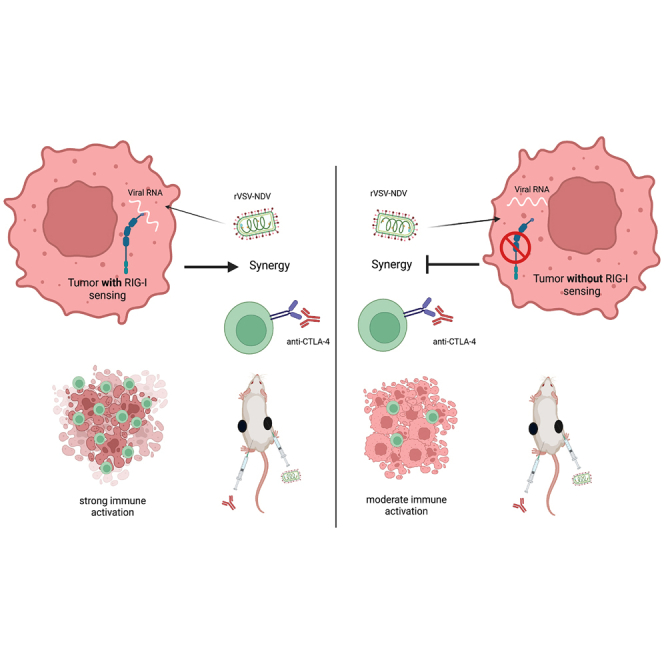
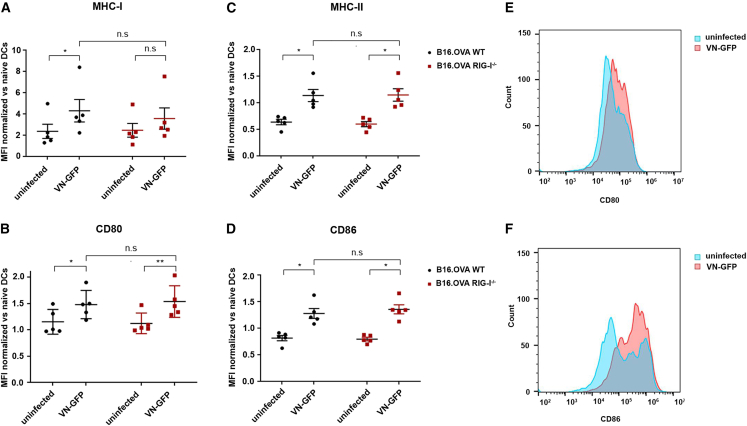
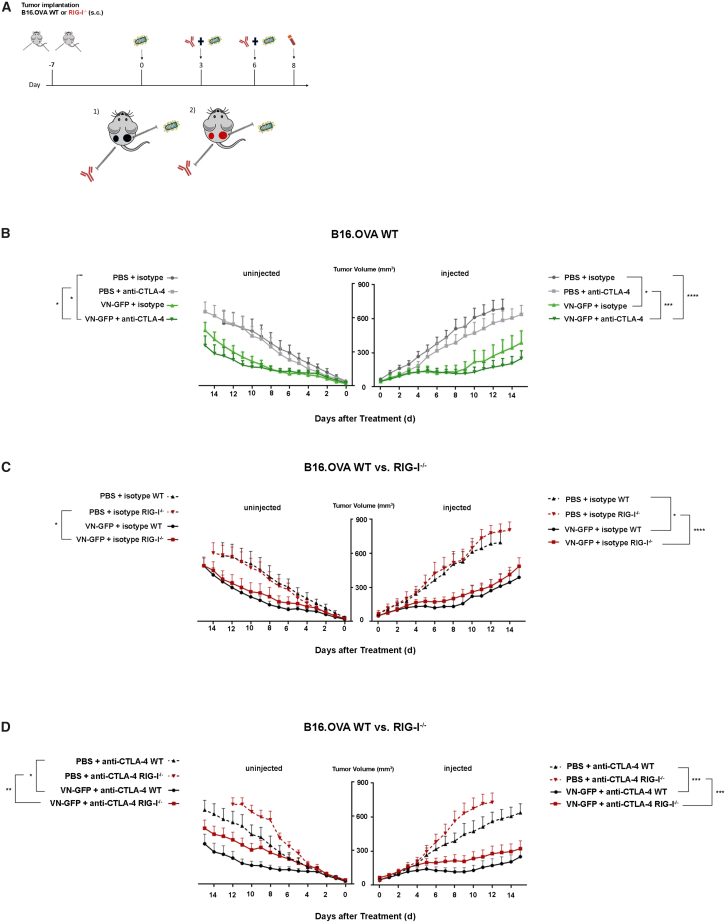
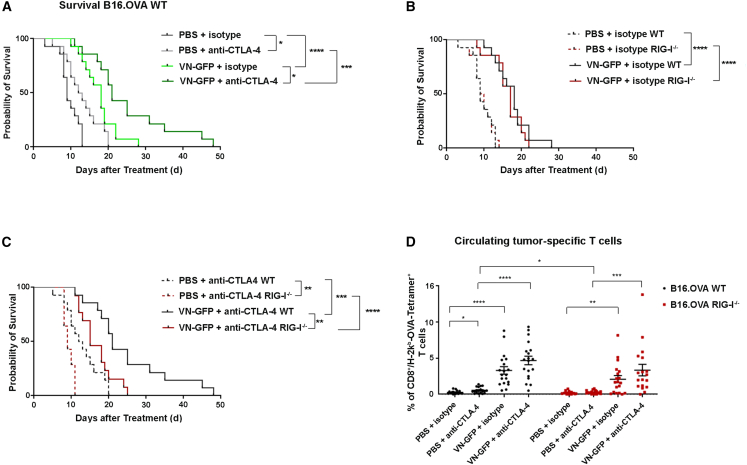
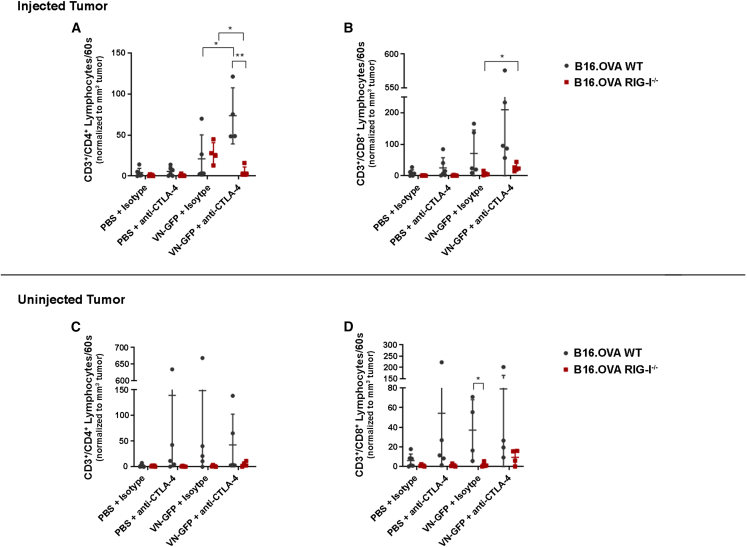
Unraveling the complexities of the tumor microenvironment (TME) and its correlation with responsiveness to immunotherapy has become a main focus in overcoming resistance to such treatments. Targeting tumor-intrinsic retinoic acid-inducible gene-I (RIG-I), a sensor for viral RNA, was shown to transform the TME from an immunogenically "cold" state to an inflamed, "hot" lesion, which we demonstrated previously to be a crucial mediator of the efficacy of immune checkpoint inhibition with anti-cytotoxic T lymphocyte-associated protein 4 (CTLA-4). In this study, we focus on the chimeric oncolytic virus vesicular stomatitis virus (VSV)-Newcastle disease virus (NDV), comprised of genetic components of VSV and NDV, and we investigate its utility to support tumor-intrinsic RIG-I-dependent therapy with anti-CTLA-4. Overall, we demonstrate that treatment with VSV-NDV efficiently delays tumor growth and significantly prolongs survival in a murine model of malignant melanoma, which was further enhanced in combination with anti-CTLA-4. Although the direct oncolytic and pro-inflammatory effects of VSV-NDV therapy were independent of RIG-I activation, the synergism with anti-CTLA-4 therapy and associated activation of tumor-specific T cells was critically dependent on active RIG-I signaling in tumor cells. This work highlights the therapeutic value of utilizing an immune-stimulatory oncolytic virus to sensitize tumors to immune checkpoint inhibition.
揭示肿瘤微环境(TME)的复杂性及其与免疫治疗反应性的相关性已成为克服此类治疗耐药性的主要焦点。靶向肿瘤内在的视黄酸诱导基因-I(RIG-I),一种病毒RNA传感器,已被证明可将TME从免疫原性“冷”状态转变为炎症性“热”病变,我们之前证明这是抗细胞毒性T淋巴细胞相关蛋白4(CTLA-4)免疫检查点抑制疗效的关键介质。在本研究中,我们聚焦于由水泡性口炎病毒(VSV)和新城疫病毒(NDV)的基因成分组成的嵌合溶瘤病毒VSV-NDV,并研究其支持抗CTLA-4的肿瘤内在RIG-I依赖性治疗的效用。总体而言,我们证明在恶性黑色素瘤小鼠模型中,VSV-NDV治疗可有效延迟肿瘤生长并显著延长生存期,与抗CTLA-4联合使用时效果进一步增强。尽管VSV-NDV治疗的直接溶瘤和促炎作用独立于RIG-I激活,但与抗CTLA-4治疗的协同作用以及肿瘤特异性T细胞的相关激活严重依赖于肿瘤细胞中活跃的RIG-I信号传导。这项工作突出了利用免疫刺激溶瘤病毒使肿瘤对免疫检查点抑制敏感的治疗价值。