Muire Preeti J, Lofgren Alicia L, Shiels Stefanie M, Wenke Joseph C
Combat Wound Care, US Army Institute of Surgical Research, JBSA Ft Sam Houston, San Antonio, TX, 78234, USA.
Department of Orthopaedic Surgery and Rehabilitation, Loyola University Medical Center, Maywood, IL, USA.
J Exp Orthop. 2023 Sep 1;10(1):90. doi: 10.1186/s40634-023-00637-5.
The mitochondrial DNA (mtDNA) activated cyclic guanosine monophosphate-adenosine monophosphate synthase-stimulator of interferon genes (cGAS-STING) signaling pathway is a key player in mediating immune responses in autoimmune disorders and cancer. However, its role in severe trauma associated fracture healing is unknown. This study investigated if the cGAS-STING signaling pathway contributes to delayed bone healing in polytrauma (PT) fractures.
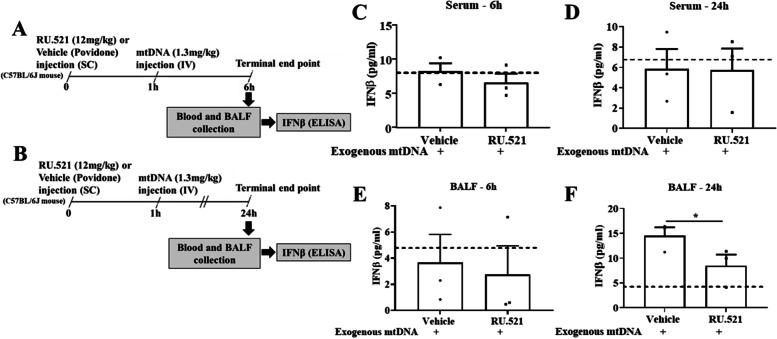
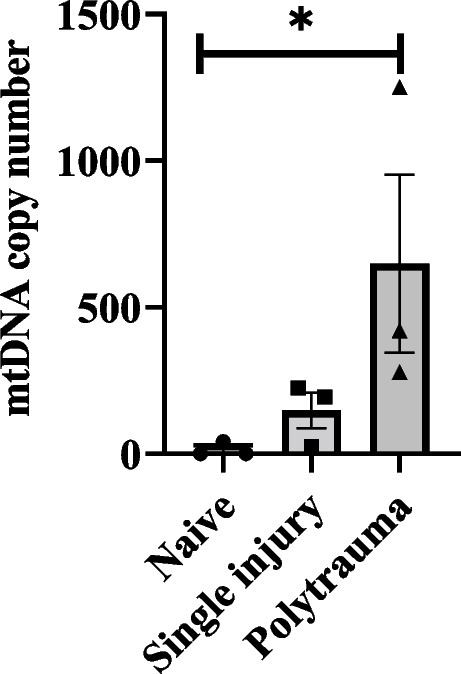
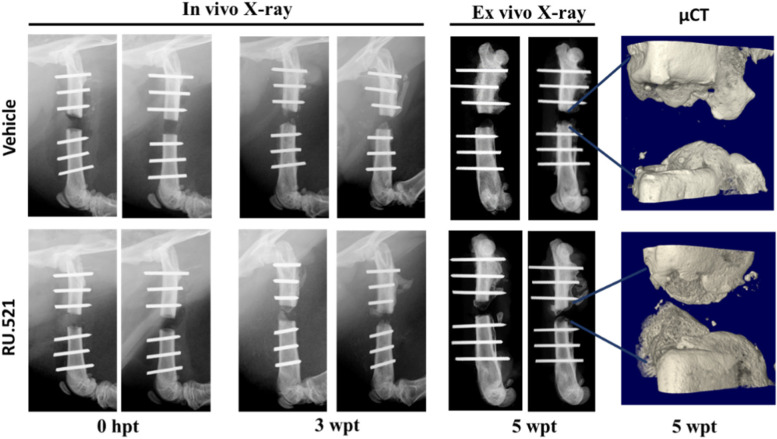
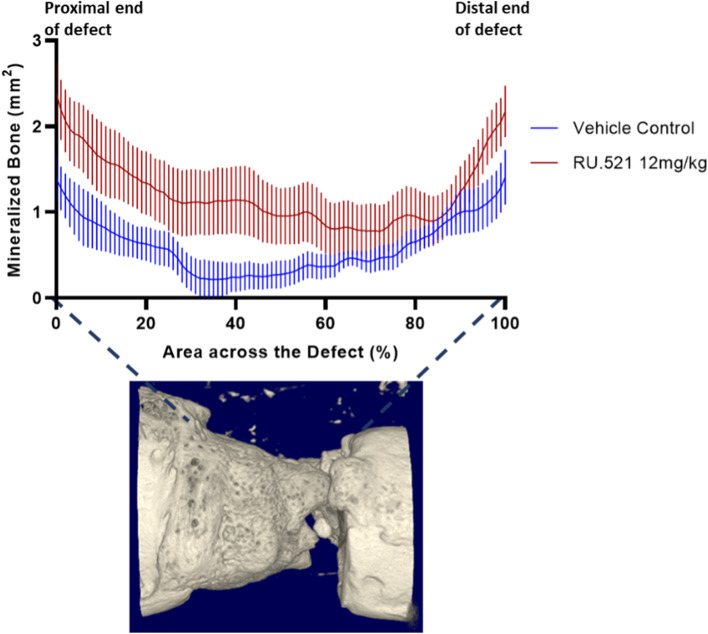
For preliminary analyses, therapeutic dosage of RU.521 (cGAS inhibitor) (n = 2) was determined in C57BL/6 J mice by mass spectrometry, and IFNβ expression levels in serum and bronchioalveolar fluid (BALF) at 6 and 24 h (h) in RU.521/vehicle + mtDNA injected mice (n = 3/treatment and time point) was measured by ELISA. In the main study, plasma mtDNA was quantified by qPCR in a clinically relevant delayed fracture healing PT rat model with burn injury, blunt trauma, and a femoral fracture at 3 h post-trauma (hpt). Next, PT rats received either RU.521 (12 mg/kg in povidone; n = 8) or vehicle (povidone only; n = 5) immediately after injury and were followed up for 5 weeks post-trauma to assess bone regeneration by radiography and histology.
IFNβ levels were significantly decreased only at 24 h in BALF of RU.521 treated mice. At 3hpt mtDNA was significantly elevated in PT rats compared to rats without injury. When treated with RU.521, PT rats showed improvement in bone healing compared to vehicle control PT rats.
These data reveal that the cGAS-STING signaling pathway influences trauma-induced delayed bone healing. However, further evaluation of this pathway at the cellular and molecular levels to augment PT associated detrimental effects is needed.
线粒体DNA(mtDNA)激活的环磷酸鸟苷-磷酸腺苷合成酶-干扰素基因刺激因子(cGAS-STING)信号通路是介导自身免疫性疾病和癌症免疫反应的关键因素。然而,其在严重创伤相关骨折愈合中的作用尚不清楚。本研究调查了cGAS-STING信号通路是否会导致多发伤(PT)骨折的骨愈合延迟。
在初步分析中,通过质谱法确定C57BL/6 J小鼠中RU.521(cGAS抑制剂)的治疗剂量(n = 2),并通过酶联免疫吸附测定法测量在注射RU.521/赋形剂 + mtDNA的小鼠中6小时和24小时(h)时血清和支气管肺泡灌洗液(BALF)中的IFNβ表达水平(n = 3/治疗组和时间点)。在主要研究中,通过定量聚合酶链反应(qPCR)对具有烧伤、钝性创伤和创伤后3小时(hpt)股骨骨折的临床相关延迟骨折愈合PT大鼠模型中的血浆mtDNA进行定量。接下来,PT大鼠在受伤后立即接受RU.521(12 mg/kg溶于聚维酮;n = 8)或赋形剂(仅聚维酮;n = 5)治疗,并在创伤后随访5周,通过放射学和组织学评估骨再生情况。
仅在接受RU.521治疗的小鼠的BALF中,24小时时IFNβ水平显著降低。与未受伤的大鼠相比,PT大鼠在3hpt时mtDNA显著升高。与赋形剂对照PT大鼠相比,用RU.521治疗的PT大鼠的骨愈合情况有所改善。
这些数据表明,cGAS-STING信号通路影响创伤诱导的延迟骨愈合。然而,需要在细胞和分子水平上对该通路进行进一步评估,以增强PT相关的有害影响。