Oluwalomola Oluwole Victor, Briskin Emily, Olaleye Michael, Samuel Joseph, Oluyide Bukola, Sherlock Mark, Adetunji Adeniyi Semiyu, Amirtharajah Mohana
Medecins Sans Frontieres, Sokoto, Nigeria.
Medecins Sans Frontieres, Epicentre, Paris, France.
PLOS Glob Public Health. 2023 Sep 1;3(9):e0001995. doi: 10.1371/journal.pgph.0001995. eCollection 2023.
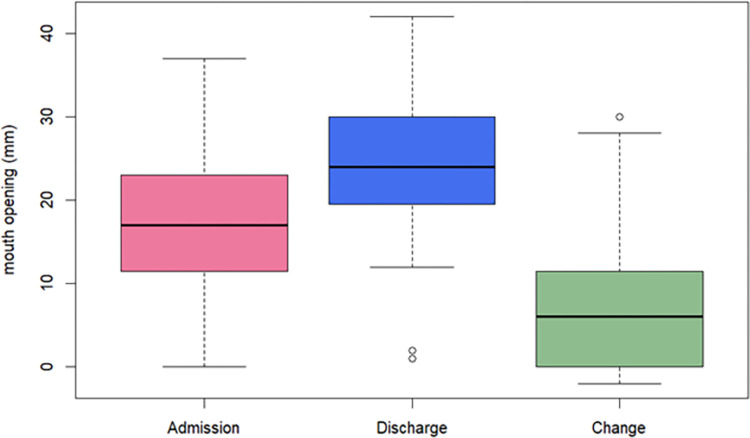
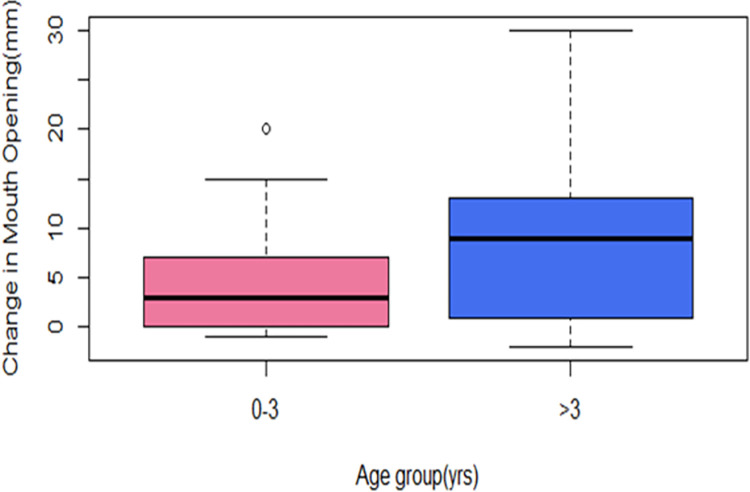
Noma is a rapidly progressing infection of the oral cavity, which can cause the disintegration of the cheek, nose and eye, in under a week. One of the most disabling sequelae is trismus, the restriction of mouth opening, which results in difficulties in speech, mastication, social feeding habits and maintenance of oral hygiene. Restriction of mouth opening among noma patients mostly begins during the transition between World Health Organisation (WHO) stage 3 (gangrene) and stage 4 (scarring) of the disease. This study aims to describe the impact of physiotherapy in noma patients hospitalised with stages 3 and 4 of the disease and to identify factors that influence change in mouth opening of noma patients. This study is a retrospective analysis of routinely collected data from patients admitted at Noma Children Hospital, Sokoto, Northwest Nigeria between 1 May 2018 and 1 May 2020. Eligible patients included stage 3 and 4 noma patients who had not undergone any surgical reconstruction or trismus release surgery but received physiotherapy assessment and treatment during initial hospitalization. Factors associated with a change in mouth opening were identified using paired t-test analysis, bivariate and multivariate analyses. The mean difference in the mouth opening from admission to discharge was 6.9mm (95% CI: 5.4 to 8.3, p < 0.0001). Increased number of physiotherapy sessions and patient age above three years were significant predictors of improvement in mouth opening (p-value 0.011, 0.001 respectively). Physiotherapy treatment received within an adequate number of physiotherapy sessions for stage 3 and 4 noma patients during the period of the first hospitalization is important and results in a significant increase in mouth opening. Hence, noma patients at these stages should routinely undergo physiotherapy as part of a holistic approach to treatment.
坏疽性口炎是一种进展迅速的口腔感染,可在一周内导致脸颊、鼻子和眼睛溃烂。最致残的后遗症之一是牙关紧闭,即张口受限,这会导致言语、咀嚼、社交进食习惯及口腔卫生维护方面的困难。坏疽性口炎患者的张口受限大多始于世界卫生组织(WHO)疾病分期3期(坏疽)和4期(瘢痕形成)之间的过渡阶段。本研究旨在描述物理治疗对处于疾病3期和4期并住院治疗的坏疽性口炎患者的影响,并确定影响坏疽性口炎患者张口度变化的因素。本研究是一项回顾性分析,分析了2018年5月1日至2020年5月1日期间在尼日利亚西北部索科托坏疽性口炎儿童医院收治患者的常规收集数据。符合条件的患者包括处于3期和4期的坏疽性口炎患者,这些患者未接受任何外科重建或牙关紧闭松解手术,但在初次住院期间接受了物理治疗评估和治疗。使用配对t检验分析、双变量和多变量分析确定与张口度变化相关的因素。入院至出院时张口度的平均差异为6.9毫米(95%置信区间:5.4至8.3,p<0.0001)。物理治疗疗程数增加和患者年龄超过三岁是张口度改善的显著预测因素(p值分别为0.011、0.001)。在初次住院期间,为处于3期和4期的坏疽性口炎患者提供足够疗程的物理治疗很重要,且会使张口度显著增加。因此,处于这些阶段的坏疽性口炎患者应作为整体治疗方法的一部分常规接受物理治疗。