Department of Endocrinology and Metabolism, Shanghai Ninth People's Hospital, Shanghai JiaoTong University School of Medicine, Shanghai, 201999, China.
School of Graduate, Bengbu Medical College, Bengbu, Anhui, 233030, China.
Cell Death Dis. 2023 Sep 2;14(9):584. doi: 10.1038/s41419-023-06095-2.
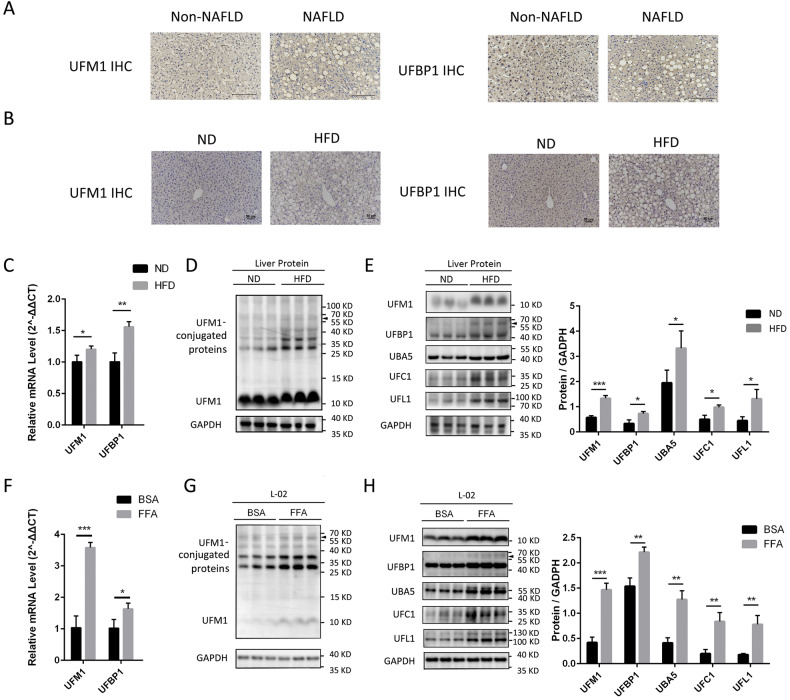
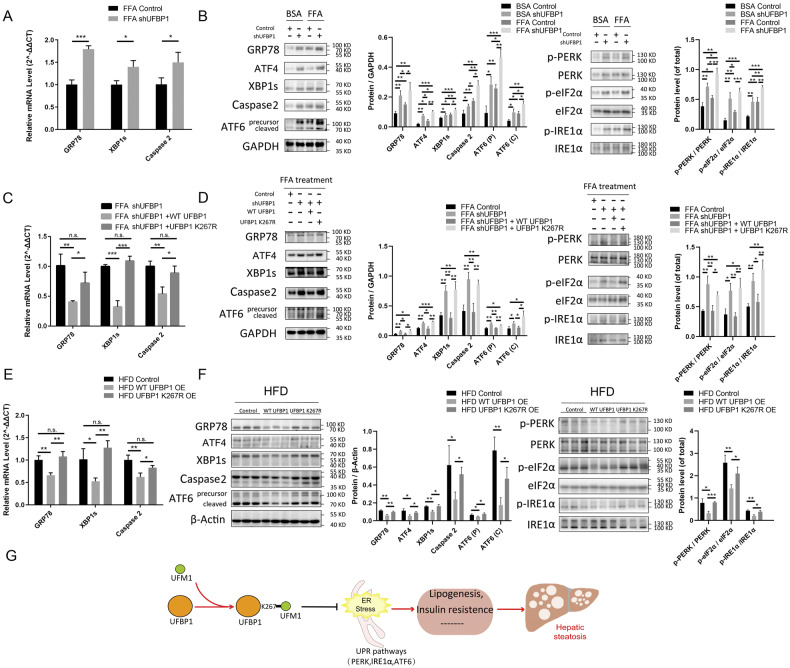
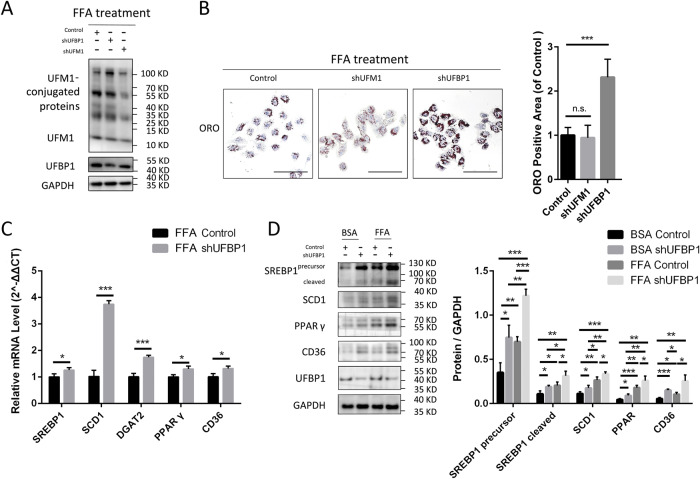
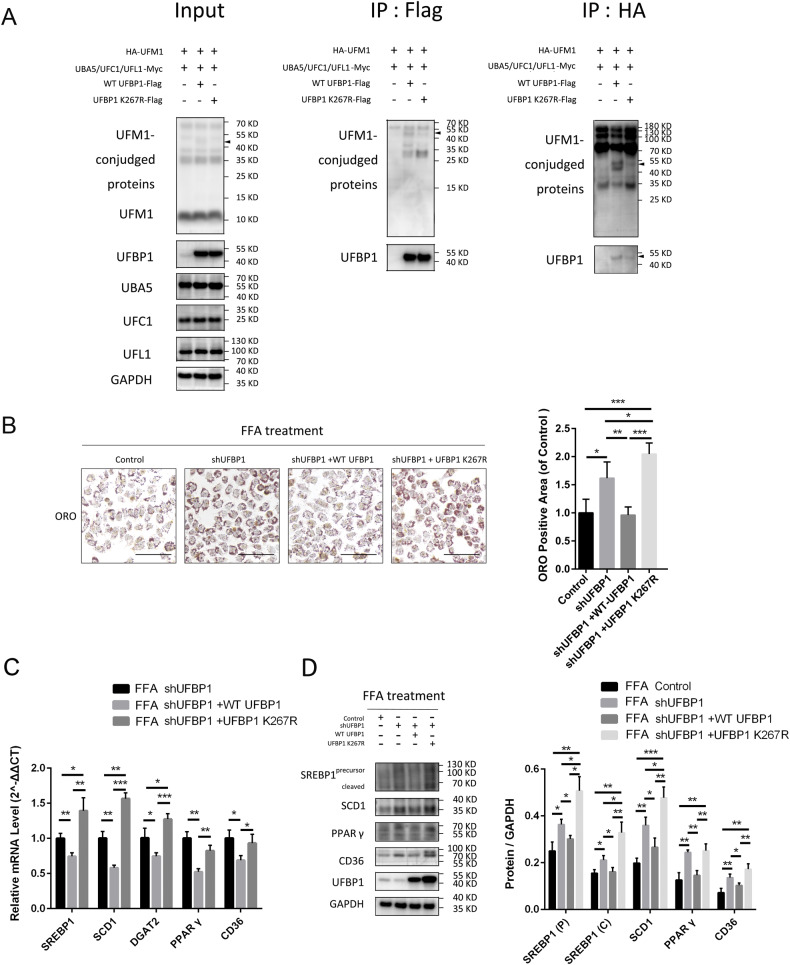
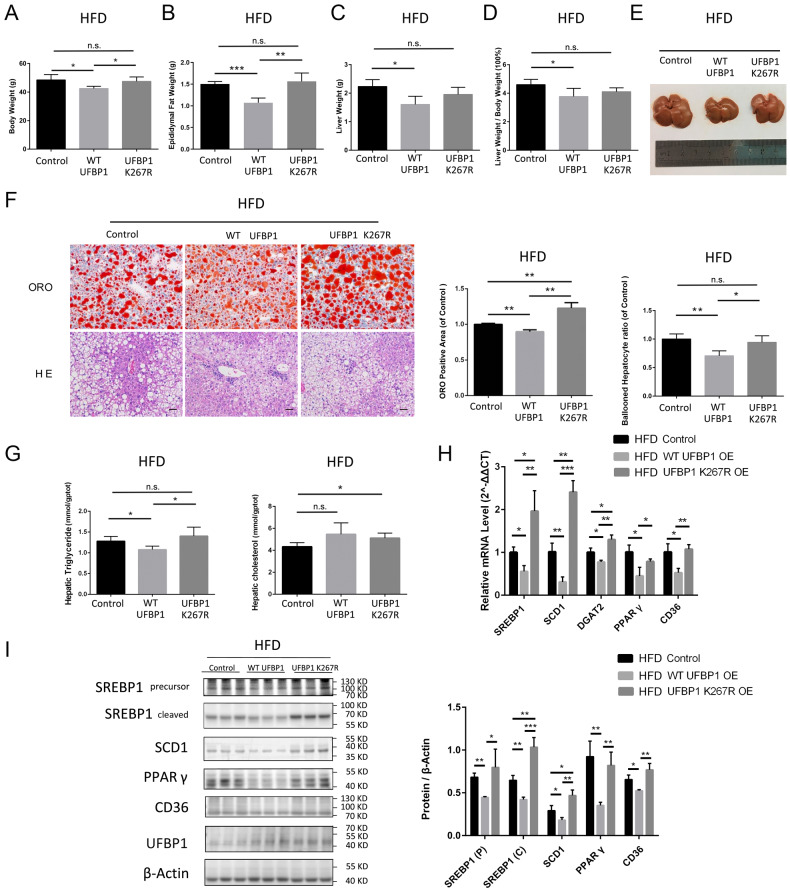
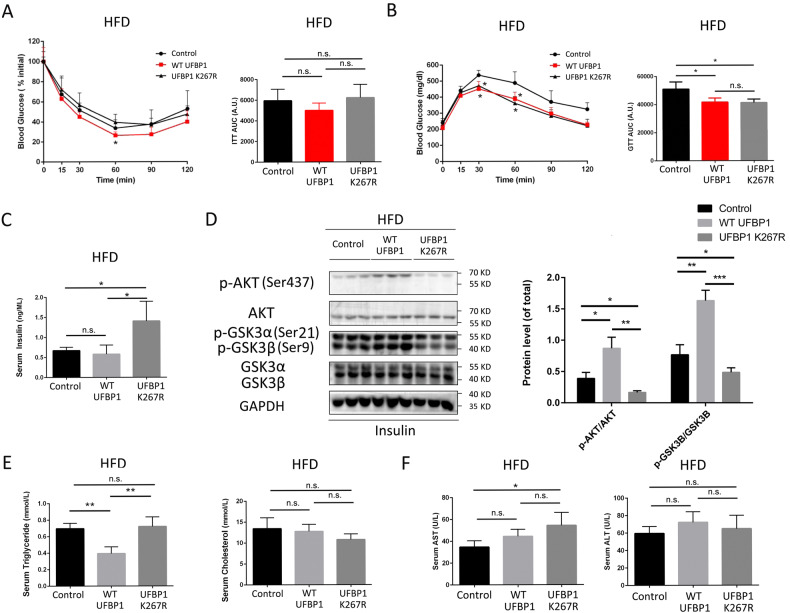
Non-alcoholic fatty liver disease (NAFLD) is the most common liver disease characterized by lipid accumulation and endoplasmic reticulum (ER) stress, while effective therapies targeting the specific characteristics of NAFLD are limited. Ufmylation is a newly found post-translational modification process that involves the attachment of the Ubiquitin-fold modifier 1 (UFM1) protein to its substrates via ufmylation modification system. Ufmylation regulates ER stress via modifying UFM1 binding protein 1 (UFBP1), suggesting a potential role for ufmylation in NAFLD pathogenesis. However, the precise role of ufmylation in NAFLD remains unclear. Herein, we aim to elucidate the impact of ufmylation on UFBP1 in NAFLD and explore the underlying mechanisms involved. We observed increased expression of UFM1-conjugated proteins and ufmylation modification system components in livers with steatosis derived from NAFLD patients and NAFLD models. Upregulation of ufmylation on hepatic proteins appeared to be an adaptive response to hepatic ER stress in NAFLD. In vitro, knocking down UFBP1 resulted in increased lipid accumulation and lipogenesis in hepatocytes treated with free fatty acids (FFA), which could be rescued by wild-type UFBP1 (WT UFBP1) but not by a mutant form of UFBP1 lacking the main ufmylation site lys267 (UFBP1 K267R). In vivo, ufmylation on UFBP1 ameliorated obesity, hepatic steatosis, hepatic lipogenesis, dyslipidemia, insulin resistance and liver damage in mice with NAFLD induced by a high fat diet (HFD). We also demonstrated that the downregulation of UFBP1 induced ER stress, whereas the reintroduction or overexpression of UFBP1 alleviated ER stress in a manner dependent on ufmylation in NAFLD. This mechanism could be responsible for the amelioration of aberrant hepatic lipogenesis and insulin resistance in NAFLD. Our data reveal a protective role of ufmylation on UFBP1 against NAFLD and offer a specific target for NAFLD treatment.
非酒精性脂肪性肝病(NAFLD)是最常见的肝脏疾病,其特征为脂质堆积和内质网(ER)应激,而针对 NAFLD 特定特征的有效治疗方法有限。泛素样修饰(ufmylation)是一种新发现的翻译后修饰过程,涉及通过 ufmylation 修饰系统将泛素样修饰物 1(UFM1)蛋白连接到其底物上。ufmylation 通过修饰 UFM1 结合蛋白 1(UFBP1)来调节 ER 应激,表明 ufmylation 在 NAFLD 发病机制中可能具有潜在作用。然而,ufmylation 在 NAFLD 中的确切作用尚不清楚。本文旨在阐明 ufmylation 对 NAFLD 中 UFBP1 的影响,并探讨其涉及的潜在机制。我们观察到,来自 NAFLD 患者和 NAFLD 模型的脂肪变性肝脏中 UFM1 缀合蛋白和 ufmylation 修饰系统成分的表达增加。NAFLD 中肝脏蛋白上 ufmylation 的上调似乎是对 ER 应激的一种适应性反应。在体外,用游离脂肪酸(FFA)处理时,敲低 UFBP1 会导致肝细胞中脂质堆积和脂肪生成增加,而野生型 UFBP1(WT UFBP1)可以挽救,但缺乏主要 ufmylation 位点赖氨酸 267 的突变形式 UFBP1(UFBP1 K267R)则不能挽救。在体内,ufmylation 对 UFBP1 的修饰改善了高脂肪饮食(HFD)诱导的 NAFLD 小鼠的肥胖、肝脂肪变性、肝脂肪生成、血脂异常、胰岛素抵抗和肝损伤。我们还证明,UFBP1 的下调诱导 ER 应激,而 UFBP1 的再引入或过表达以依赖于 ufmylation 的方式减轻了 ER 应激。这种机制可能是改善 NAFLD 中异常肝脂肪生成和胰岛素抵抗的原因。我们的数据揭示了 ufmylation 对 UFBP1 的保护作用可抵抗 NAFLD,并为 NAFLD 的治疗提供了一个特定的靶点。