Abdi Mohammad Hossein, Zamiri Bita, Pazuki Gholamreza, Sardari Soroush, Pearson Christopher E
Department of Chemical Engineering, Amirkabir University of Technology (Tehran Polytechnic), Tehran, Iran.
Department of Chemical Engineering, Amirkabir University of Technology (Tehran Polytechnic), Tehran, Iran.
J Biol Chem. 2023 Oct;299(10):105202. doi: 10.1016/j.jbc.2023.105202. Epub 2023 Sep 1.
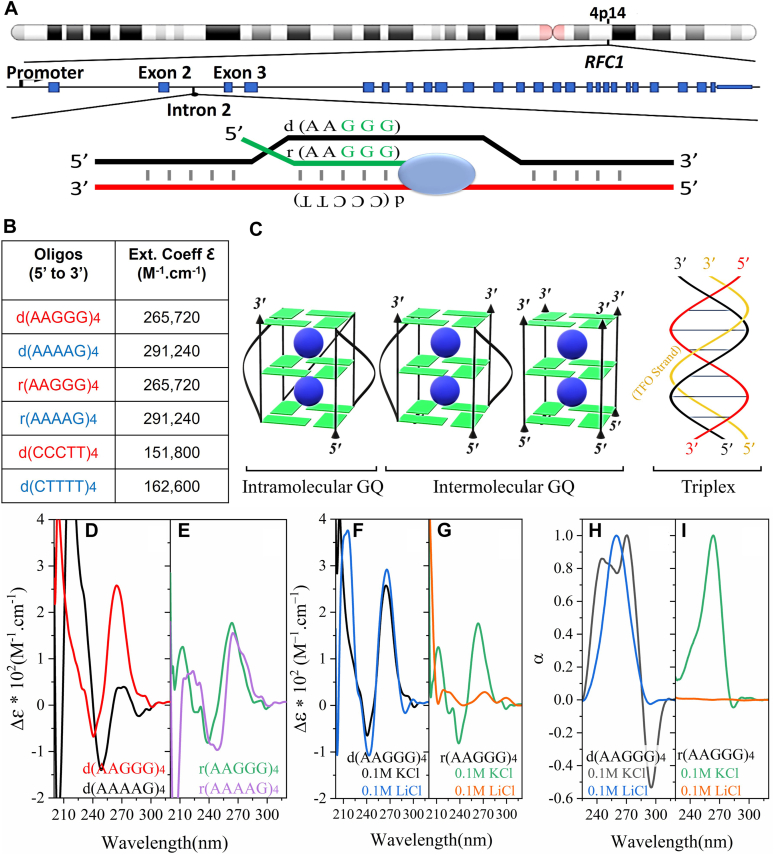
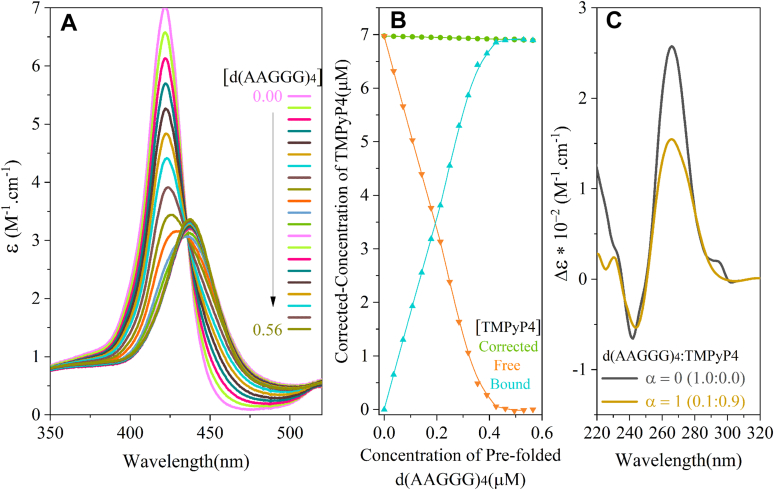
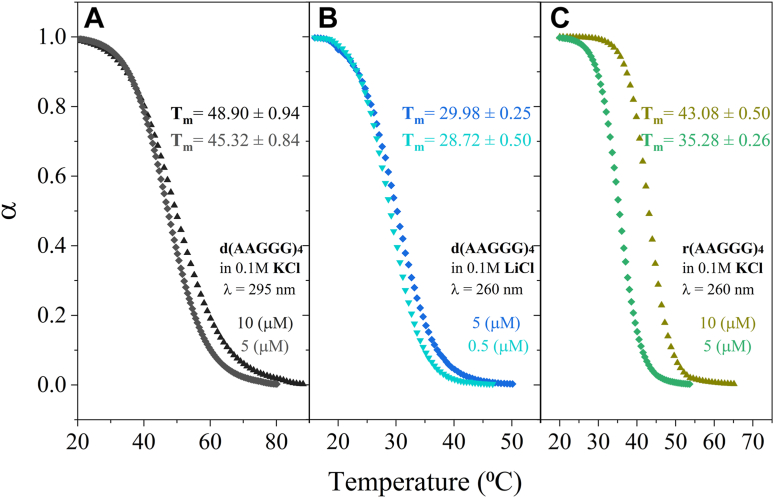
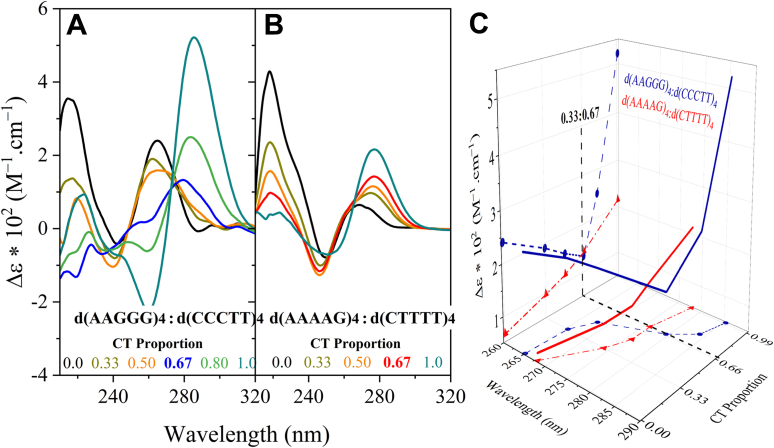
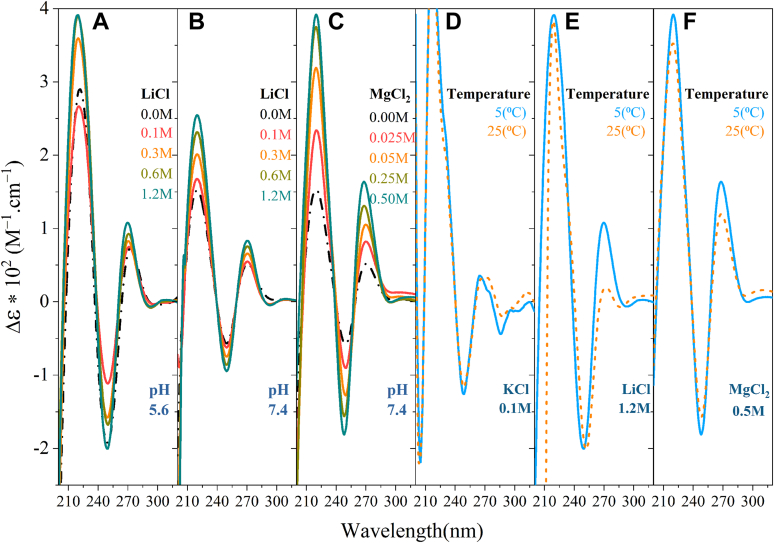
Biallelic expansions of various tandem repeat sequence motifs are possible in RFC1 (replication factor C subunit 1), encoding the DNA replication/repair protein RFC1, yet only certain repeat motifs cause cerebellar ataxia, neuropathy, and vestibular areflexia syndrome (CANVAS). CANVAS presents enigmatic puzzles: The pathogenic path for CANVAS neither is known nor is it understood why some, but not all expanded, motifs are pathogenic. The most common pathogenic repeat is (AAGGG)n•(CCCTT)n, whereas (AAAAG)n•(CTTTT)n is the most common nonpathogenic motif. While both intronic motifs can be expanded and transcribed, only r(AAGGG)n is retained in the mutant RFC1 transcript. We show that only the pathogenic forms unusual nucleic acid structures. Specifically, DNA and RNA of the pathogenic d(AAGGG)4 and r(AAGGG)4 form G-quadruplexes in potassium solution. Nonpathogenic repeats did not form G-quadruplexes. Triple-stranded structures are formed by the pathogenic motifs but not by the nonpathogenic motifs. G- and C-richness of the pathogenic strands favor formation of G•G•G•G-tetrads and protonated C+-G Hoogsteen base pairings, involved in quadruplex and triplex structures, respectively, stabilized by increased hydrogen bonds and pi-stacking interactions relative to A-T Hoogsteen pairs that could form by the nonpathogenic motif. The ligand, TMPyP4, binds the pathogenic quadruplexes. Formation of quadruplexes and triplexes by pathogenic repeats supports toxic-DNA and toxic-RNA modes of pathogenesis at the RFC1 gene and the RFC1 transcript. Our findings with short repeats provide insights into the disease specificity of pathogenic repeat motif sequences and reveal nucleic acid structural features that may be pathogenically involved and targeted therapeutically.
编码DNA复制/修复蛋白RFC1的RFC1基因(复制因子C亚基1)中各种串联重复序列基序可能发生双等位基因扩增,但只有某些重复基序会导致小脑共济失调、神经病变和前庭反射消失综合征(CANVAS)。CANVAS存在一些令人费解的问题:CANVAS的致病途径尚不清楚,也不明白为什么有些(而非全部)扩增基序具有致病性。最常见的致病重复序列是(AAGGG)n•(CCCTT)n,而(AAAAG)n•(CTTTT)n是最常见的非致病基序。虽然这两种内含子基序都可以扩增并转录,但只有r(AAGGG)n保留在突变型RFC1转录本中。我们发现只有致病形式会形成异常核酸结构。具体而言,致病的d(AAGGG)4和r(AAGGG)4的DNA和RNA在钾溶液中形成G-四链体。非致病重复序列不形成G-四链体。致病基序形成三链结构,而非致病基序则不形成。致病链的富含G和C有利于形成G•G•G•G-四联体和质子化C+-G Hoogsteen碱基对,分别参与四链体和三链体结构,相对于非致病基序可能形成的A-T Hoogsteen对,通过增加的氢键和π-堆积相互作用得以稳定。配体TMPyP4与致病四链体结合。致病重复序列形成四链体和三链体支持了RFC1基因和RFC1转录本的毒性DNA和毒性RNA致病模式。我们对短重复序列的研究结果为致病重复基序序列的疾病特异性提供了见解,并揭示了可能与致病相关且可作为治疗靶点的核酸结构特征。