Endocrinology and Metabolism Research Center, Nemazee Hospital, Shiraz University of Medical Sciences, Shiraz, 71345-1414, Iran.
J Med Case Rep. 2023 Sep 6;17(1):400. doi: 10.1186/s13256-023-04042-5.
Hypercalcemia of malignancy, as a paraneoplastic syndrome, is the most common metabolic disorder that accounts for 30% of malignancies and usually has a poor prognosis. Neuroendocrine tumors are uncommon and arise from neuroendocrine cells throughout the body. Actually, paraneoplastic hypercalcemia in neuroendocrine tumors is unusual and mostly associated with parathyroid hormone-related protein (PTHrP) secretion.
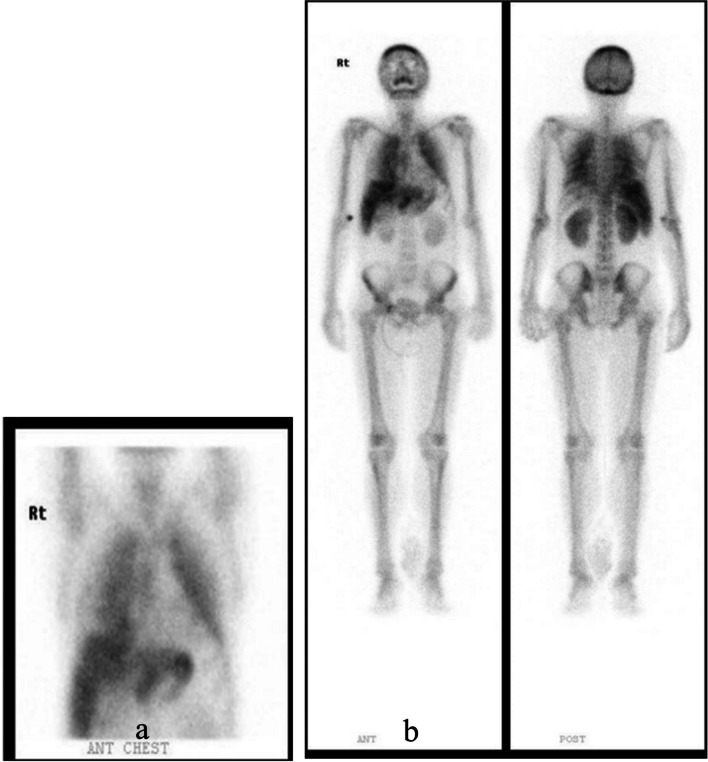
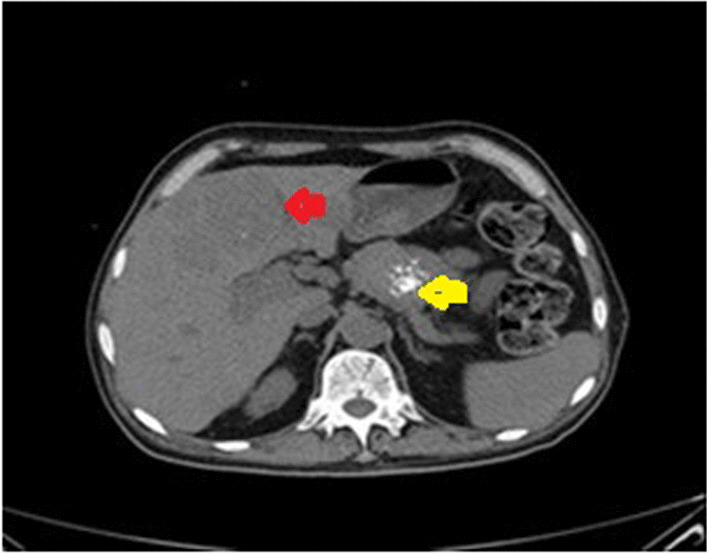
We report a 51-year-old Iranian man who presented with nausea, vomiting, and significant weight loss for 1 month. Laboratory data revealed calcium of 26 mg/dl, accompanied by low level of PTH. Octreotide scan revealed a large donut-shaped octreotide avid lesion in the epigastric region at the right side of the mid-abdomen, with multiple varying size foci of abnormally increased radiotracer uptake in the epigastric region and both lobes of the liver. Endoscopic ultrasonography demonstrated a large heterogeneous mass lesion with irregular outline and good demarcation in the body of the pancreas with diffuse foci of calcification. Percutaneous biopsy of the liver mass demonstrated a well-differentiated neuroendocrine tumor (low grade) confirmed by immunohistochemistry with strongly positive chromogranin and synaptophysin stain. Hypercalcemia was treated with hydration, few sessions of hemodialysis, calcitonin, and denosumab injection. However, the patient developed symptomatic hypocalcemia. Oncology consultation led to prescription of long-acting octreotide 30 mg monthly and everolimus daily.
Pancreatic neuroendocrine tumor could lead to malignant hypercalcemia; secretion of PTHrP is the most common cause, and signs and symptoms are usually milder than paraneoplastic syndrome due to hematologic and solid tumor. Generally, survival is better; however, its treatment is challenging, and primary debulking surgery is often required. A team approach to management is important at all points.
恶性肿瘤高钙血症是一种副瘤综合征,是最常见的代谢紊乱,占恶性肿瘤的 30%,通常预后较差。神经内分泌肿瘤罕见,起源于全身各处的神经内分泌细胞。实际上,神经内分泌肿瘤的副瘤性高钙血症并不常见,主要与甲状旁腺激素相关蛋白(PTHrP)分泌有关。
我们报告了一位 51 岁的伊朗男性,他因恶心、呕吐和 1 个月的显著体重减轻而就诊。实验室数据显示血钙为 26mg/dl,同时伴有低水平的甲状旁腺激素。奥曲肽扫描显示在中腹部右侧上腹部有一个大的甜甜圈状奥曲肽活性病变,在上腹部和肝脏的两个叶有多个大小不一的异常放射性示踪剂摄取增加的焦点。内镜超声检查显示胰腺体部有一个大的混杂性肿块病变,轮廓不规则,边界良好,伴有弥漫性钙化灶。肝肿块的经皮活检显示为分化良好的神经内分泌肿瘤(低级别),免疫组化染色强阳性嗜铬粒蛋白和突触素染色证实。高钙血症采用水化、几次血液透析、降钙素和地舒单抗注射治疗。然而,患者出现了症状性低钙血症。肿瘤学咨询导致开出处方:每月长效奥曲肽 30mg 和依维莫司每日一次。
胰腺神经内分泌肿瘤可导致恶性高钙血症;PTHrP 的分泌是最常见的原因,由于血液系统和实体肿瘤,其症状和体征通常比副瘤综合征更轻微。一般来说,预后较好;然而,其治疗具有挑战性,通常需要进行原发性减瘤手术。在各个方面都需要采用团队方法进行管理。