Zhuang Yixuan, Zhang Fan, Xu Yue, He Lifang, Huang Wenhe, Hong Chaoqun, Cui Yukun
Guangdong Provincial Key Laboratory for Breast Cancer Diagnosis and Treatment, Cancer Hospital of Shantou University Medical College, Shantou, Guangdong, China.
Department of Pathology, Cancer Hospital of Shantou University Medical College, Shantou, Guangdong, China.
Front Oncol. 2023 Aug 15;13:1067179. doi: 10.3389/fonc.2023.1067179. eCollection 2023.
Neoadjuvant anthracycline-based chemotherapy (NAC) is a major regimen for the treatment of local advanced breast cancer (LABC), while resistance to NAC remains a paramount clinical obstacle. To investigate the role of heat shock protein 27 (Hsp27) and/or topoisomerase IIα (TopoIIα) in LABC patients treated with NAC, we performed this retrospective study.
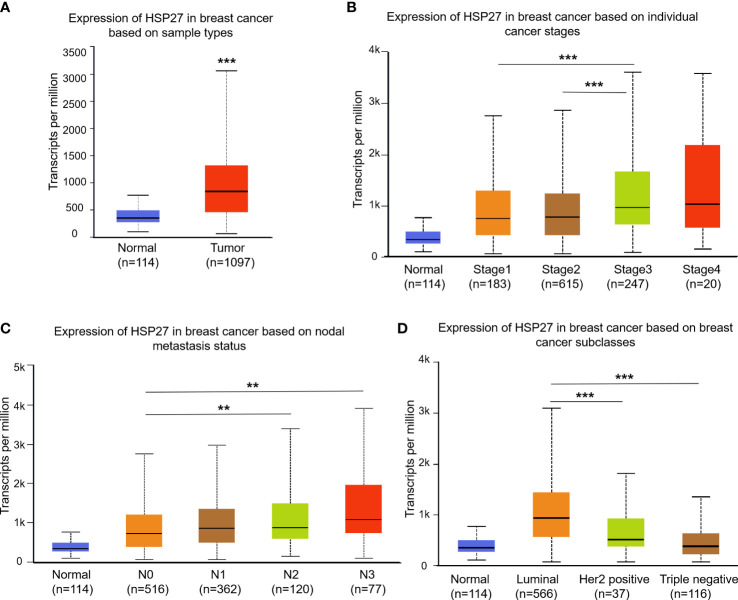
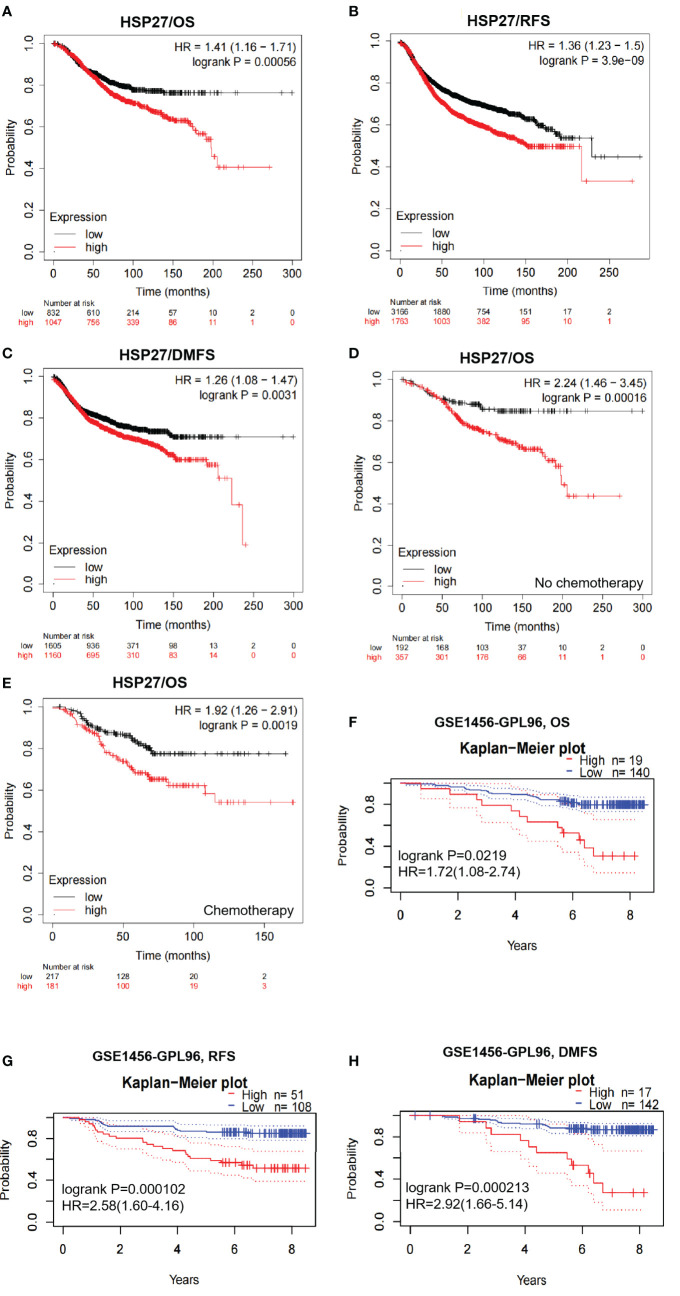
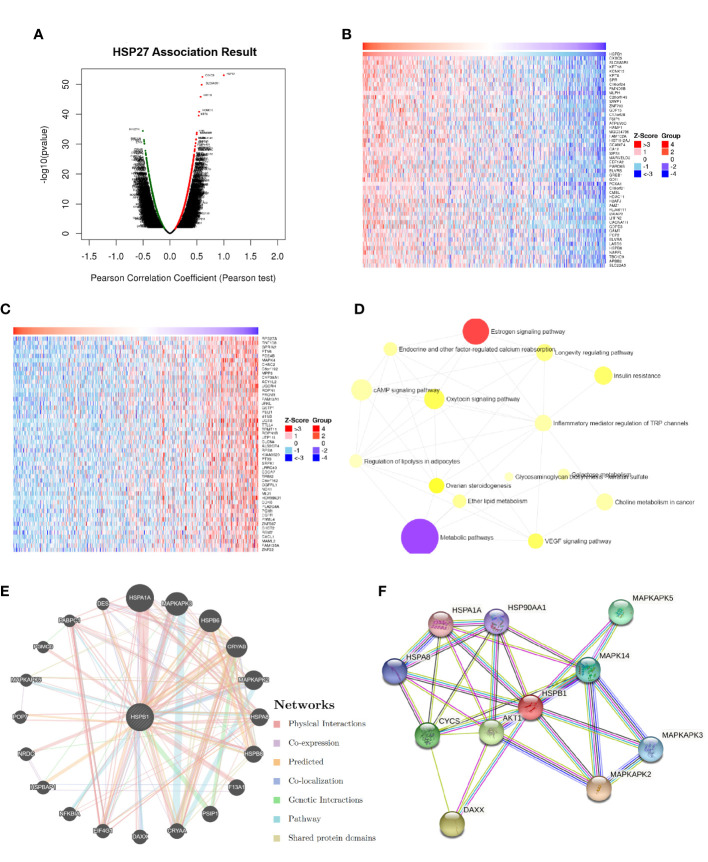
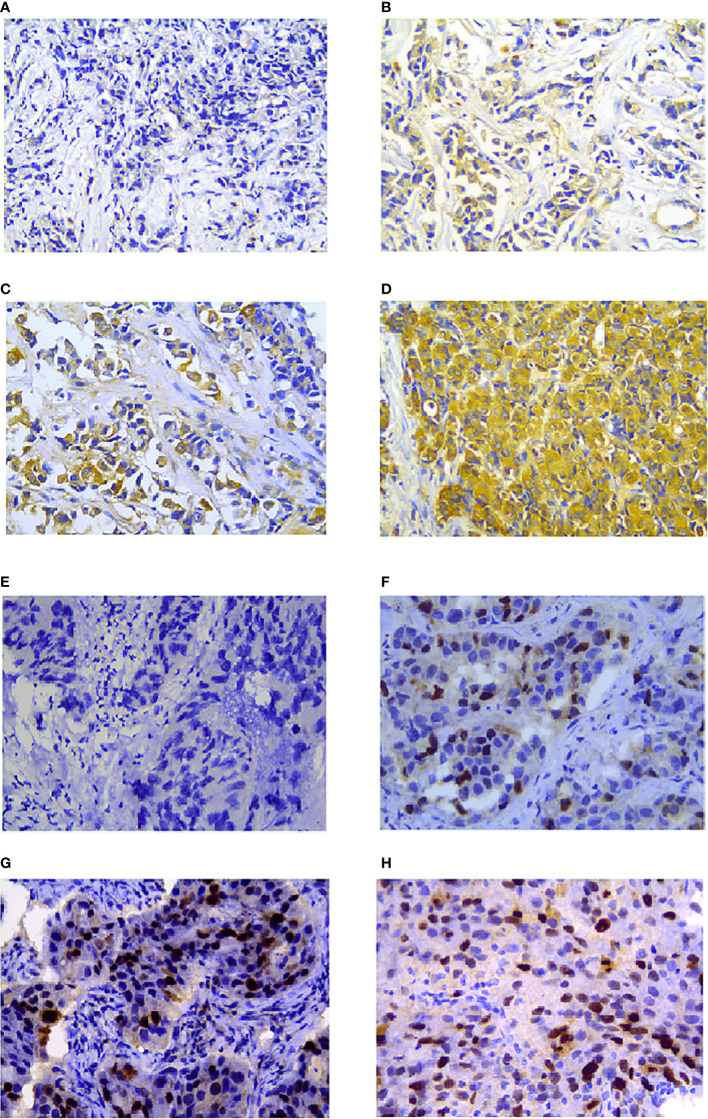
Associations of Hsp27 transcripts with clinic-pathological characteristics, survival and drug response were investigated in public databases. Hsp27-related genes were identified, followed by functional enrichment analyses. Besides, two protein-protein interaction networks were built. Then, tumors from 103 patients who were diagnosed with LABC and received NAC were collected, and Hsp27 and TopoIIα were examined by Immunohistochemistry (IHC). Chi-square or Fisher's exact tests were performed, as well as survival analyses.
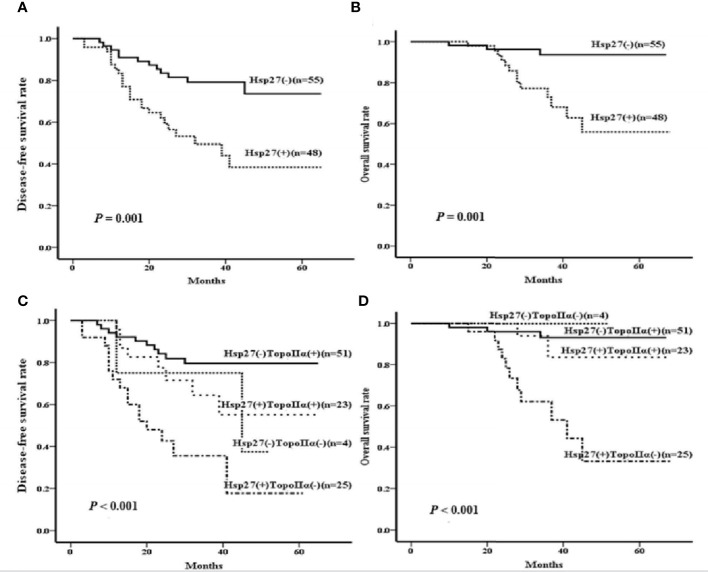
Either at the transcriptional level in public databases or at the protein level tested by IHC, a high level of Hsp27 was associated with aggressive tumor characteristics such as lymph node invasion and chemotherapy resistance. Hsp27-related genes mostly involved in the metabolic pathway and the gamete generation biological process. An elevated Hsp27 indicated a poor prognosis in patients with breast cancer (log-rank test = 0.002 and 0.004 for disease-free survival [DFS] and overall survival [OS], respectively), while it might not be an independent predictor. Of note, tumors with high TopoIIα expression (TopoIIα+) was less likely to express Hsp27 (Hsp27+), in contrast to those with TopoIIα negativity (31.1% vs. 86.2%, <0.001), and survival analyses revealed that patients with Hsp27+ and TopoIIα- tumors had a significantly lower DFS and OS (log-rank test < 0.001 and 0.001, respectively), in contrast to the other three groups.
Hsp27 was associated with aggressive breast cancers and more predictable for the prognosis of LABC patients treated with NAC when concomitantly considering TopoIIα expression.
基于蒽环类药物的新辅助化疗(NAC)是治疗局部晚期乳腺癌(LABC)的主要方案,然而对NAC的耐药性仍然是一个至关重要的临床障碍。为了研究热休克蛋白27(Hsp27)和/或拓扑异构酶IIα(TopoIIα)在接受NAC治疗的LABC患者中的作用,我们进行了这项回顾性研究。
在公共数据库中研究Hsp27转录本与临床病理特征、生存率和药物反应之间的关联。鉴定Hsp27相关基因,随后进行功能富集分析。此外,构建了两个蛋白质-蛋白质相互作用网络。然后,收集了103例被诊断为LABC并接受NAC治疗的患者的肿瘤,通过免疫组织化学(IHC)检测Hsp27和TopoIIα。进行卡方检验或Fisher精确检验以及生存分析。
无论是在公共数据库中的转录水平还是通过IHC检测的蛋白质水平,高水平的Hsp27都与侵袭性肿瘤特征相关,如淋巴结侵犯和化疗耐药。Hsp27相关基因主要参与代谢途径和配子生成生物学过程。Hsp27升高表明乳腺癌患者预后不良(无病生存期[DFS]和总生存期[OS]的对数秩检验分别为0.002和0.004),但其可能不是一个独立的预测指标。值得注意的是,与TopoIIα阴性的肿瘤相比,TopoIIα高表达(TopoIIα+)的肿瘤表达Hsp27(Hsp27+)的可能性较小(31.1%对86.2%,<0.001),生存分析显示,与其他三组相比,Hsp27+和TopoIIα-肿瘤患者的DFS和OS显著更低(对数秩检验分别<0.001和0.001)。
Hsp27与侵袭性乳腺癌相关,在同时考虑TopoIIα表达时,对接受NAC治疗的LABC患者的预后更具预测性。