Central Institute for Experimental Animals, 3-25-12 Tonomachi, Kawasaki-ku, Kawasaki 210-0821, Japan; Division of Molecular Genetics & Epigenetics, Department of Biomolecular Science, Faculty of Medicine, Saga University, 5-1-1 Nabeshima, Saga 849-8501, Japan.
Department of Physiology, Development and Neuroscience, University of Cambridge, Downing Site, Cambridge, UK; Wellcome Trust-Cancer Research UK Gurdon Institute, University of Cambridge, Cambridge, UK; Centre for Trophoblast Research, University of Cambridge, Downing Site, Cambridge CB2 3EG, UK; Wellcome Trust - Medical Research Council Stem Cell Institute, University of Cambridge, Jeffrey Cheah Biomedical Centre, Puddicombe Way, Cambridge CB2 0AW, UK.
Stem Cell Reports. 2023 Oct 10;18(10):1987-2002. doi: 10.1016/j.stemcr.2023.08.006. Epub 2023 Sep 7.
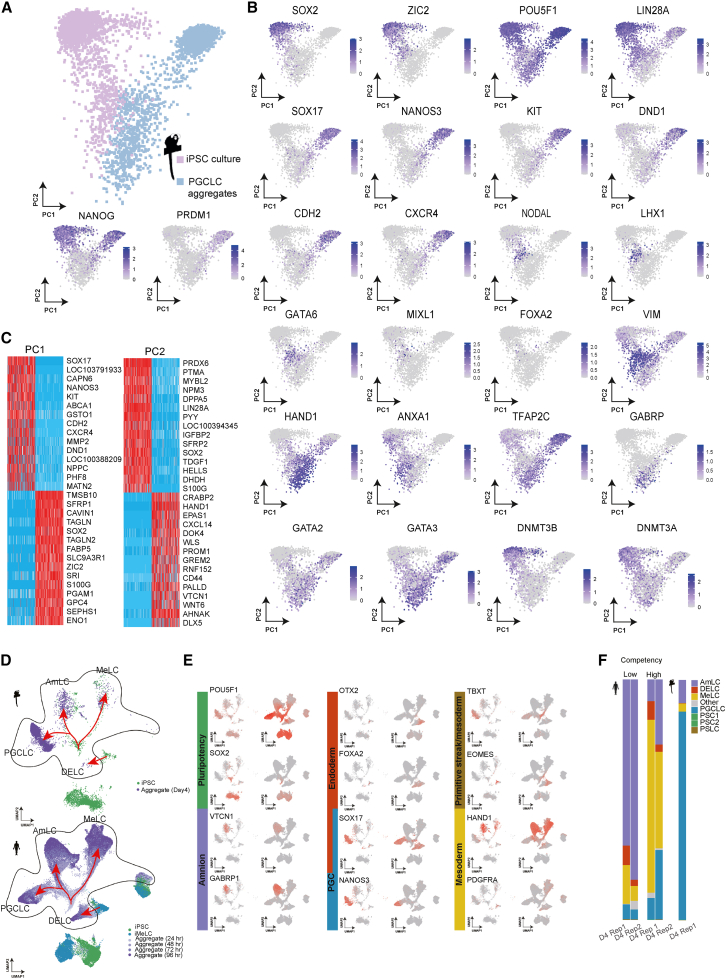
Primate germ cell development remains largely unexplored due to limitations in sample collection and the long duration of development. In mice, primordial germ cell-like cells (PGCLCs) derived from pluripotent stem cells (PSCs) can develop into functional gametes by in vitro culture or in vivo transplantation. Such PGCLC-mediated induction of mature gametes in primates is highly useful for understanding human germ cell development. Since marmosets generate functional sperm earlier than other species, recapitulating the whole male germ cell development process is technically more feasible. Here, we induced the differentiation of iPSCs into gonocyte-like cells via PGCLCs in marmosets. First, we developed an mRNA transfection-based method to efficiently generate PGCLCs. Subsequently, to promote PGCLC differentiation, xenoreconstituted testes (xrtestes) were generated in the mouse kidney capsule. PGCLCs show progressive DNA demethylation and stepwise expression of developmental marker genes. This study provides an efficient platform for the study of marmoset germ cell development.
由于样本采集的限制和发育时间长,灵长类动物的生殖细胞发育在很大程度上仍未被探索。在小鼠中,来源于多能干细胞(PSCs)的原始生殖细胞样细胞(PGCLCs)可以通过体外培养或体内移植发育成功能性配子。这种 PGCLC 介导的在灵长类动物中诱导成熟配子的方法对于理解人类生殖细胞的发育非常有用。由于狨猴产生功能性精子的时间早于其他物种,因此在技术上更可行地重现整个雄性生殖细胞的发育过程。在这里,我们通过 PGCLCs 诱导 iPSCs 分化为精原细胞样细胞。首先,我们开发了一种基于 mRNA 转染的方法来有效地生成 PGCLCs。随后,为了促进 PGCLC 分化,在小鼠肾包膜中生成了异种重构睾丸(xrtestes)。PGCLCs 表现出逐渐的 DNA 去甲基化和发育标记基因的逐步表达。这项研究为研究狨猴生殖细胞发育提供了一个有效的平台。