Németh Péter, Garvie Laurence A J, Salzmann Christoph G
Institute for Geological and Geochemical Research, Research Centre for Astronomy and Earth Sciences, Eötvös Loránd Research Network, Budaörsi út 45, Budapest 1112, Hungary.
University of Pannonia, Research Institute of Biomolecular and Chemical Engineering, Egyetem út 10, Veszprém 8200, Hungary.
Philos Trans A Math Phys Eng Sci. 2023 Oct 30;381(2259):20220344. doi: 10.1098/rsta.2022.0344. Epub 2023 Sep 11.
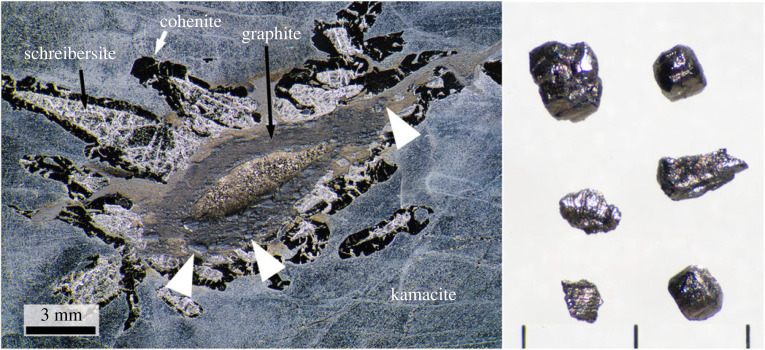
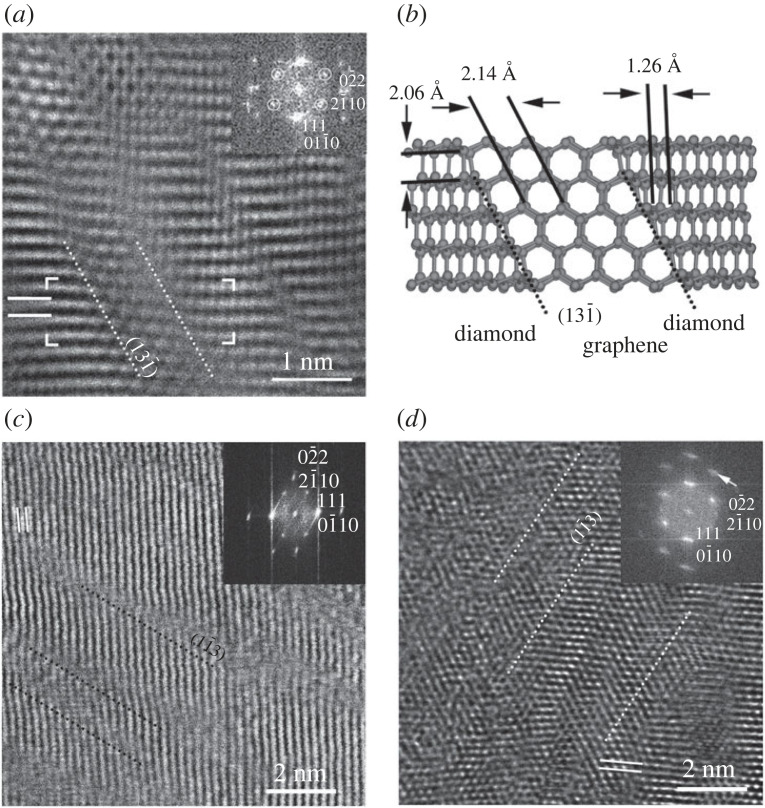
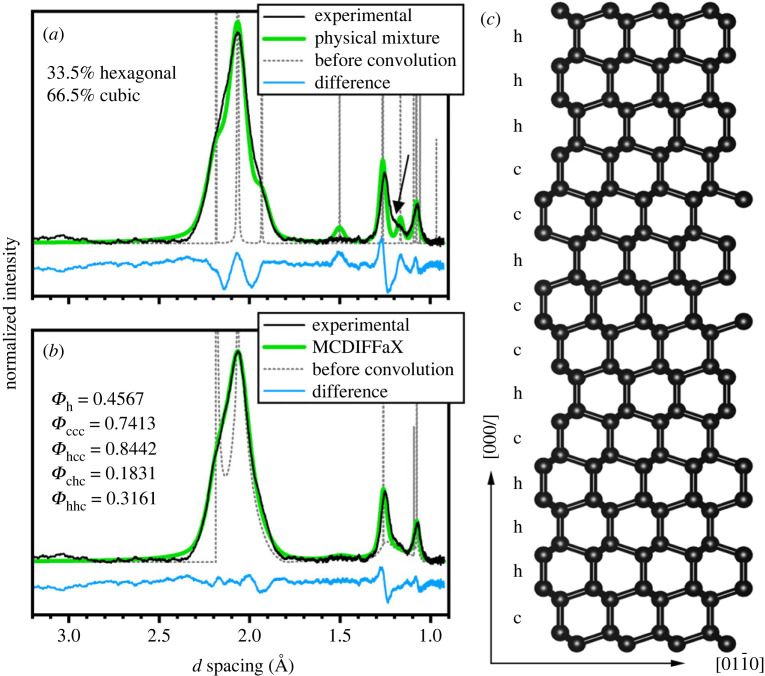
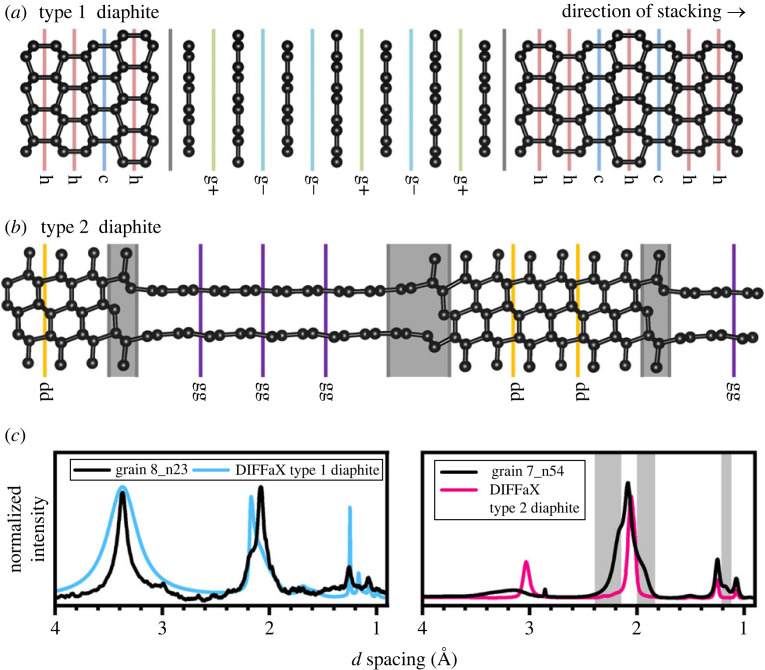
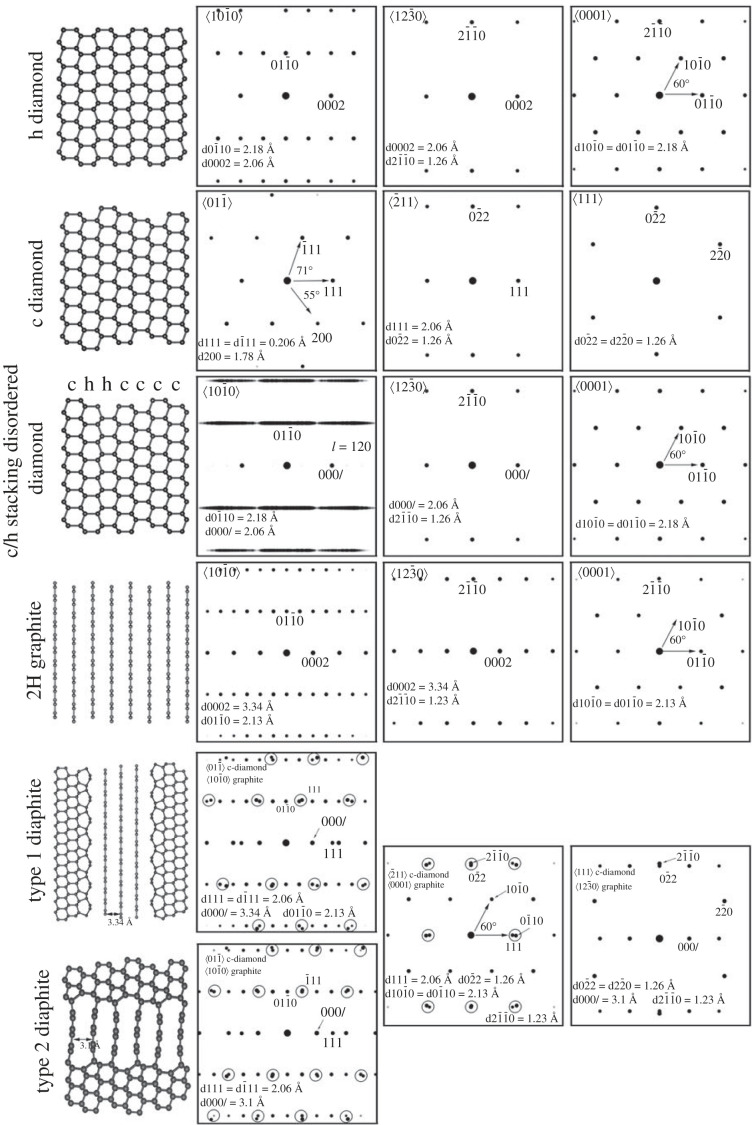
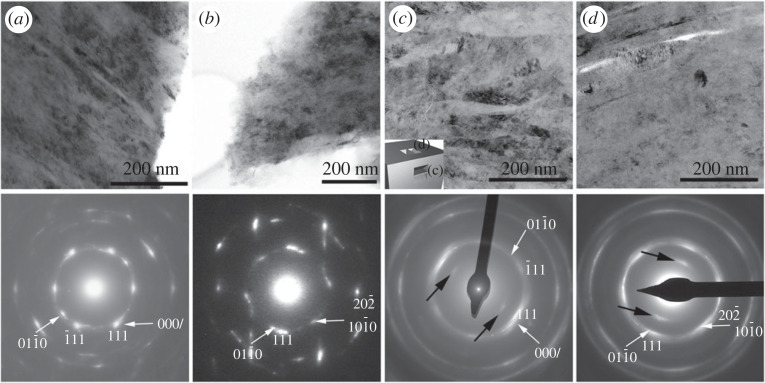
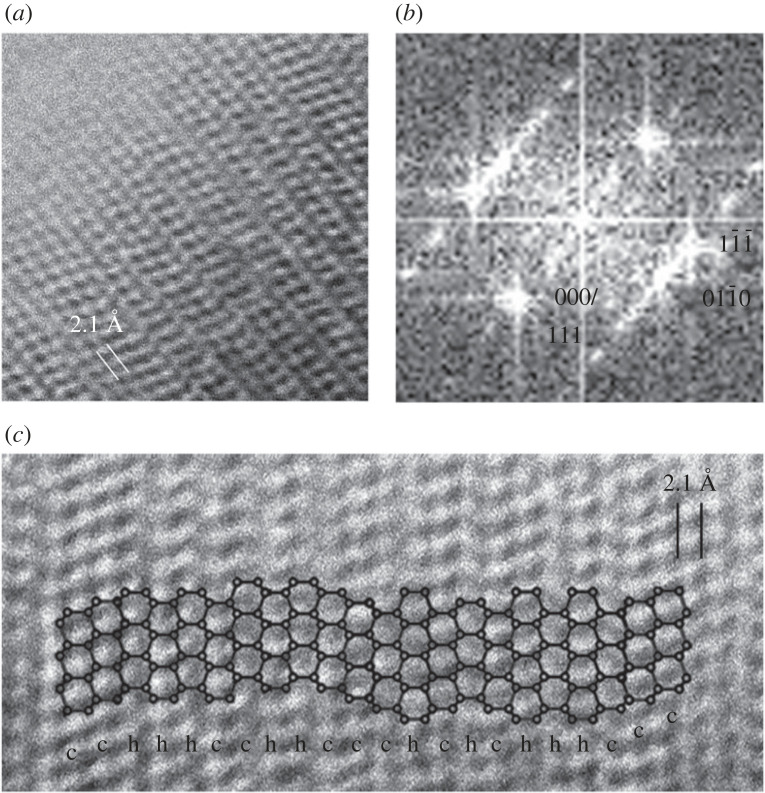
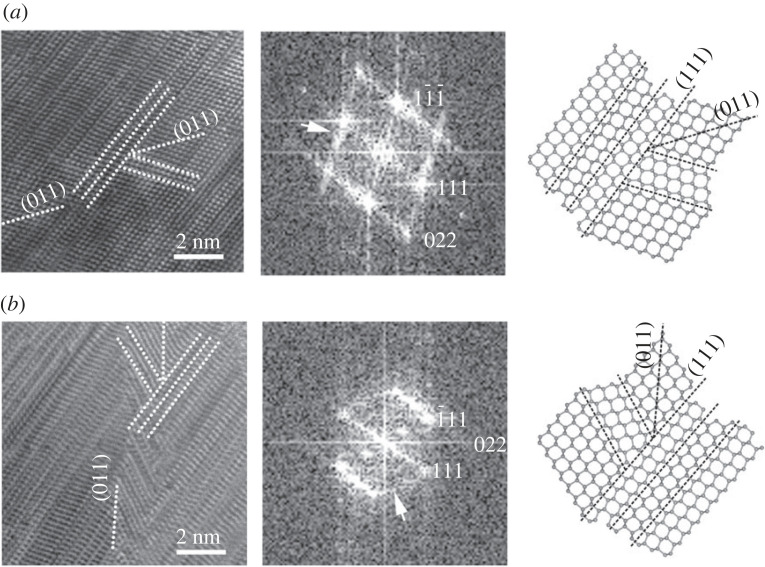
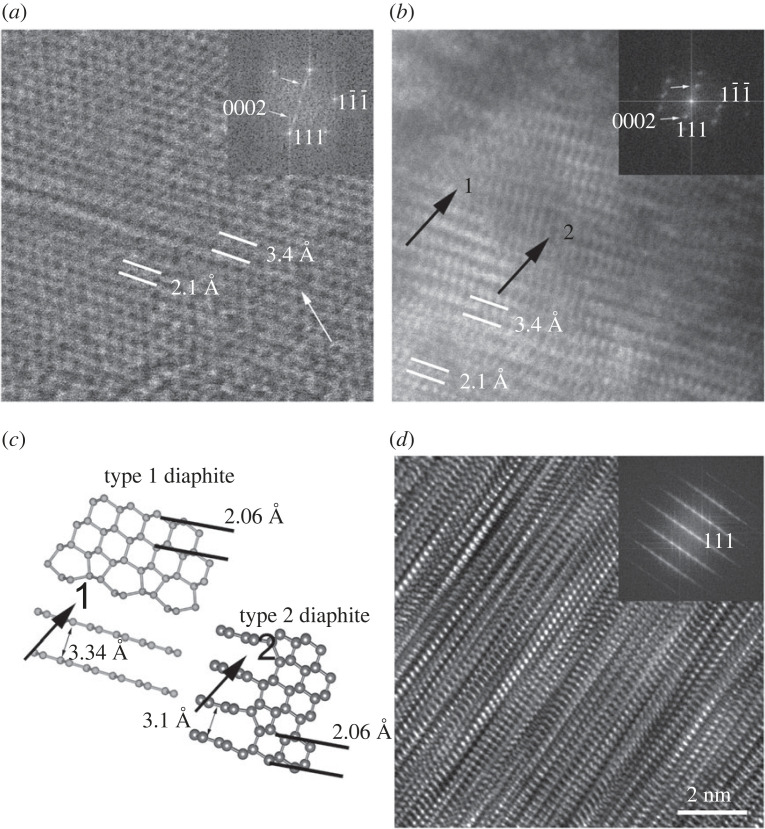
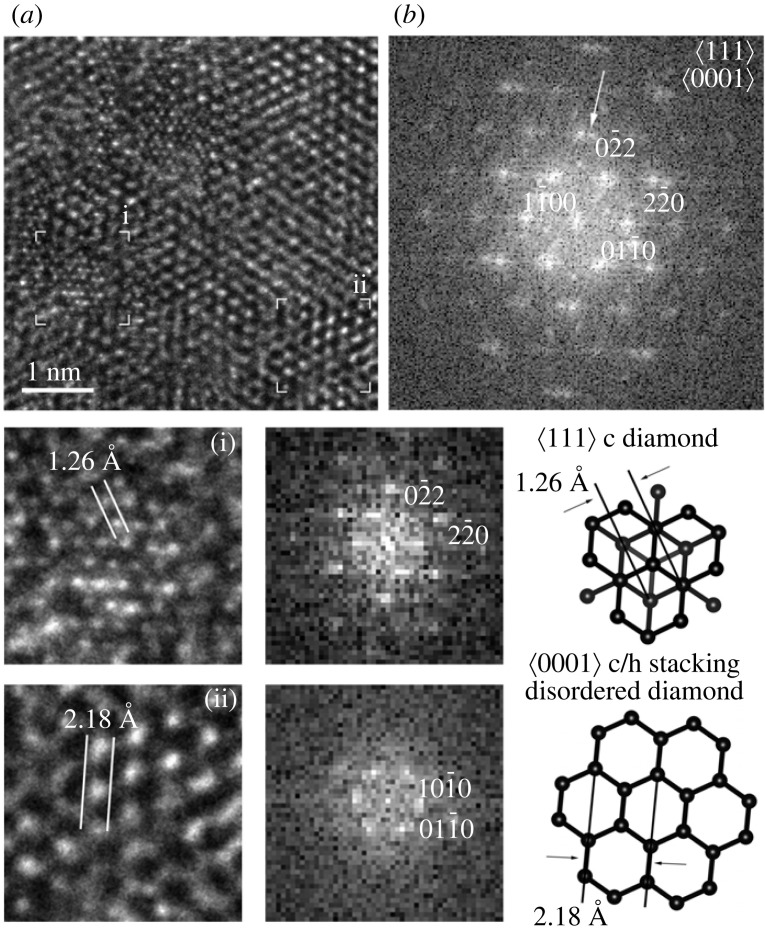
In 1967, a diamond polymorph was reported from hard, diamond-like grains of the Canyon Diablo iron meteorite and named lonsdaleite. This mineral was defined and identified by powder X-ray diffraction (XRD) features that were indexed with a hexagonal unit cell. Since 1967, several natural and synthetic diamond-like materials with XRD data matching lonsdaleite have been reported and the name lonsdaleite was used interchangeably with hexagonal diamond. Its hexagonal structure was speculated to lead to physical properties superior to cubic diamond, and as such has stimulated attempts to synthesize lonsdaleite. Despite numerous reports, several recent studies have provided alternative explanations for the XRD, transmission electron microscopy and Raman data used to identify lonsdaleite. Here, we show that lonsdaleite from the Canyon Diablo diamond-like grains are a nanocomposite material dominated by subnanometre-scale cubic/hexagonal stacking disordered diamond and diaphite domains. These nanostructured elements are intimately intergrown, giving rise to structural features erroneously associated with h diamond. Our data suggest that the diffuse scattering in XRD and the hexagonal features in transmission electron microscopy images reported from various natural and laboratory-prepared samples that were previously used for lonsdaleite identification, in fact arise from cubic/hexagonal stacking disordered diamond and diaphite domains. This article is part of the theme issue 'Exploring the length scales, timescales and chemistry of challenging materials (Part 2)'.
1967年,有人报道从迪亚布洛峡谷铁陨石中坚硬的类金刚石颗粒中发现了一种金刚石多晶型体,并将其命名为六方金刚石。这种矿物是通过粉末X射线衍射(XRD)特征来定义和识别的,这些特征用六方晶胞进行了索引。自1967年以来,已经报道了几种具有与六方金刚石匹配的XRD数据的天然和合成类金刚石材料,并且六方金刚石这个名称与六方金刚石可以互换使用。据推测,其六方结构会导致物理性质优于立方金刚石,因此激发了合成六方金刚石的尝试。尽管有大量报道,但最近的几项研究对用于识别六方金刚石的XRD、透射电子显微镜和拉曼数据提供了其他解释。在这里,我们表明,来自迪亚布洛峡谷类金刚石颗粒的六方金刚石是一种纳米复合材料,主要由亚纳米级的立方/六方堆叠无序金刚石和透辉石域组成。这些纳米结构元素紧密共生,产生了与六方金刚石错误关联的结构特征。我们的数据表明,之前用于六方金刚石识别的各种天然和实验室制备样品的XRD中的漫散射和透射电子显微镜图像中的六方特征,实际上是由立方/六方堆叠无序金刚石和透辉石域引起的。本文是主题为“探索具有挑战性材料的长度尺度、时间尺度和化学性质(第2部分)”的一部分。