Luo Xiwen, Tang Xuemei
Department of Rheumatology and Immunology, Children's Hospital of Chongqing Medical University, Chongqing 400014, China.
Chongqing Key Laboratory of Child Infection and Immunity, Ministry of Education Key Laboratory of Child Development and Disorders, National Clinical Research Center for Child Health and Disorders, China International Science and Technology Cooperation Base of Child Development and Critical Disorders, Children's Hospital of Chongqing Medical University, Chongqing 400014, China.
Genes Dis. 2023 May 24;11(2):633-644. doi: 10.1016/j.gendis.2023.04.014. eCollection 2024 Mar.
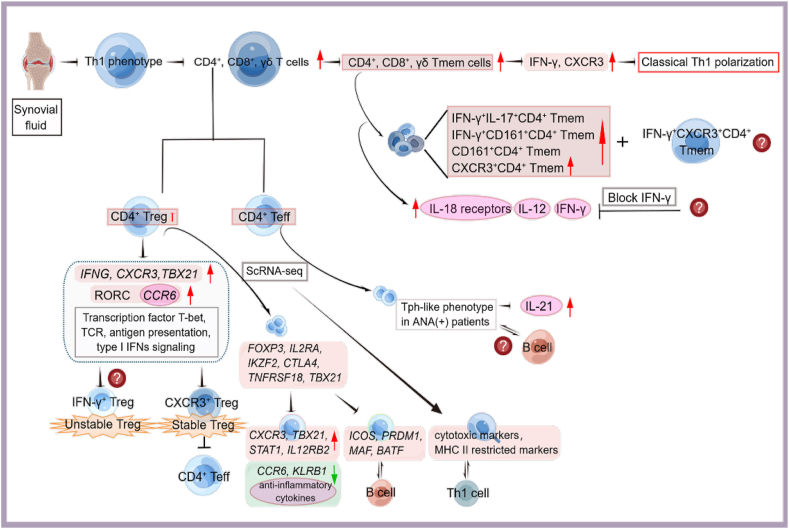
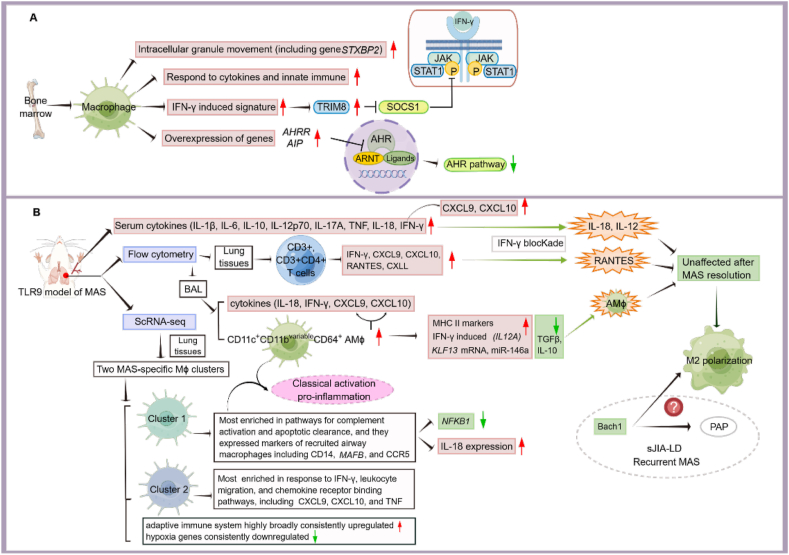
Juvenile idiopathic arthritis (JIA) is one of the most common chronic inflammatory rheumatic diseases in children, with onset before age 16 and lasting for more than 6 weeks. JIA is a highly heterogeneous condition with various consequences for health and quality of life. For some JIA patients, early detection and intervention remain challenging. As a result, further investigation of the complex and unknown mechanisms underlying JIA is required. Advances in technology now allow us to describe the biological heterogeneity and function of individual cell populations in JIA. Through this review, we hope to provide novel ideas and potential targets for the diagnosis and treatment of JIA by summarizing the current findings of single-cell RNA sequencing studies and understanding how the major cell subsets drive JIA pathogenesis.
幼年特发性关节炎(JIA)是儿童中最常见的慢性炎症性风湿性疾病之一,发病于16岁之前,病程持续超过6周。JIA是一种高度异质性疾病,对健康和生活质量有各种影响。对于一些JIA患者来说,早期检测和干预仍然具有挑战性。因此,需要进一步研究JIA潜在的复杂未知机制。现在技术的进步使我们能够描述JIA中单个细胞群体的生物学异质性和功能。通过本综述,我们希望通过总结单细胞RNA测序研究的当前发现,并了解主要细胞亚群如何驱动JIA发病机制,为JIA的诊断和治疗提供新的思路和潜在靶点。