England Samantha J, Woodard Amber K, Mujcic Amra, Kowalchuk Angelica, de Jager Sarah, Hilinski William C, Juárez-Morales José L, Smith Matthew E, Grieb Ginny, Banerjee Santanu, Lewis Katharine E
Syracuse University.
Cambridge University.
Res Sq. 2023 Aug 30:rs.3.rs-3290462. doi: 10.21203/rs.3.rs-3290462/v1.
V0v spinal interneurons are highly conserved, glutamatergic, commissural neurons that function in locomotor circuits. We have previously shown that Evx1 and Evx2 are required to specify the neurotransmitter phenotype of these cells. However, we still know very little about the gene regulatory networks that act downstream of these transcription factors in V0v cells.
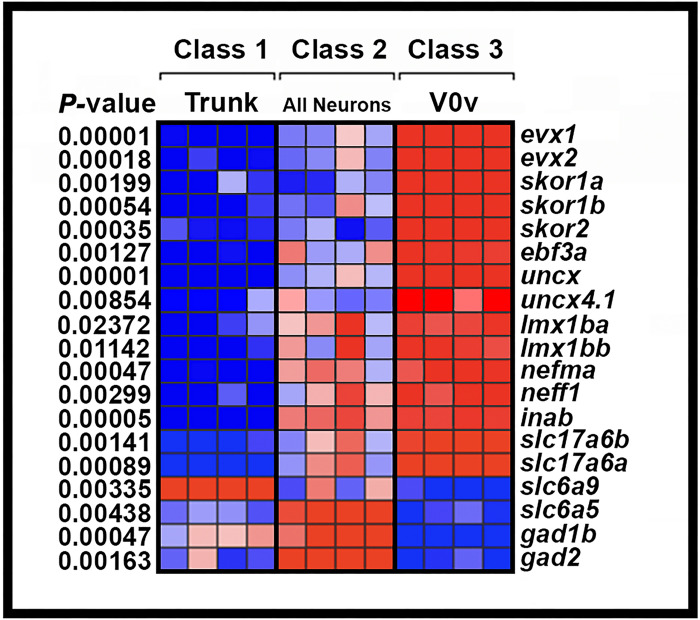
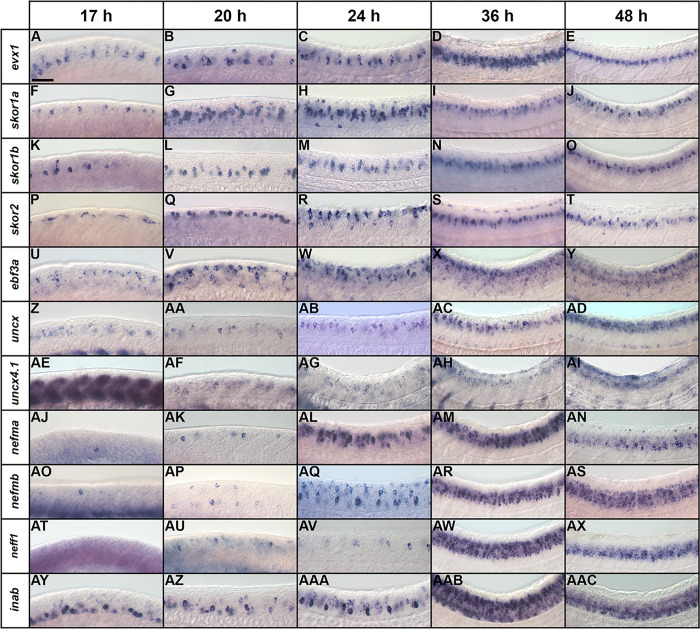
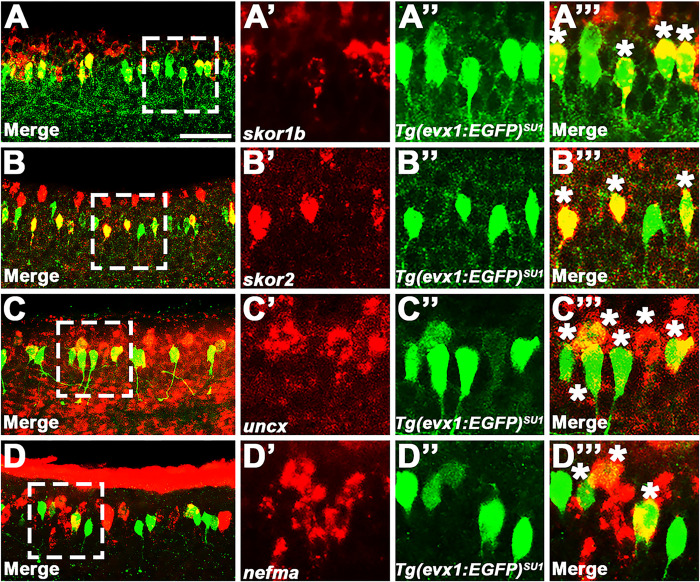
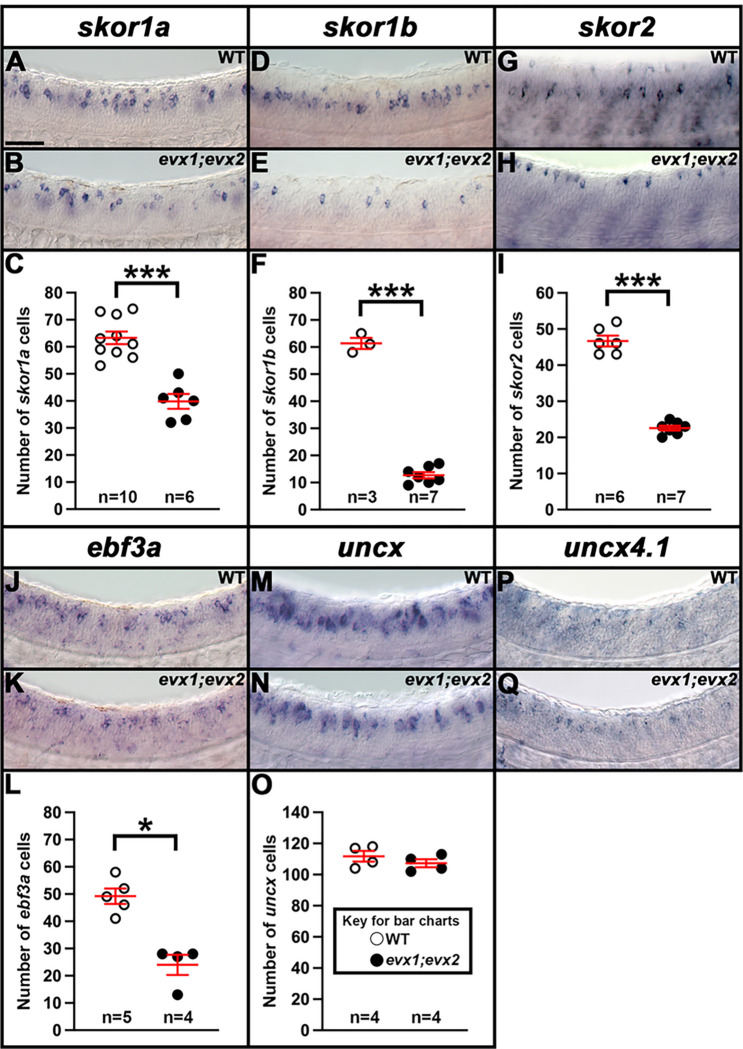
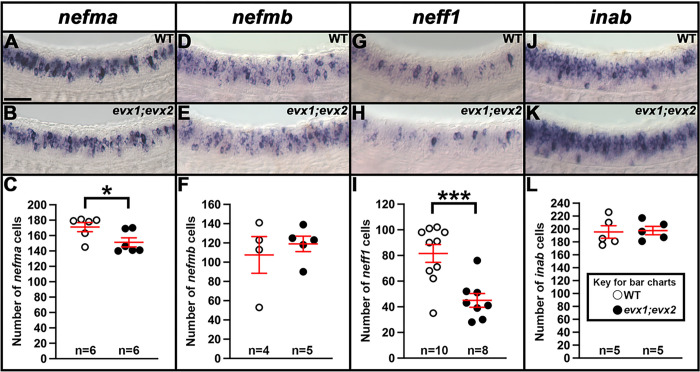
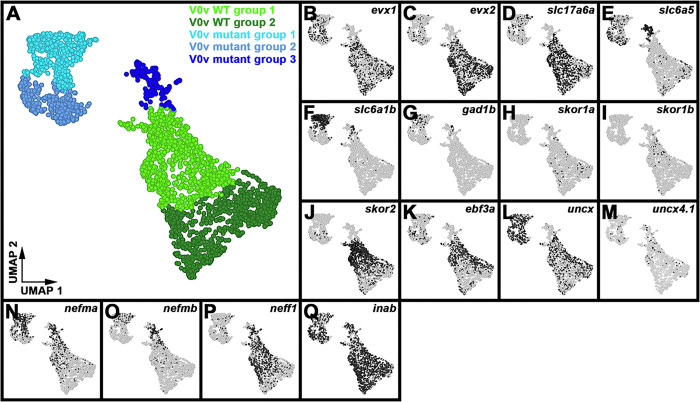
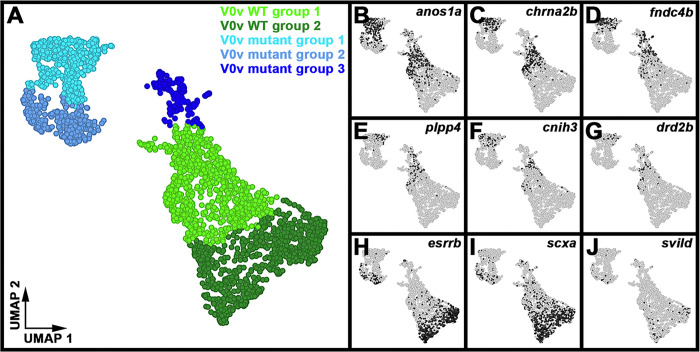
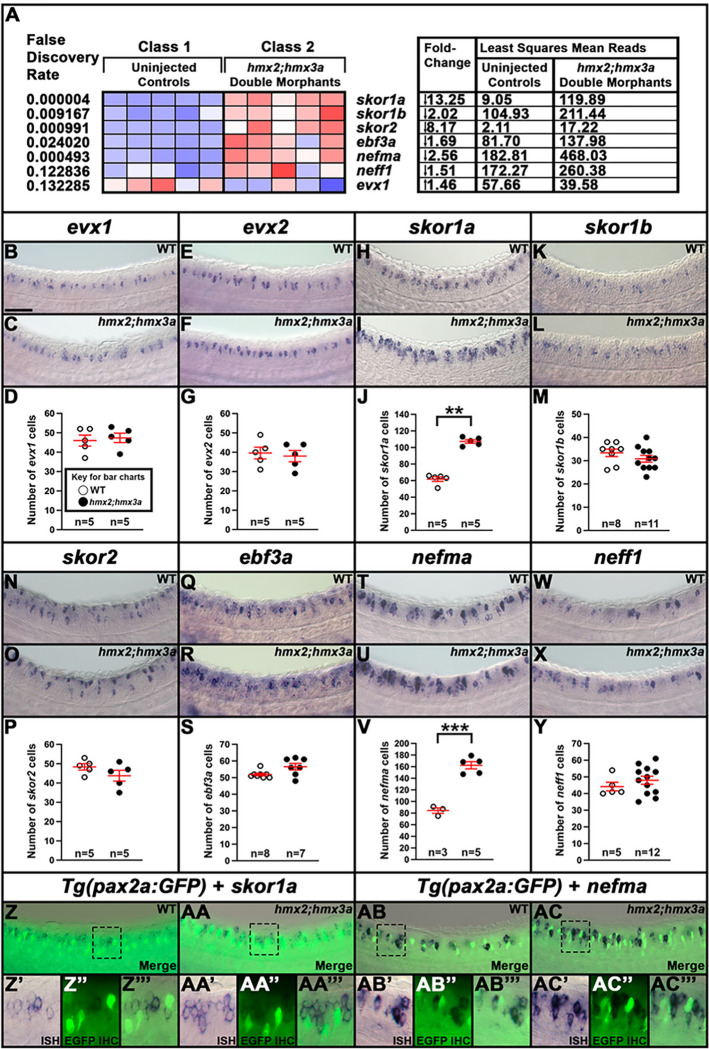
To identify candidate members of V0v gene regulatory networks, we FAC-sorted WT and double mutant zebrafish V0v spinal interneurons and expression-profiled them using microarrays and single cell RNA-seq. We also used hybridization to compare expression of a subset of candidate genes in double mutants and wild-type siblings.
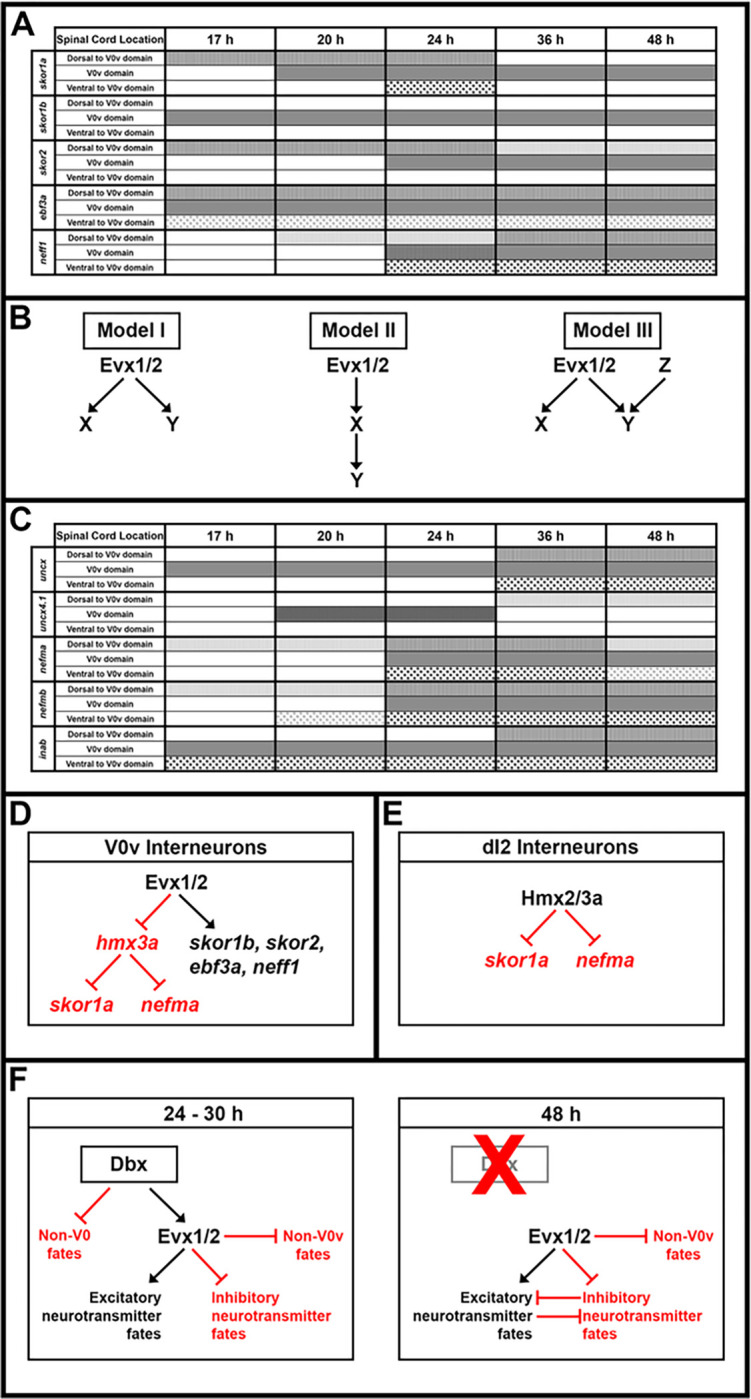
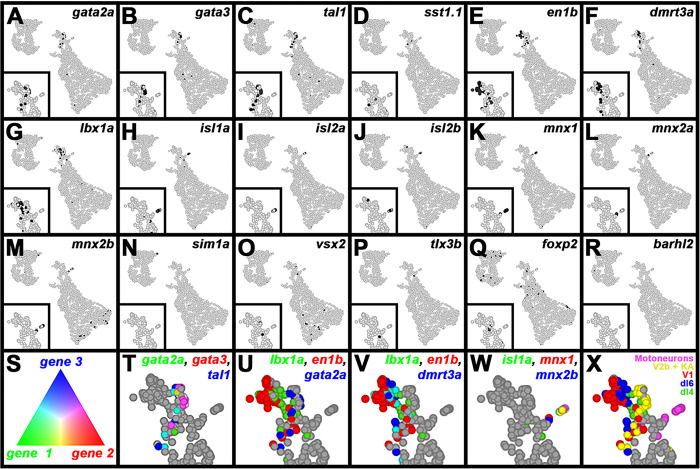
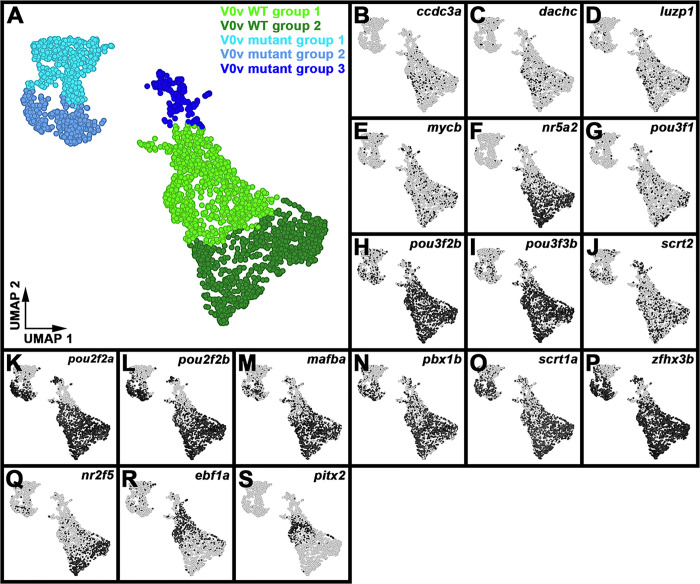
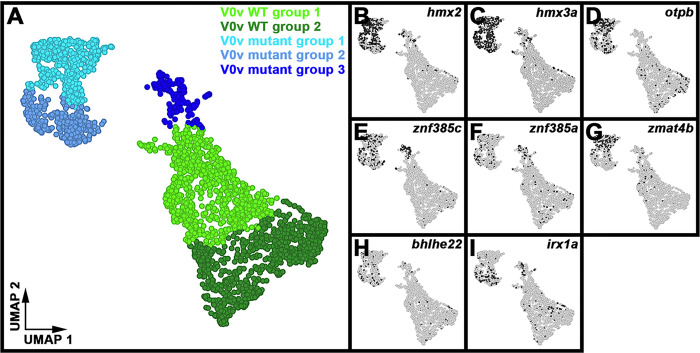
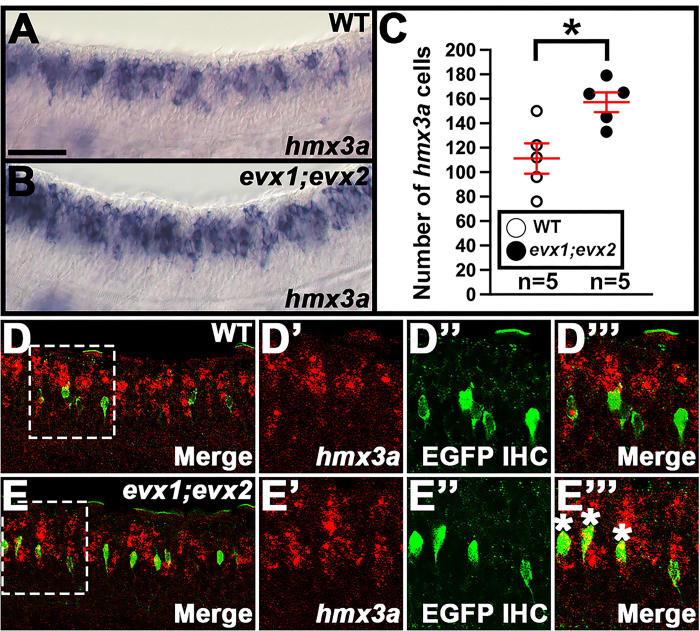
Our data reveal two molecularly distinct subtypes of V0v spinal interneurons at 48 h and suggest that, by this stage of development, double mutant cells transfate into either inhibitory spinal interneurons, or motoneurons. Our results also identify 25 transcriptional regulator genes that require Evx1/2 for their expression in V0v interneurons, plus a further 11 transcriptional regulator genes that are repressed in V0v interneurons by Evx1/2. Two of the latter genes are and . Intriguingly, we show that Hmx/3a, repress dI2 interneuronal expression of and , two genes that require Evx1/2 for their expression in V0v interneurons. This suggests that Evx1/2 might regulate and expression in V0v interneurons by repressing /3a expression.
This study identifies two molecularly distinct subsets of V0v spinal interneurons, as well as multiple transcriptional regulators that are strong candidates for acting downstream of Evx1/2 to specify the essential functional characteristics of these cells. Our data further suggest that in the absence of both Evx1 and Evx2, V0v spinal interneurons initially change their neurotransmitter phenotypes from excitatory to inhibitory and then, later, start to express markers of distinct types of inhibitory spinal interneurons, or motoneurons. Taken together, our findings significantly increase our knowledge of V0v and spinal development and move us closer towards the essential goal of identifying the complete gene regulatory networks that specify this crucial cell type.
V0v脊髓中间神经元是高度保守的、谷氨酸能的、连合神经元,在运动回路中发挥作用。我们之前已经表明,Evx1和Evx2是确定这些细胞神经递质表型所必需的。然而,我们对在V0v细胞中这些转录因子下游起作用的基因调控网络仍然知之甚少。
为了鉴定V0v基因调控网络的候选成员,我们通过荧光激活细胞分选(FACS)对野生型和双突变斑马鱼的V0v脊髓中间神经元进行分选,并使用微阵列和单细胞RNA测序对它们进行表达谱分析。我们还使用原位杂交来比较双突变体和野生型同胞中候选基因子集的表达。
我们的数据揭示了48小时时V0v脊髓中间神经元的两种分子上不同的亚型,并表明在这个发育阶段,双突变细胞转变为抑制性脊髓中间神经元或运动神经元。我们的结果还鉴定了25个转录调节基因,它们在V0v中间神经元中的表达需要Evx1/2,另外还有11个转录调节基因在V0v中间神经元中被Evx1/2抑制。后两个基因是 和 。有趣的是,我们表明Hmx/3a抑制dI2中间神经元中 和 的表达,这两个基因在V0v中间神经元中的表达需要Evx1/2。这表明Evx1/2可能通过抑制 /3a的表达来调节V0v中间神经元中 和 的表达。
本研究鉴定了V0v脊髓中间神经元的两个分子上不同的亚群,以及多个转录调节因子,它们是在Evx1/2下游起作用以确定这些细胞基本功能特征的有力候选者。我们的数据进一步表明,在缺乏Evx1和Evx2的情况下,V0v脊髓中间神经元最初将其神经递质表型从兴奋性转变为抑制性,然后,后来开始表达不同类型抑制性脊髓中间神经元或运动神经元的标志物。总之,我们的发现显著增加了我们对V0v和脊髓发育的了解,并使我们更接近识别确定这种关键细胞类型的完整基因调控网络这一基本目标。