Department of Hepatic Surgery and Liver Transplantation Center of the Third Affiliated Hospital of Sun Yat-sen University, Organ Transplantation Research Center of Guangdong Province, Guangdong Province Engineering Laboratory for Transplantation Medicine; Guangzhou, China.
Guangdong Key Laboratory of Liver Disease Research, Key Laboratory of Liver Disease Biotherapy and Translational Medicine of Guangdong Higher Education Institutes, the Third Affiliated Hospital of Sun Yat-sen University; Guangzhou, China.
Hepatology. 2024 Mar 1;79(3):589-605. doi: 10.1097/HEP.0000000000000590. Epub 2023 Sep 9.
Immune cells play a crucial role in liver aging. However, the impact of dynamic changes in the local immune microenvironment on age-related liver injury remains poorly understood. We aimed to characterize intrahepatic immune cells at different ages to investigate key mechanisms associated with liver aging.
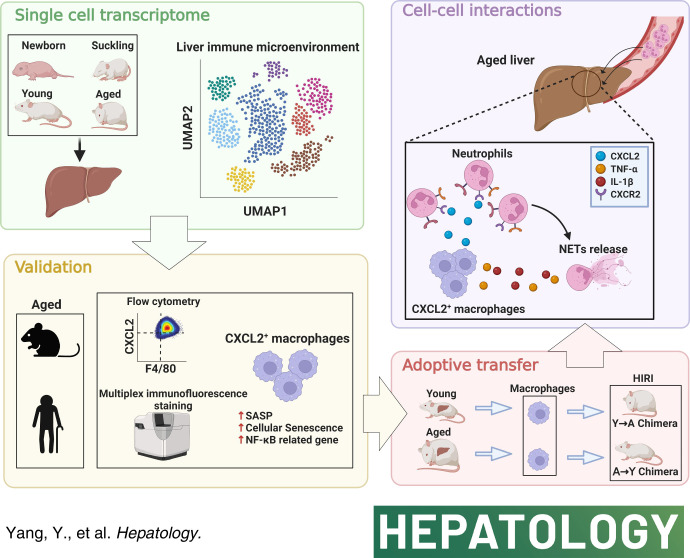
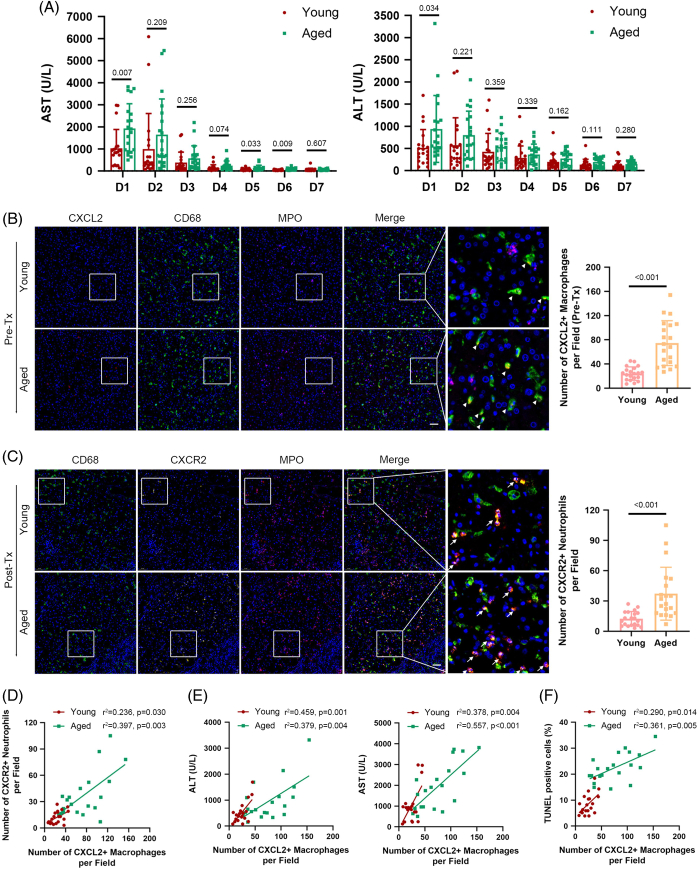
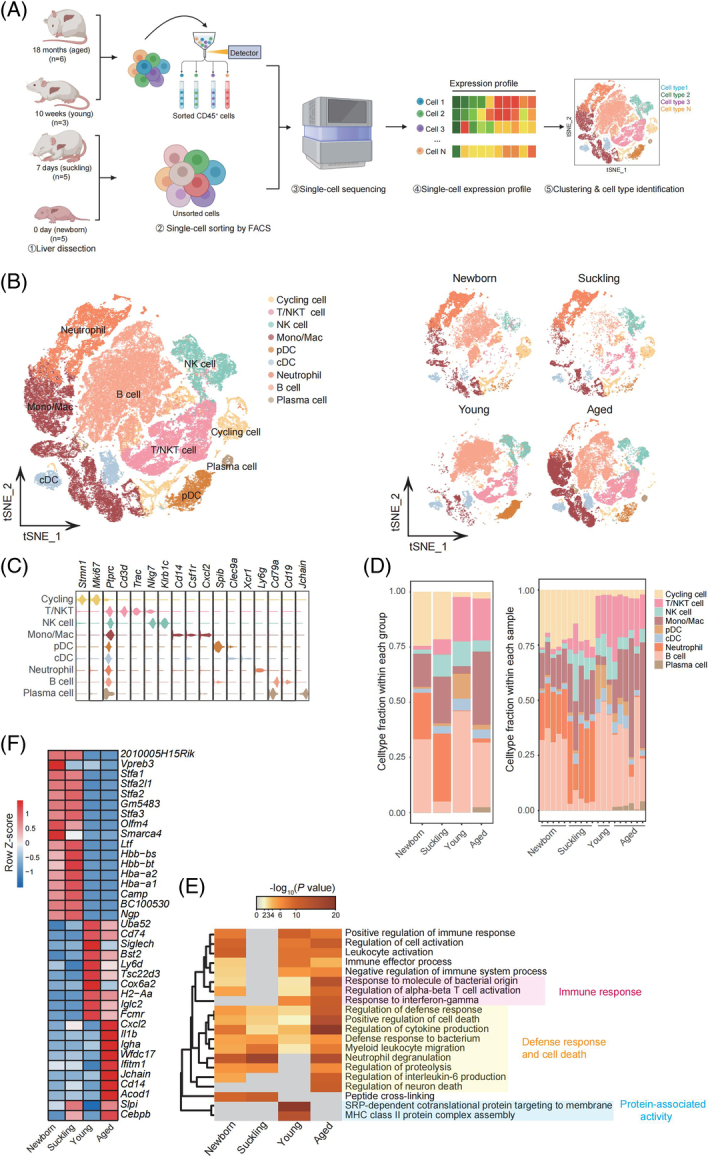
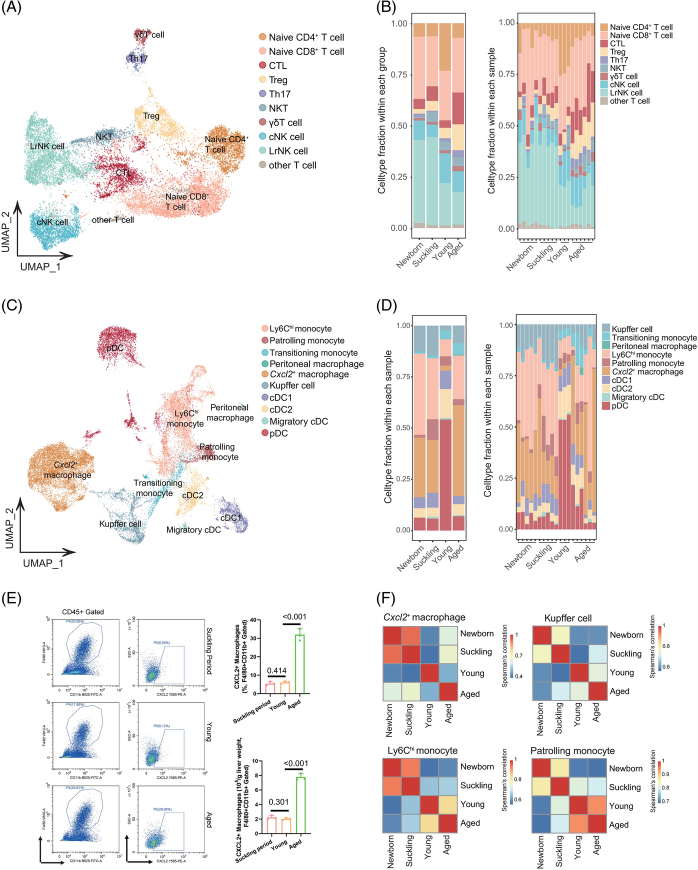
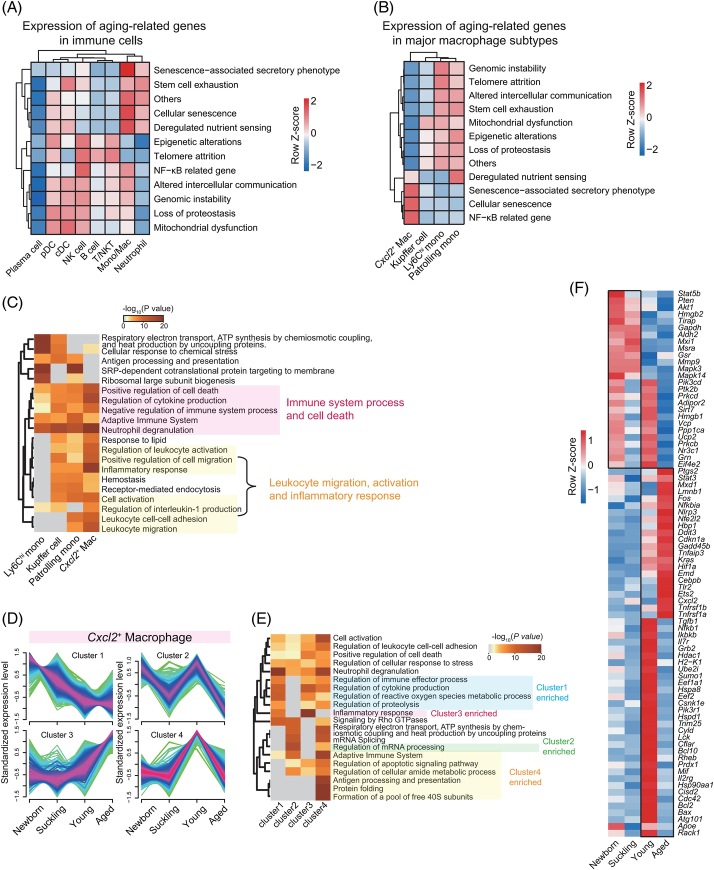
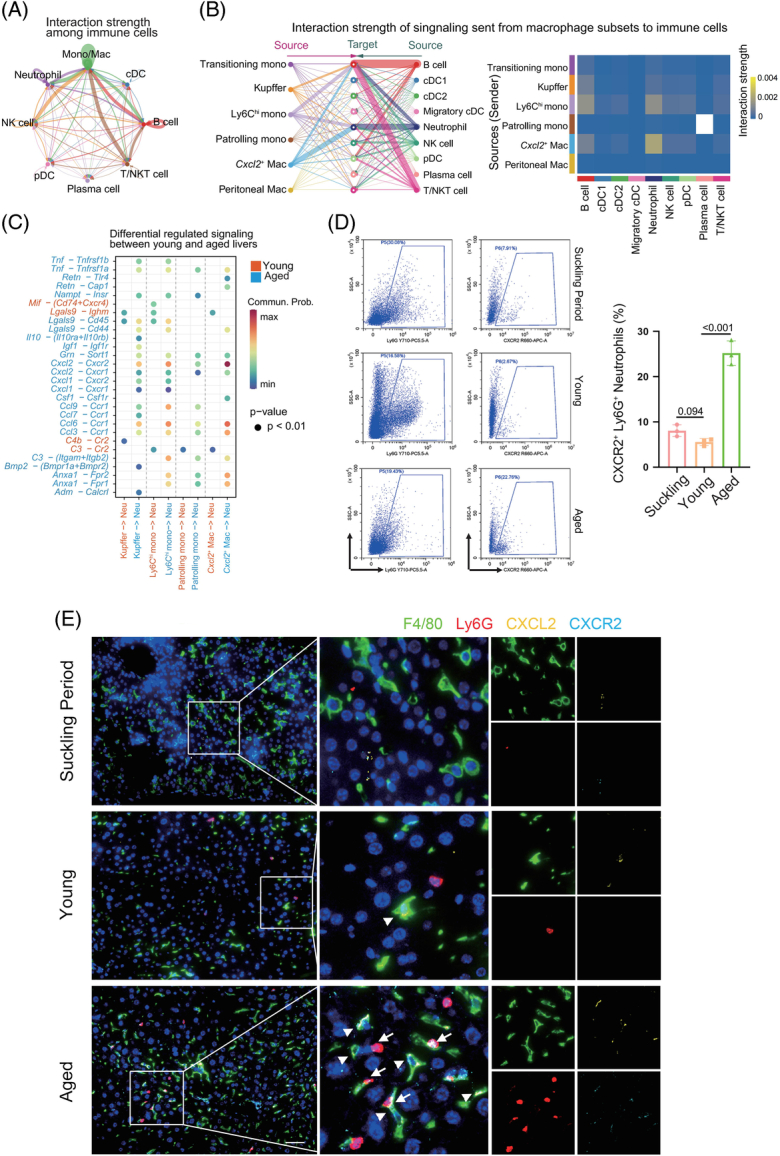
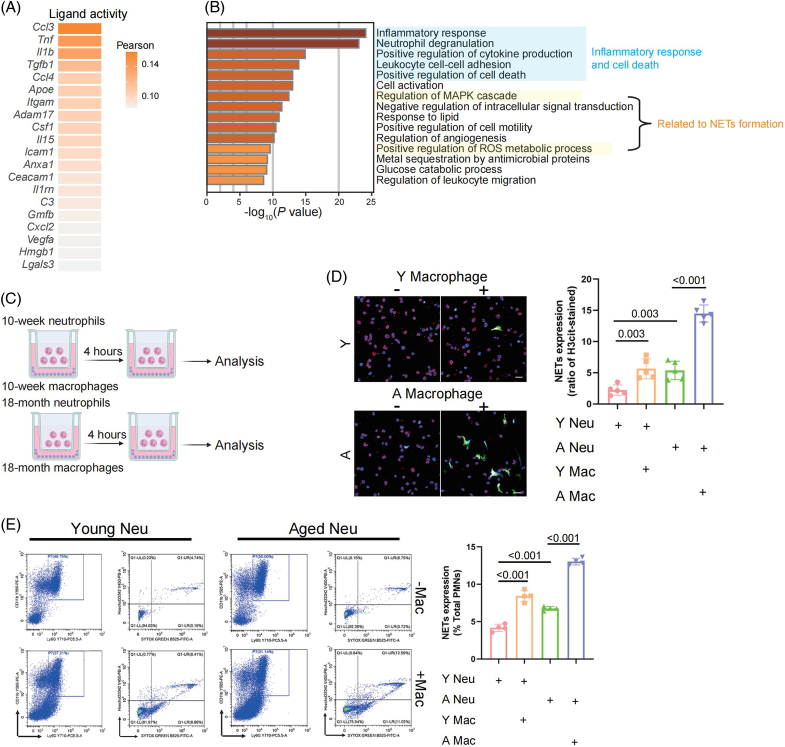
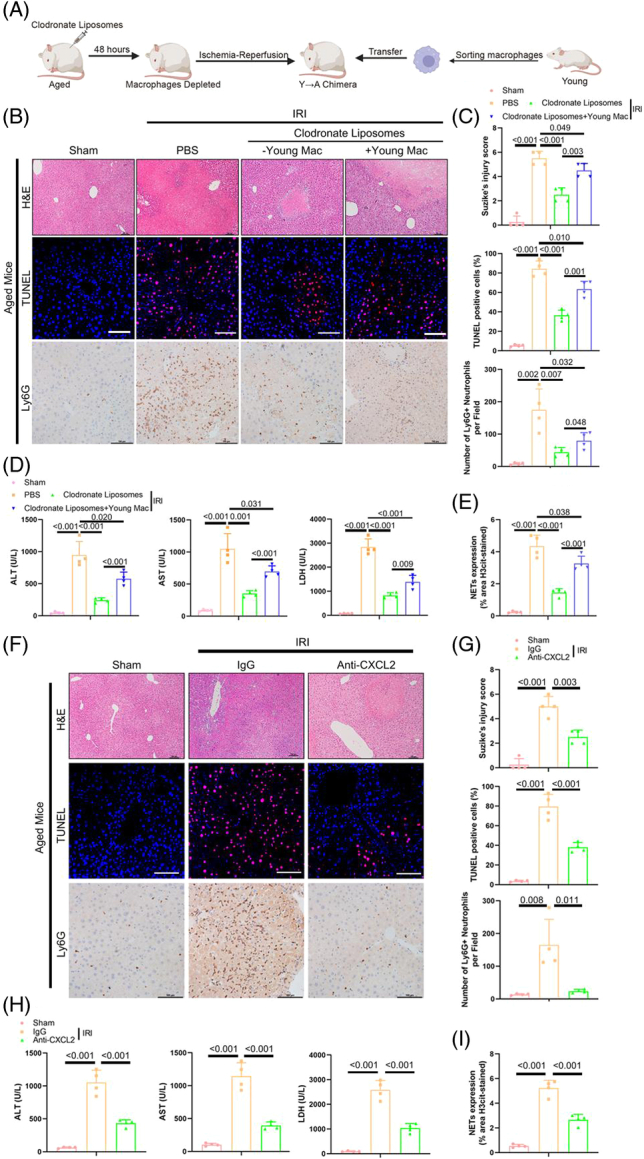
We carried out single-cell RNA sequencing on mouse liver tissues at 4 different ages, namely, the newborn, suckling, young, and aged stages. The transcriptomic landscape, cellular classification, and intercellular communication were analyzed. We confirmed the findings by multiplex immunofluorescence staining, flow cytometry, in vitro functional experiments, and chimeric animal models. Nine subsets of 89,542 immune cells with unique properties were identified, of which Cxcl2+ macrophages within the monocyte/macrophage subset were preferentially enriched in the aged liver. Cxcl2+ macrophages presented a senescence-associated secretory phenotype and recruited neutrophils to the aged liver through the CXCL2-CXCR2 axis. Through the secretion of IL-1β and TNF-α, Cxcl2+ macrophages stimulated neutrophil extracellular traps formation. Targeting the CXCL2-CXCR2 axis limited the neutrophils migration toward the liver and attenuated age-related liver injury. Moreover, the relationship between Cxcl2+ macrophages and neutrophils in age-related liver injury was further validated by human liver transplantation samples.
This in-depth study illustrates that the mechanism of Cxcl2+ macrophage-driven neutrophil activation involves the CXCL2-CXCR2 axis and provides a potential therapeutic strategy for age-related liver injury.
免疫细胞在肝脏衰老中起着至关重要的作用。然而,局部免疫微环境中动态变化对与年龄相关的肝损伤的影响仍知之甚少。我们旨在描述不同年龄的肝内免疫细胞,以研究与肝衰老相关的关键机制。
我们对 4 个不同年龄段(新生、哺乳、年轻和老年)的小鼠肝组织进行了单细胞 RNA 测序。分析了转录组图谱、细胞分类和细胞间通讯。我们通过多重免疫荧光染色、流式细胞术、体外功能实验和嵌合动物模型验证了这些发现。鉴定出了 89542 个免疫细胞的 9 个亚群,其中单核细胞/巨噬细胞亚群中的 Cxcl2+巨噬细胞在老年肝脏中优先富集。Cxcl2+巨噬细胞表现出衰老相关的分泌表型,并通过 CXCL2-CXCR2 轴招募中性粒细胞到老年肝脏。Cxcl2+巨噬细胞通过分泌 IL-1β 和 TNF-α 刺激中性粒细胞细胞外陷阱的形成。靶向 CXCL2-CXCR2 轴限制了中性粒细胞向肝脏的迁移,并减轻了与年龄相关的肝损伤。此外,通过人肝移植样本进一步验证了 Cxcl2+巨噬细胞与中性粒细胞在与年龄相关的肝损伤中的关系。
这项深入研究表明,Cxcl2+巨噬细胞驱动中性粒细胞激活的机制涉及 CXCL2-CXCR2 轴,并为与年龄相关的肝损伤提供了一种潜在的治疗策略。