AMPEL Biosolutions LLC and the RILITE Research Institute, Charlottesville, Virginia, USA.
AMPEL BioSolutions LLC, Charlottesville, Virginia, USA
RMD Open. 2023 Sep;9(3). doi: 10.1136/rmdopen-2023-003475.
Type I interferon (IFN) plays a role in the pathogenesis of systemic lupus erythematosus (SLE), but insufficient attention has been directed to the differences in IFN responses between ancestral populations. Here, we explored the expression of the interferon gene signatures (IGSs) in SLE patients of European ancestry (EA) and Asian ancestry (AsA).
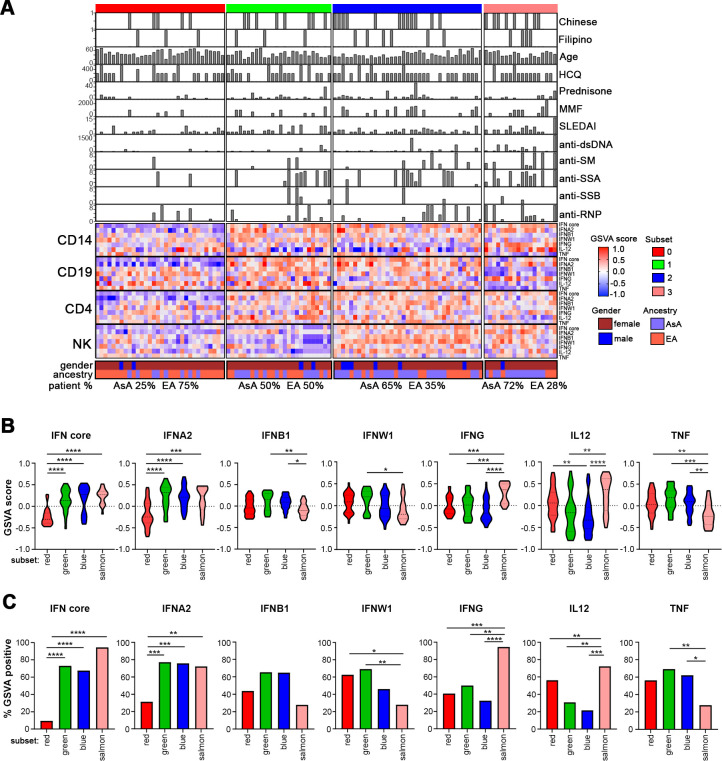
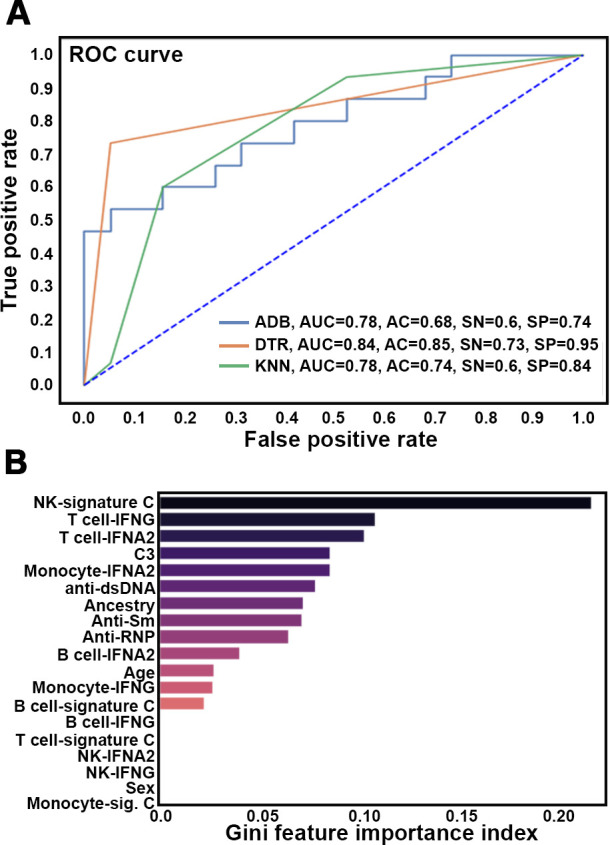
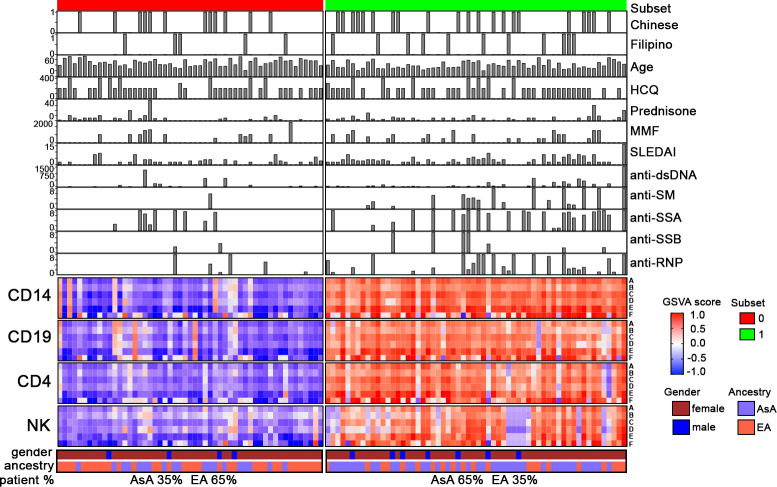
We used gene set variation analysis with multiple IGS encompassing the response to both type 1 and type 2 IFN in isolated CD14+ monocytes, CD19+B cells, CD4+T cells and Natural Killer (NK) cells from patients with SLE stratified by self-identified ancestry. The expression of genes upstream of the IGS and influenced by lupus-associated risk alleles was also examined. Lastly, we employed machine learning (ML) models to assess the most important features classifying patients by disease activity.
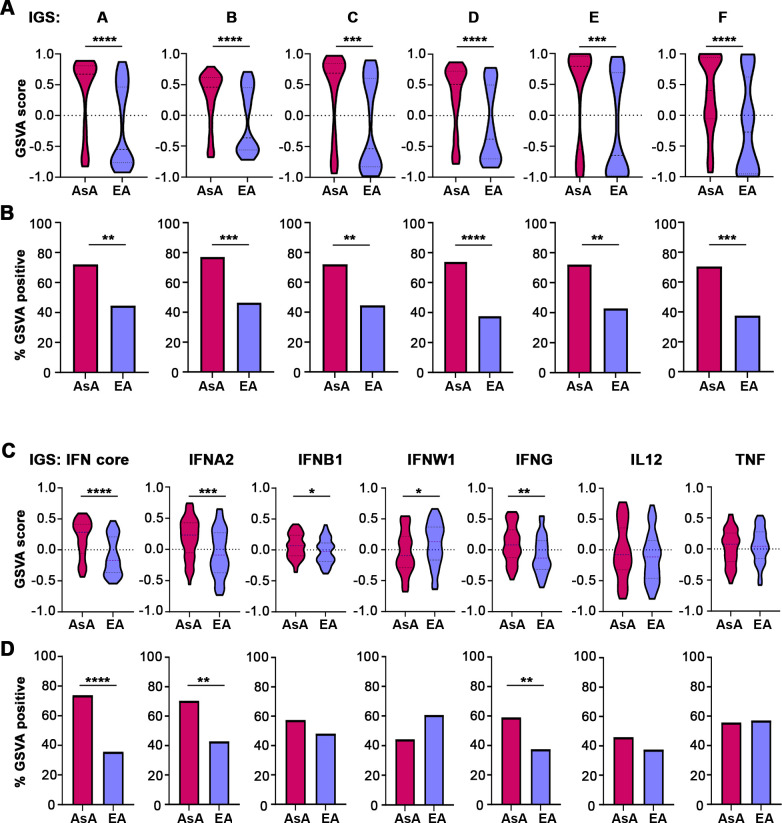
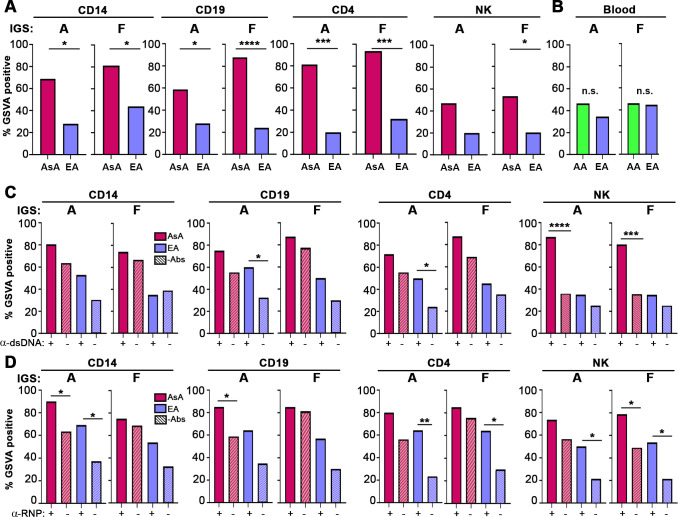
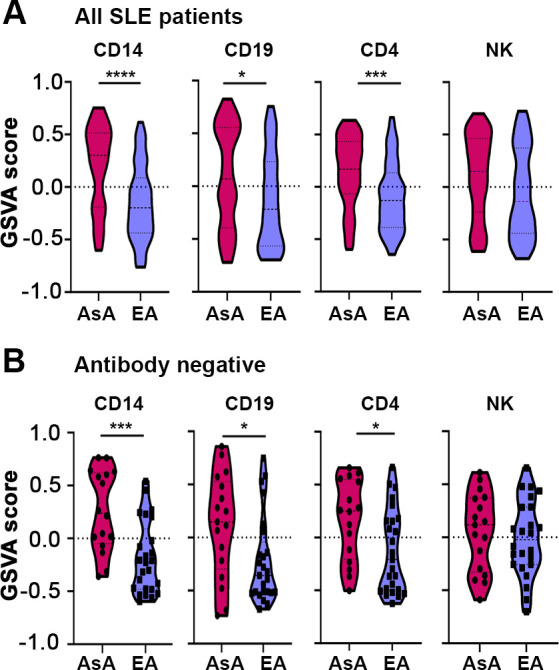
AsA patients with SLE exhibited greater enrichment in the IFN core and IFNA2 IGS compared with EA patients in all cell types examined and, in the presence and absence of autoantibodies. Overall, AsA patients with SLE demonstrated higher expression of genes upstream of the IGS than EA counterparts. ML with feature importance analysis indicated that IGS expression in NK cells, anti-dsDNA, complement levels and AsA status contributed to disease activity.
AsA patients with SLE exhibited higher IGS than EA patients in all cell types regardless of autoantibody status, with enhanced expression of genetically associated genes upstream of the IGS potentially contributing. AsA, along with the IGS in NK cells, anti-dsDNA and complement, independently influenced SLE disease activity.
I 型干扰素(IFN)在系统性红斑狼疮(SLE)发病机制中发挥作用,但人们对祖先人群中 IFN 反应的差异关注不足。在此,我们探讨了欧洲裔(EA)和亚洲裔(AsA)SLE 患者中干扰素基因特征(IGS)的表达情况。
我们使用基因集变异分析(GSVA),对来自不同祖先的患者中,分离的 CD14+单核细胞、CD19+B 细胞、CD4+T 细胞和自然杀伤(NK)细胞中的多个 IGS 进行分析,这些 IGS 包含对 1 型和 2 型 IFN 的反应。还检查了 IGS 上游基因的表达情况,这些基因受狼疮相关风险等位基因的影响。最后,我们采用机器学习(ML)模型评估了最能区分疾病活动患者的重要特征。
在所有检测的细胞类型中,与 EA 患者相比,AsA 患者的 IFN 核心和 IFNA2 IGS 表达更为丰富,无论是否存在自身抗体。总体而言,与 EA 患者相比,AsA 患者的 IGS 上游基因表达更高。具有特征重要性分析的 ML 表明,NK 细胞、抗 dsDNA、补体水平和 AsA 状态的 IGS 表达有助于疾病活动。
无论自身抗体状态如何,与 EA 患者相比,AsA 患者的所有细胞类型中的 IGS 表达更高,潜在地与 IGS 上游基因的遗传相关表达增强有关。AsA 以及 NK 细胞、抗 dsDNA 和补体中的 IGS 独立影响 SLE 的疾病活动。