Abuei Haniyeh, Namdari Sepide, Pakdel Tahereh, Pakdel Fatemeh, Andishe-Tadbir Azadeh, Behzad-Behbahani Abbas, Ashraf Mohammad J, Alavi Parnian, Farhadi Ali
Division of Medical Biotechnology, Department of Medical Laboratory Sciences, School of Paramedical Sciences, Shiraz University of Medical Sciences, Shiraz, Iran.
Diagnostic Laboratory Sciences and Technology Research Center, School of Paramedical Sciences, Shiraz University of Medical Sciences, Shiraz, Iran.
Infect Agent Cancer. 2023 Sep 14;18(1):51. doi: 10.1186/s13027-023-00528-5.
The role of human parvovirus B19 (B19V) infection in malignant and benign lesions such as head and neck squamous cell carcinomas (HNSCCs) and oral mucocele lesions has not been established. Herein, we examined, for the first time, the presence of B19V in HNSCCs from Iranian subjects.
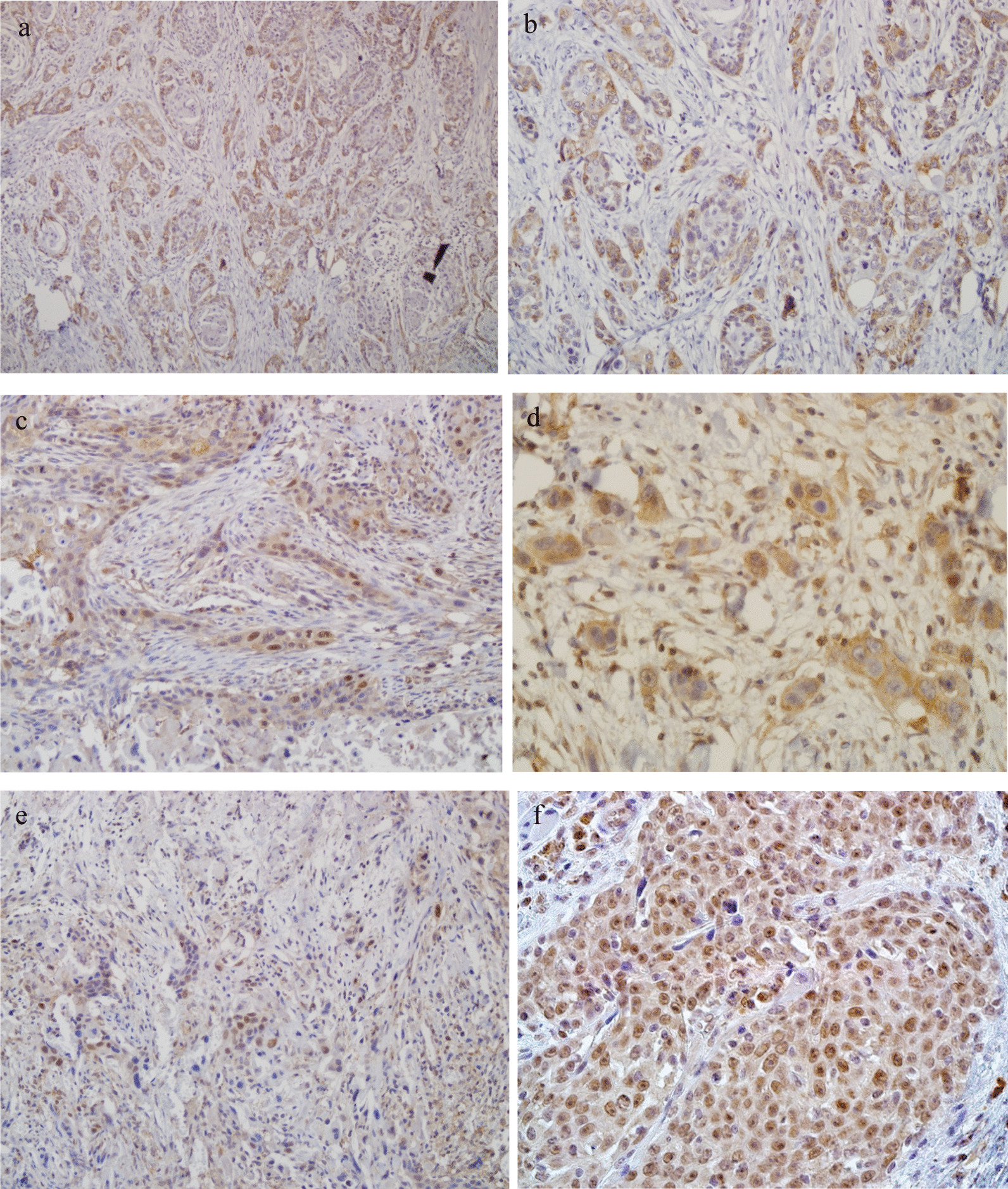
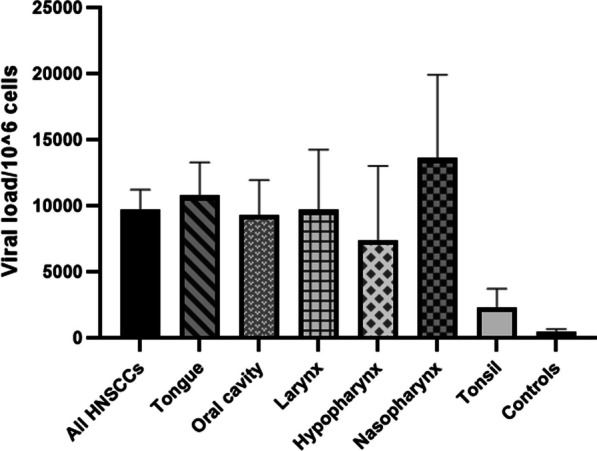
One hundred and eight HNSCC specimens were analyzed for the presence of B19V using nested polymerase chain reaction (nPCR) and TaqMan quantitative PCR assays. Immunohistochemistry procedures were performed to evaluate the expression of B19V VP1/VP2 proteins, p16INK4a, and NF-κB in tumor tissues and their adjacent non-tumor tissues. In addition, 40 oral mucocele, 30 oral buccal mucosa swabs, and 30 nasopharyngeal swabs obtained from healthy adults were analyzed as controls.
B19V DNA was detected in 36.1% of HNSCCs. Further, 23.3% of HNSCC specimens showed immunoreactivity against B19V VP1/VP2 proteins. There was a significant difference in the frequency of B19V DNA-positive cases between the patient and control groups (p < 0.0001). Moreover, comparing tumoral tissues and their adjacent non-tumor tissues in terms of immunoreactivity against B19V structural proteins, a significant association was found between tumor tissues and B19V infection (p < 0.0001). Finally, investigating the simultaneous presence of B19V and high-risk human papillomaviruses (HPV) DNA, we found a significant association between these two viral infections in HNSCCs (p = 0.031).
To sum up, B19V was frequently present in HNSCC tissues of Iranian patients but mostly absent in the adjacent non-tumor tissues as well as oral mucocele lesions, buccal, and nasopharyngeal swabs of healthy subjects. HPV possibly contributes to B19V persistence in HNSCC tissues. Additional research is required to investigate potential etiological or cofactor roles of B19V in the development of HNSCCs.
人细小病毒B19(B19V)感染在恶性和良性病变(如头颈部鳞状细胞癌(HNSCC)和口腔黏液囊肿病变)中的作用尚未明确。在此,我们首次检测了伊朗受试者HNSCC中B19V的存在情况。
采用巢式聚合酶链反应(nPCR)和TaqMan定量PCR检测方法,对108份HNSCC标本进行B19V检测。通过免疫组织化学方法评估肿瘤组织及其相邻非肿瘤组织中B19V VP1/VP2蛋白、p16INK4a和NF-κB的表达。此外,对40份口腔黏液囊肿、30份口腔颊黏膜拭子和30份健康成年人鼻咽拭子作为对照进行分析。
在36.1%的HNSCC中检测到B19V DNA。此外,23.3%的HNSCC标本对B19V VP1/VP2蛋白呈免疫反应阳性。患者组和对照组之间B19V DNA阳性病例的频率存在显著差异(p < 0.0001)。此外,就对B19V结构蛋白的免疫反应性而言,比较肿瘤组织及其相邻非肿瘤组织,发现肿瘤组织与B19V感染之间存在显著关联(p < 0.0001)。最后,研究B19V和高危人乳头瘤病毒(HPV)DNA的同时存在情况,我们发现在HNSCC中这两种病毒感染之间存在显著关联(p = 0.031)。
综上所述,B19V在伊朗患者的HNSCC组织中频繁存在,但在相邻非肿瘤组织以及健康受试者的口腔黏液囊肿病变、颊黏膜和鼻咽拭子中大多不存在。HPV可能有助于B19V在HNSCC组织中持续存在。需要进一步研究以探讨B19V在HNSCC发生发展中的潜在病因或辅助因子作用。