Department of Internal Medicine, Division of Hematology and Oncology.
Harold C. Simmons Comprehensive Cancer Center, and.
J Clin Invest. 2023 Sep 15;133(18):e172156. doi: 10.1172/JCI172156.
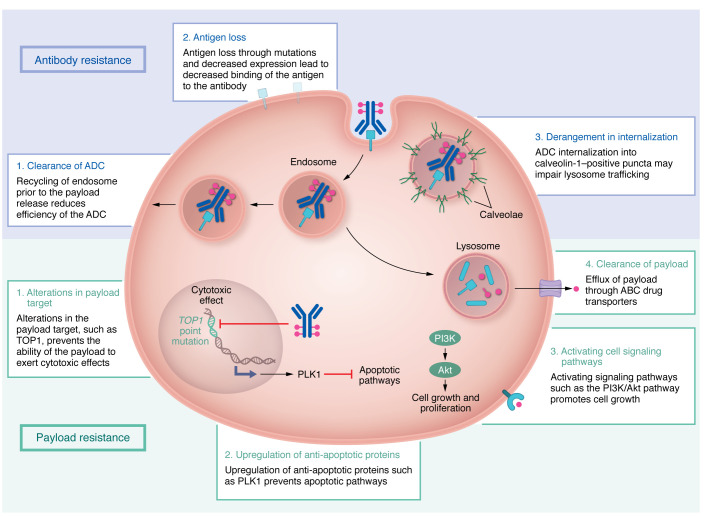
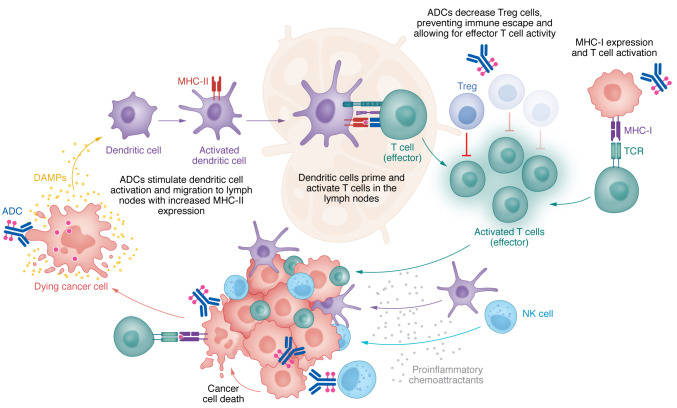
Antibody-drug conjugates (ADCs) have emerged as a revolutionary therapeutic class, combining the precise targeting ability of monoclonal antibodies with the potent cytotoxic effects of chemotherapeutics. Notably, ADCs have rapidly advanced in the field of breast cancer treatment. This innovative approach holds promise for strengthening the immune system through antibody-mediated cellular toxicity, tumor-specific immunity, and adaptive immune responses. However, the development of upfront and acquired resistance poses substantial challenges in maximizing the effectiveness of these therapeutics, necessitating a deeper understanding of the underlying mechanisms. These mechanisms of resistance include antigen loss, derangements in ADC internalization and recycling, drug clearance, and alterations in signaling pathways and the payload target. To overcome resistance, ongoing research and development efforts are focused on urgently identifying biomarkers, integrating immune therapy approaches, and designing novel cytotoxic payloads. This Review provides an overview of the mechanisms and clinical effectiveness of ADCs, and explores their unique immune-boosting function, while also highlighting the complex resistance mechanisms and safety challenges that must be addressed. A continued focus on how ADCs impact the tumor microenvironment will help to identify new payloads that can improve patient outcomes.
抗体药物偶联物(ADCs)的出现是治疗领域的一场革命,它将单克隆抗体的精确靶向能力与化疗药物的强大细胞毒性相结合。值得注意的是,ADC 在乳腺癌治疗领域取得了快速进展。这种创新方法有望通过抗体介导的细胞毒性、肿瘤特异性免疫和适应性免疫反应来增强免疫系统。然而,原发性和获得性耐药的发展对最大限度地提高这些治疗药物的疗效构成了重大挑战,需要深入了解潜在的机制。这些耐药机制包括抗原丢失、ADC 内化和再循环、药物清除以及信号通路和有效载荷靶标的改变。为了克服耐药性,正在进行的研究和开发工作集中于迫切确定生物标志物、整合免疫治疗方法和设计新型细胞毒性有效载荷。本综述概述了 ADC 的作用机制和临床疗效,并探讨了它们独特的免疫增强功能,同时还强调了必须解决的复杂耐药机制和安全挑战。持续关注 ADC 如何影响肿瘤微环境将有助于确定能够改善患者预后的新有效载荷。