Division of General Internal Medicine, Geneva University Hospitals, Geneva, Switzerland.
Division of Clinical Pharmacology and Toxicology, Geneva University Hospitals, 4 Rue Gabrielle Perret-Gentil, 1205, Geneva, Switzerland.
BMC Anesthesiol. 2023 Sep 15;23(1):314. doi: 10.1186/s12871-023-02276-w.
Despite clear, relatively easy-to-use guidance, many clinicians find the preoperative management of direct oral anticoagulants (DOACs) challenging. Inappropriate management can delay procedures and lead to haemorrhagic or thromboembolic complications. We aimed to describe preoperative management practices regarding DOACs in a tertiary hospital and clinicians' adherence to in-house recommendations.
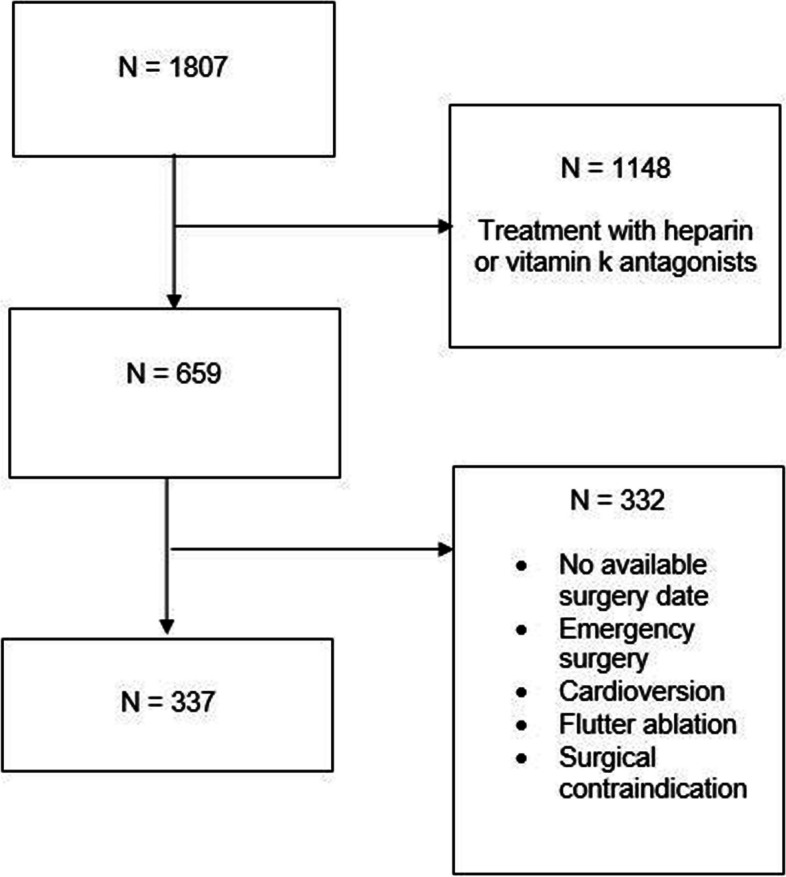
We included all patients being treated with DOACs who underwent elective surgery in 2019 and 2020 (n = 337). In-house recommendations for perioperative management were largely comparable to the 2022 American College of Chest Physicians guidelines.
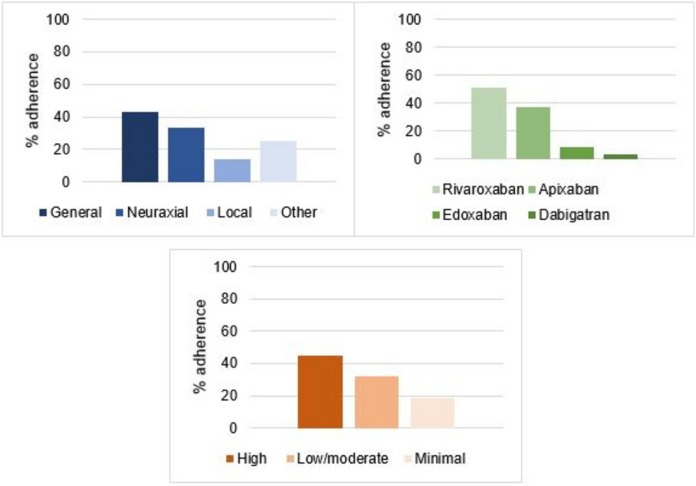
Typical patients were older adults with multiple comorbidities and high thrombotic risk stratification scores, and 65.6% (n = 221) had not undergone recommended preoperative anticoagulation management protocols. Patients operated on using local anaesthesia (adjusted OR = 0.30, 95%CI 0.14-0.66; p < 0.01) were less likely to have been treated following institutional recommendations, but no association between their procedure's bleeding risk and adherence was found. Clinicians' failures to adhere to recommendations mostly involved late or non-indicated interruptions of anticoagulation treatment (n = 89, 26.4%) or inappropriate heparin bridging (n = 54, 16.0%). Forty-five (13.3%) procedures had to be postponed. Incorrect preoperative anticoagulation management was directly responsible for 12/45 postponements (26.7% of postponements).
This study highlights clinicians' low adherence rates to institutional recommendations for patients treated with DOACs scheduled for elective surgery in a tertiary hospital centre. To the best of our knowledge, this is the first clinical study addressing the issue of clinicians' adherence to guidelines for the preoperative management of DOACs. Going beyond the issue of whether clinicians are knowledgeable about guidelines or have them available, this study questions how generalisable guidelines are in a tertiary hospital managing many highly polymorbid patients. Further studies should identify the causes of poor adherence.
尽管有明确、相对易用的指南,但许多临床医生发现直接口服抗凝剂(DOAC)的术前管理具有挑战性。不适当的管理会延迟手术并导致出血或血栓栓塞并发症。我们旨在描述三级医院中 DOAC 术前管理的实践以及临床医生对内部建议的遵守情况。
我们纳入了 2019 年和 2020 年接受择期手术且正在接受 DOAC 治疗的所有患者(n=337)。围手术期管理的内部建议与 2022 年美国胸科医师学会指南基本一致。
典型患者为有多种合并症和高血栓风险分层评分的老年患者,65.6%(n=221)未接受过推荐的术前抗凝管理方案。接受局部麻醉的患者(调整后的 OR=0.30,95%CI 0.14-0.66;p<0.01)更不可能接受机构建议的治疗,但未发现他们手术的出血风险与依从性之间存在关联。临床医生不遵守建议主要涉及抗凝治疗的延迟或不适当中断(n=89,26.4%)或不适当的肝素桥接(n=54,16.0%)。45 例(13.3%)手术不得不推迟。不正确的术前抗凝管理直接导致 45 次手术推迟中的 12 次(推迟手术的 26.7%)。
本研究强调了在三级医院中心接受 DOAC 治疗且计划接受择期手术的患者,临床医生对机构建议的遵守率较低。据我们所知,这是第一项针对临床医生对 DOAC 术前管理指南的遵守情况进行的临床研究。本研究不仅探讨了临床医生是否了解指南或是否有指南可用的问题,还质疑了在管理许多高度合并症患者的三级医院中,指南的普遍性如何。进一步的研究应确定不遵守的原因。