Li Enkai, Li Chuang, Horn Nathan, Ajuwon Kolapo M
Department of Animal Sciences, Purdue University, West Lafayette, IN 47907, USA.
Department of Biological Sciences, Purdue University, West Lafayette, IN 47907, USA.
Curr Res Toxicol. 2023 Sep 6;5:100122. doi: 10.1016/j.crtox.2023.100122. eCollection 2023.
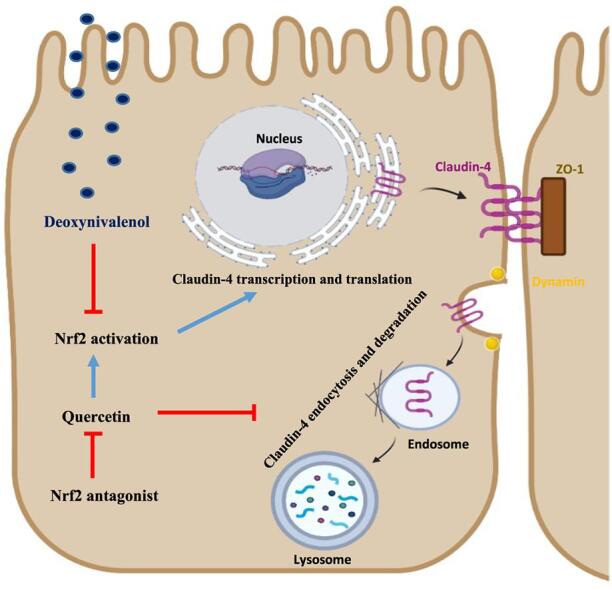
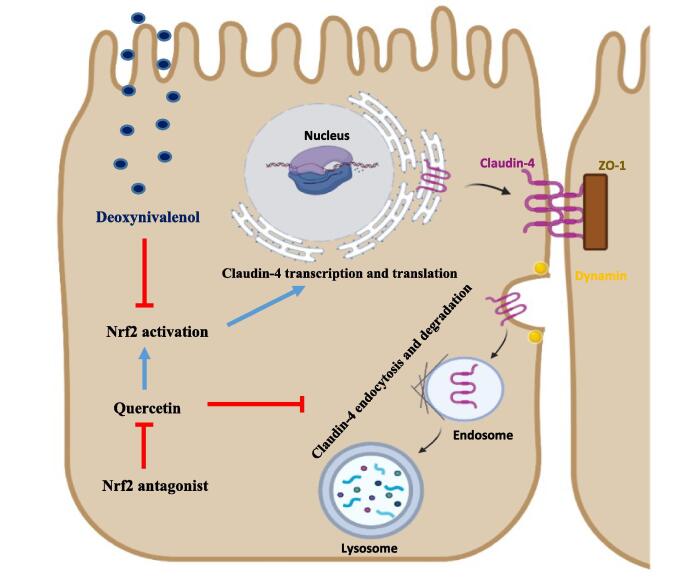
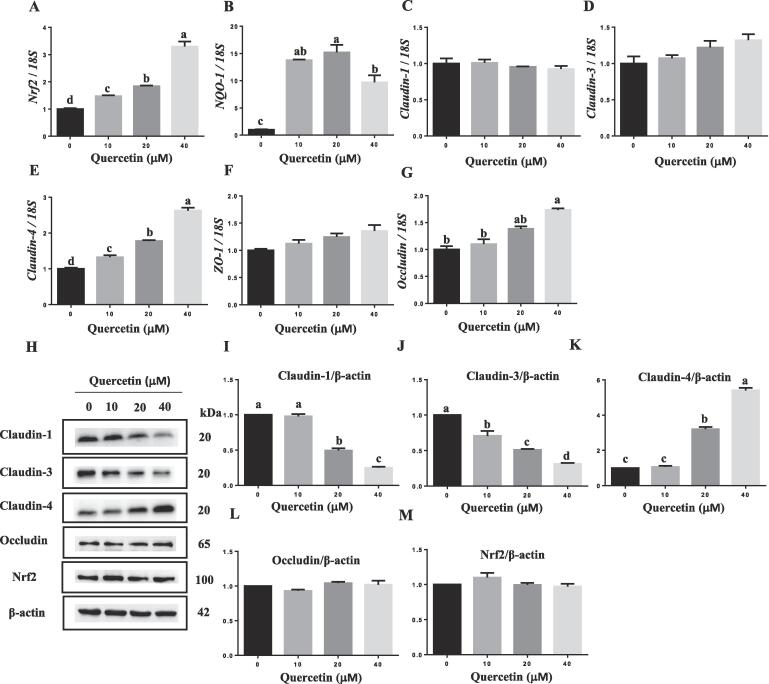
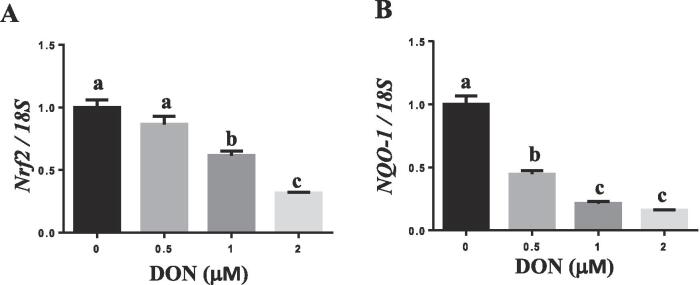
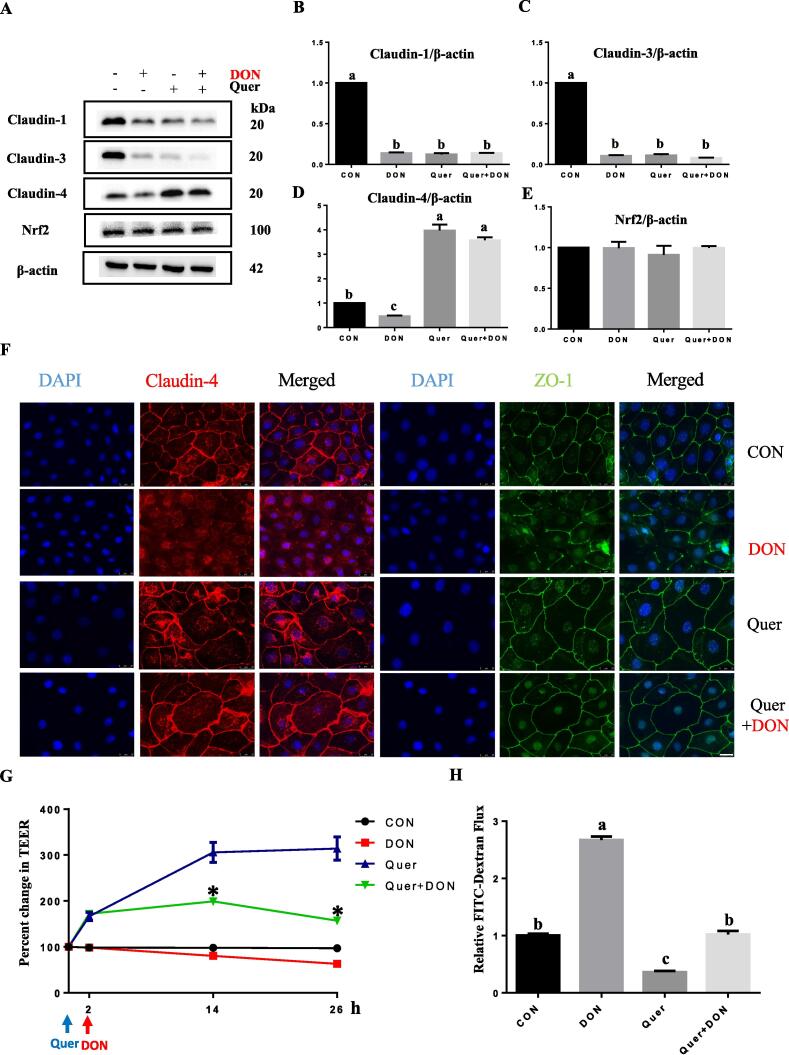
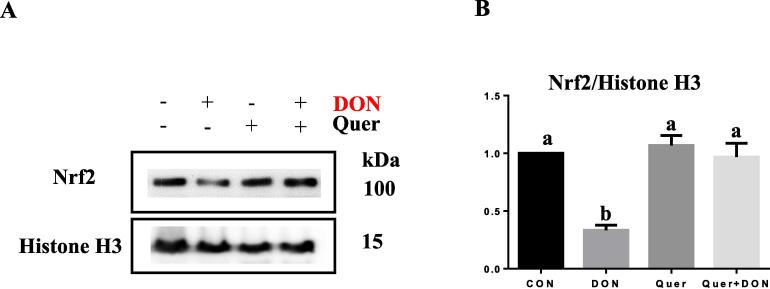
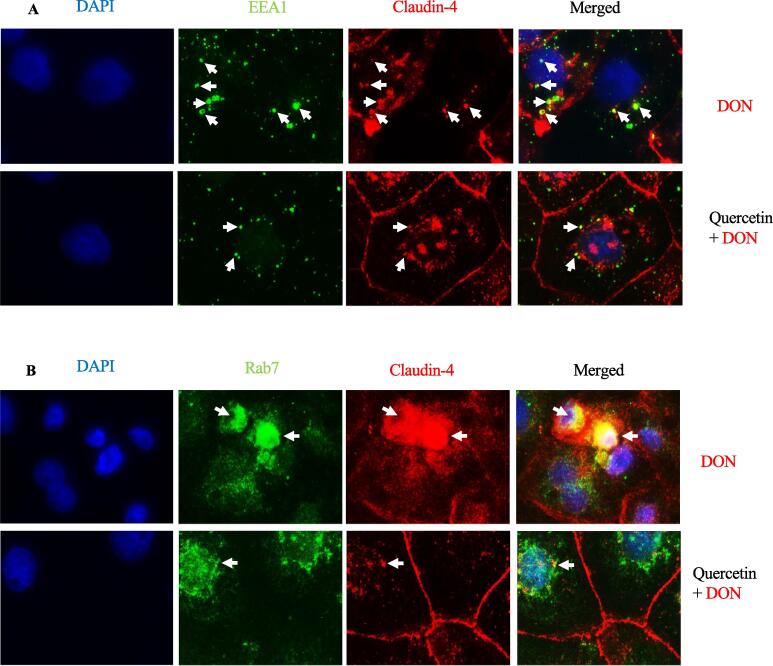
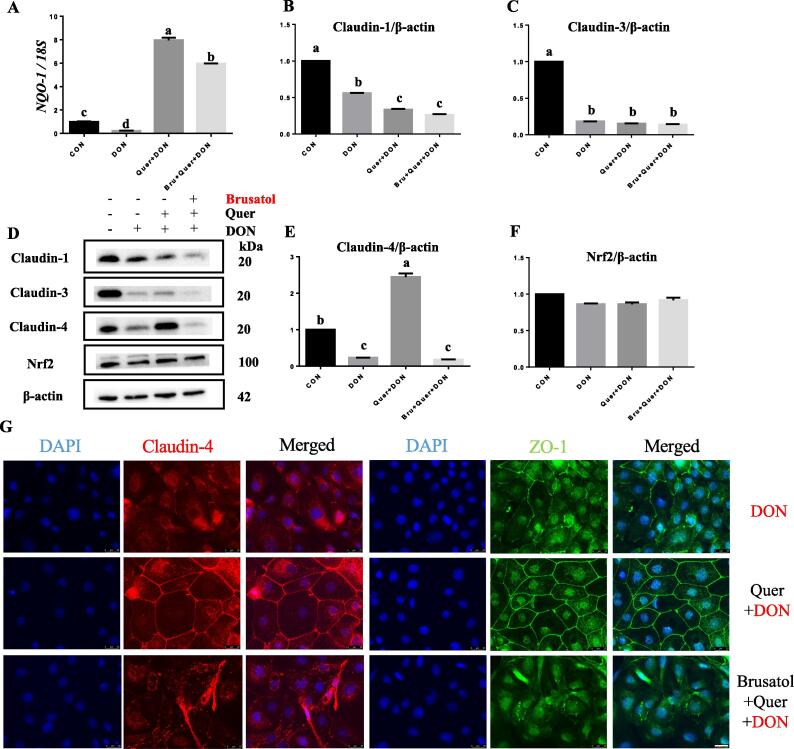
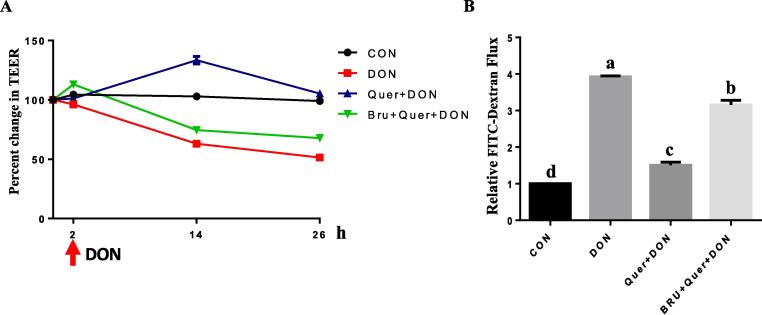
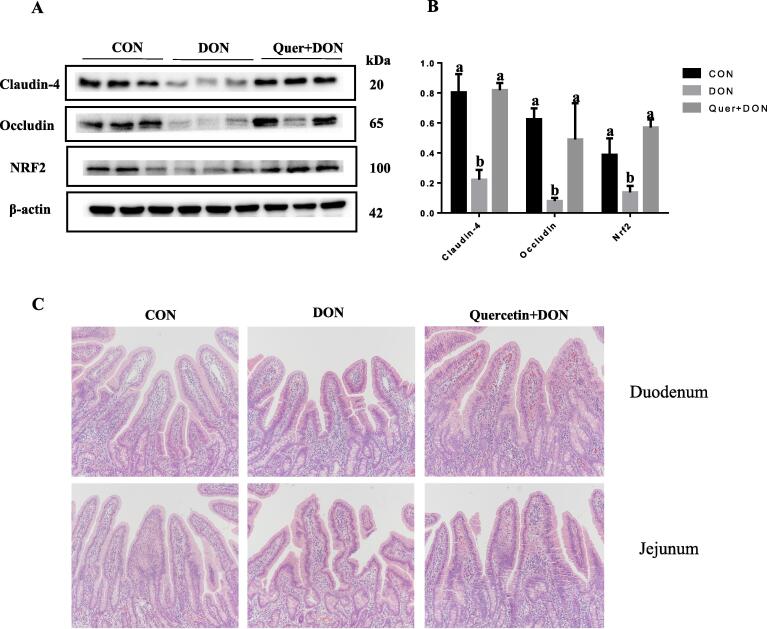
The presence of deoxynivalenol (DON), one of the most frequently occurring mycotoxin, in food and feed has been considered a risk factor to both human and animal health. Molecular mechanisms that regulate DON effects in tissues are still poorly understood. However, recent evidence suggests that nuclear factor erythroid 2-like 2 (Nrf2) may be a major target during mycotoxin-induced intestinal barrier dysfunction. Although quercetin, a plant-derived flavonoid, is known to induce the activation of Nrf2 signaling pathway, its potential to mitigate effects of DON and the implication of Nrf2 in its physiological effects is poorly understood. Therefore, this study was conducted to investigate the protective effects of quercetin in alleviating the DON-induced barrier loss and intestinal injuries in IPEC-J2 cells and weaned piglets and determine the potential role of Nrf2. Quercetin treatment dose-dependently increased mRNA expression of Nrf2 target gene, , and concomitantly increased the expression of claudin-4 at both mRNA and protein levels. Quercetin supplementation also reversed the reduction of claudin-4 caused by DON exposure and . The decreased membrane presence of claudin-4 and ZO-1 induced by DON was also blocked by quercetin. Furthermore, quercetin attenuated the endocytosis and degradation of claudin-4 caused by DON exposure. The effects of quercetin also included the restoration of transepithelial electrical resistance (TEER) and reduction of FITC-dextran permeability that have been perturbed by DON. However, the protective effects of quercetin against DON exposure were abolished by a specific Nrf2 inhibitor (brusatol), confirming the importance of Nrf2 in the regulation of TJP expression and barrier function by quercetin. study in weaned pigs showed that DON exposure impaired villus-crypt morphology as indicated by diffuse apical villus necrosis, villus atrophy and fusion. Notably, intestinal injuries caused by DON administration were partly mitigated by quercetin supplementation. Collectively, this study shows that quercetin could be used to prevent the DON-induced gut barrier dysfunction in humans and animals and the protective effects of quercetin against DON-induced intestinal barrier disruption is partly through Nrf2-dependent signaling pathway.
脱氧雪腐镰刀菌烯醇(DON)是最常见的霉菌毒素之一,其在食品和饲料中的存在被认为是对人类和动物健康的一个风险因素。调节DON在组织中作用的分子机制仍知之甚少。然而,最近的证据表明,核因子红细胞2样2(Nrf2)可能是霉菌毒素诱导肠道屏障功能障碍过程中的一个主要靶点。虽然槲皮素这种植物来源的黄酮类化合物已知可诱导Nrf2信号通路的激活,但其减轻DON影响的潜力以及Nrf2在其生理效应中的作用仍了解不足。因此,本研究旨在探讨槲皮素对减轻IPEC-J2细胞和断奶仔猪中DON诱导的屏障丧失和肠道损伤的保护作用,并确定Nrf2的潜在作用。槲皮素处理剂量依赖性地增加了Nrf2靶基因的mRNA表达,同时在mRNA和蛋白质水平上增加了claudin-4的表达。补充槲皮素还逆转了DON暴露引起的claudin-4的减少。DON诱导的claudin-4和ZO-1膜表达降低也被槲皮素阻断。此外,槲皮素减弱了DON暴露引起的claudin-4的内吞作用和降解。槲皮素的作用还包括恢复被DON扰乱的跨上皮电阻(TEER)和降低FITC-葡聚糖通透性。然而,槲皮素对DON暴露的保护作用被一种特异性Nrf2抑制剂(bruceatol)消除,这证实了Nrf2在槲皮素调节紧密连接蛋白表达和屏障功能中的重要性。一项针对断奶仔猪的研究表明,DON暴露损害了绒毛-隐窝形态,表现为弥漫性顶端绒毛坏死、绒毛萎缩和融合。值得注意的是,补充槲皮素部分减轻了DON给药引起的肠道损伤。总体而言,本研究表明槲皮素可用于预防人类和动物中DON诱导的肠道屏障功能障碍,且槲皮素对DON诱导的肠道屏障破坏的保护作用部分是通过Nrf2依赖性信号通路实现的。