Toronto Humane Society, Toronto, ON, Canada.
Biostatistical Consultant, Toronto, ON, Canada.
J Feline Med Surg. 2023 Sep;25(9):1098612X231197089. doi: 10.1177/1098612X231197089.
The aim of the present study was to report clinical findings, surgical complications and outcomes for previously hoarded cats treated surgically for otitis media-interna (OMI) and to investigate the risk factors for complications and poor outcomes.
A retrospective study was conducted of 58 cats from an institutional hoarding environment that underwent ventral bulla osteotomy (VBO).
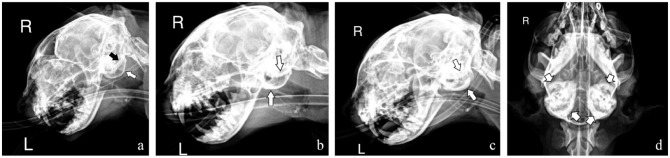
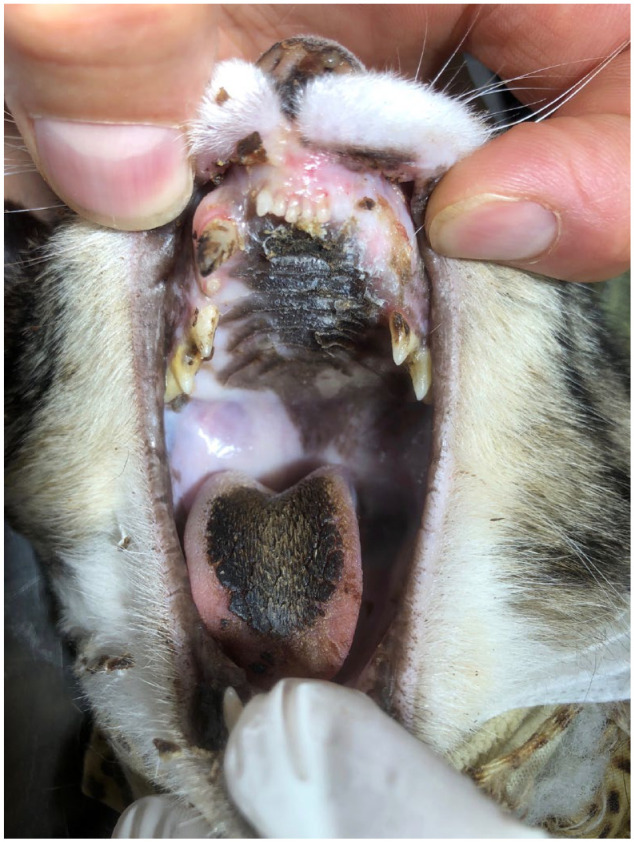
Inappetence was uncommon at presentation (9/58, 16%) compared with pruritus/alopecia (50%), nasopharyngeal signs (45%), otitis externa (OE) (79%) and otitis interna (OI) (ataxia ± head tilt/head excursions) in 40%. Purulent aural discharge occurred in 36% and polyps in 26%. The tympanic bulla wall was moderately or severely thickened radiographically in 38/108 (35%) ears. Cultures were positive for subspecies in 26/48 (54%) cats. Of the 58 cats, 40 (69%) had complications after the first VBO and 19/30 (63%) after the second. Of 101 complications, 56 (55%), from 27/88 (31%) surgeries, were considered serious, including life-threatening perioperative complications in seven, OI in eight, prolonged anorexia in six and worsening of pruritus/alopecia in nine cases. Three cats developed xerostomia (dry mouth) after the second VBO. Pruritus/alopecia, nasopharyngeal signs, OE and purulent aural discharge resolved in a statistically significant proportion of cats but persisted in some. Full resolution of OI was uncommon. OI preoperatively, and surgery performed by a generalist (vs specialist) surgeon, were risk factors for OE at recheck (OI: odds ratio [OR] 4.35; 95% confidence interval [CI] 1.21-15.70; = 0.02; surgery: OR 3.64; 95% CI 1.03-12.87; = 0.045). No other prognostic indicators were identified. No variables tested were significantly associated with risk of serious complications or euthanasia.
Surgical management of chronic OMI was successful in most cases but was not benign and not always beneficial. The analysis was unable to identify clinically helpful outcome predictors. Optimal management of chronic feline OMI remains a challenge, particularly for animal shelters. Less invasive approaches and chronic medical management require further investigation.
本研究旨在报告经手术治疗的中耳炎(OMI)囤积猫的临床发现、手术并发症和结果,并探讨并发症和不良预后的危险因素。
对 58 只来自收容所囤积环境的猫进行回顾性研究,这些猫均接受了腹侧鼓室切开术(VBO)。
与瘙痒/脱毛(50%)、鼻咽症状(45%)、外耳炎(OE)(79%)和内耳炎(OI)(共济失调±头倾斜/头部摆动)相比,就诊时无食欲(9/58,16%)较为少见。36%有脓性耳漏,26%有息肉。38/108 只(35%)耳朵的鼓室壁在影像学上中度或重度增厚。48 只中的 26 只(54%)培养阳性。58 只猫中,40 只(69%)在第一次 VBO 后出现并发症,30 只中的 19 只(63%)在第二次 VBO 后出现并发症。101 种并发症中,56 种(55%)来自 27 次(31%)手术,被认为是严重并发症,包括 7 例围手术期危及生命的并发症、8 例 OI、6 例长期厌食和 9 例瘙痒/脱毛恶化。3 只猫在第二次 VBO 后出现口干(口干)。瘙痒/脱毛、鼻咽症状、OE 和脓性耳漏在很大比例的猫中得到了统计学上的显著缓解,但在一些猫中仍持续存在。OI 完全缓解并不常见。术前 OI 和由全科医生(vs 专科医生)进行的手术是复查时 OE 的危险因素(OI:比值比[OR]4.35;95%置信区间[CI]1.21-15.70;=0.02;手术:OR 3.64;95%CI 1.03-12.87;=0.045)。没有发现其他预后指标与严重并发症或安乐死的风险相关。
慢性 OMI 的手术治疗在大多数情况下是成功的,但并非良性,也并非总是有益。分析未能确定有临床帮助的预后预测因子。慢性猫 OMI 的最佳管理仍然是一个挑战,特别是对于动物收容所。需要进一步研究更具侵入性的方法和慢性药物治疗。