Pediatric Neurosurgery, Fondazione Policlinico Universitario A. Gemelli IRCCS, Largo A. Gemelli, 8, 00168, Rome, Italy.
Department of Neuroscience, Università Cattolica del Sacro Cuore, Rome, Italy.
Childs Nerv Syst. 2023 Oct;39(10):2613-2632. doi: 10.1007/s00381-023-06143-4. Epub 2023 Sep 20.
In spite of the continuous progresses in pediatric neurosurgery, adamantinomatous craniopharyngioma (AC) remains a challenging tumor due to its proximity to optic pathways, pituitary gland, hypothalamus, and Willis' circle, which can result in significant endocrine, cognitive, and neurological morbidity after treatment with subsequent impact on the patient's quality of life (QoL). The relevance that QoL has today explains the changes in the management of AC observed over the time. The goal of the present article is to provide a historical background, to show the milestones in the changes of the AC treatment, and to analyze the current main options to manage such a challenging tumor.
The pertinent literature has been reviewed. Moreover, a comparison between the past and recent personal series is reported.
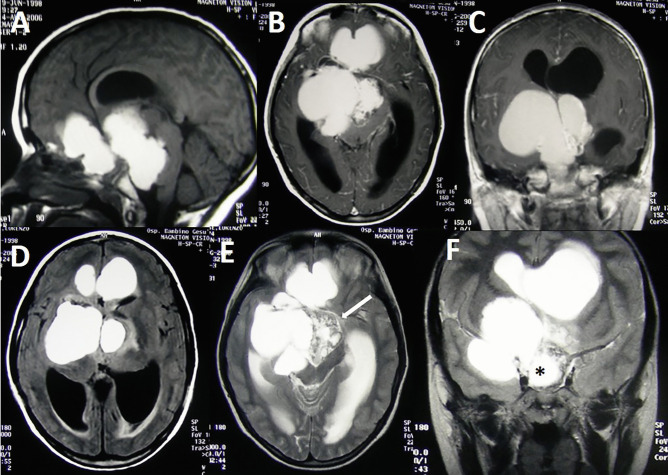
Three main eras have been identified. The first (named Cushing era) was characterized by the need to realize a harmless surgery and to define the best way to approach AC; the second (microscope era) was characterized by a tremendous technical and technological development, with remarkable results in term of safe tumor resection and control but relatively poor QoL outcomes; and the third one (current period) is characterized by an increasing integration between surgery and adjuvant treatments, with relatively minor tumor control but significant improvement of QoL (comparable overall survival). The authors' experience reflects these changes. Two groups of children were compared: 52 cases (mean follow-up: 17.5 years) belong to the historical series (group 1, 1985-2003, aggressive surgical management) and 41 (mean follow-up: 8.5 years) to the current one (Group 2, 2004-2021, integrated management). No significant differences between the two groups were detected about recurrence rate, surgical mortality, and overall survival. However, Group 2 showed significant lower rates of postoperative panhypopituitarism, obesity, and visual deterioration.
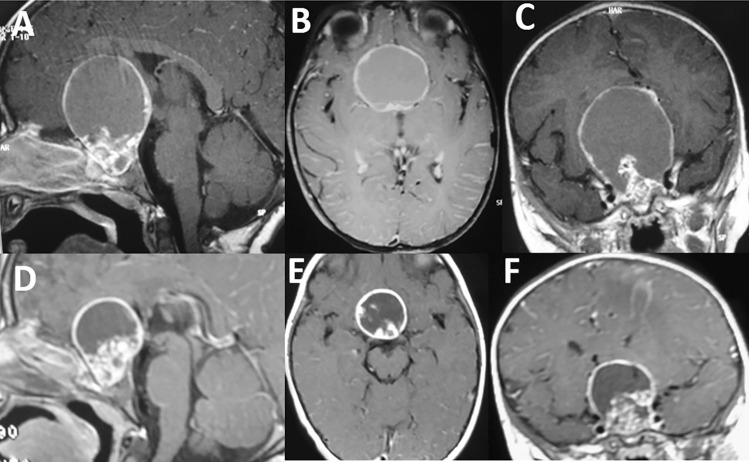
Radical surgery allows for a good AC control with a low rate of recurrence but high risk of permanent morbidity. Despite the greater number of recurrences and surgeries, the more conservative policy, based on a combination of treatments, seems to provide the same tumor control with a better QoL. The advances in trans-nasal and trans-ventricular endoscopy, in proton therapy and in the management of the AC cyst are the main factors that allowed such an improvement.
尽管儿科神经外科学不断取得进展,但颅咽管瘤(AC)仍然是一种具有挑战性的肿瘤,因为它靠近视路、垂体、下丘脑和 Willis 环,这可能导致治疗后出现显著的内分泌、认知和神经功能障碍,从而对患者的生活质量(QoL)产生后续影响。如今,QoL 的重要性解释了随着时间的推移观察到的 AC 治疗管理的变化。本文的目的是提供一个历史背景,展示 AC 治疗变化的里程碑,并分析目前管理这种具有挑战性的肿瘤的主要选择。
回顾了相关文献。此外,还报告了过去和最近个人系列之间的比较。
确定了三个主要时期。第一个时期(称为 Cushing 时期)的特点是需要实现无害手术,并确定接近 AC 的最佳方法;第二个时期(显微镜时期)的特点是技术和技术的巨大发展,在安全切除肿瘤和控制肿瘤方面取得了显著的结果,但 QoL 结果相对较差;第三个时期(当前时期)的特点是手术和辅助治疗之间的日益融合,肿瘤控制相对较小,但 QoL 显著改善(总体生存率相当)。作者的经验反映了这些变化。比较了两组儿童:52 例(平均随访 17.5 年)属于历史组(第 1 组,1985-2003 年,积极手术治疗)和 41 例(平均随访 8.5 年)属于当前组(第 2 组,2004-2021 年,综合治疗)。两组之间在复发率、手术死亡率和总体生存率方面没有显著差异。然而,第 2 组术后全垂体功能减退、肥胖和视力恶化的发生率显著较低。
根治性手术可实现良好的 AC 控制,复发率低,但永久性发病率高。尽管复发和手术次数较多,但基于治疗联合的更保守策略似乎提供了相同的肿瘤控制和更好的 QoL。经鼻和经脑室内镜技术、质子治疗和 AC 囊肿管理方面的进展是实现这种改善的主要因素。