Zhang Wang, Zhu Zhu, Zhao Yonggen, Li Zheming, Chen Lingdong, Huang Jian, Li Jing, Yu Gang
Department of Data and Information, Children's Hospital, Zhejiang University School of Medicine, Hangzhou, China.
Sino-Finland Joint AI Laboratory for Child Health of Zhejiang Province, Hangzhou, China.
JMIR Med Inform. 2023 Sep 20;11:e45846. doi: 10.2196/45846.
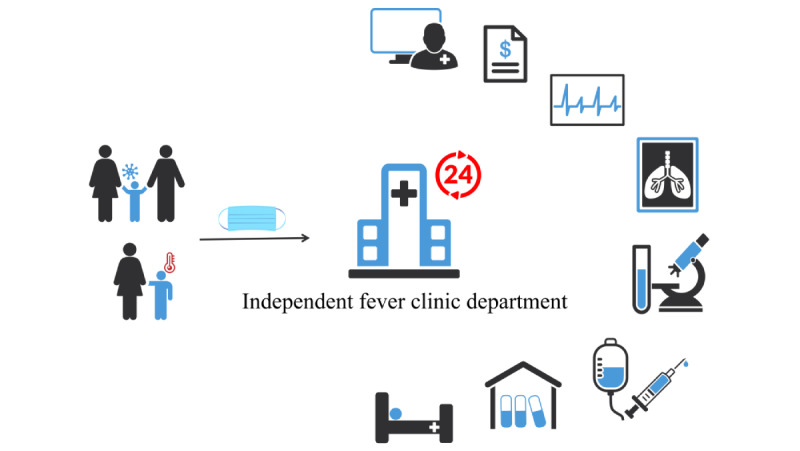
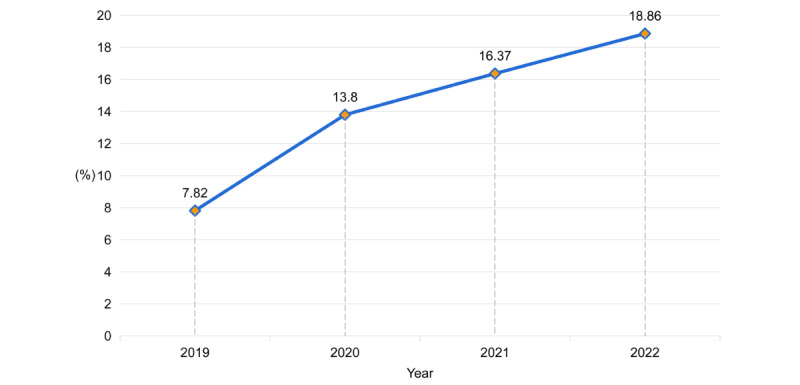
The COVID-19 pandemic has significantly altered the global health and medical landscape. In response to the outbreak, Chinese hospitals have established 24-hour fever clinics to serve patients with COVID-19. The emergence of these clinics and the impact of successive epidemics have led to a surge in visits, placing pressure on hospital resource allocation and scheduling. Therefore, accurate prediction of outpatient visits is essential for informed decision-making in hospital management.
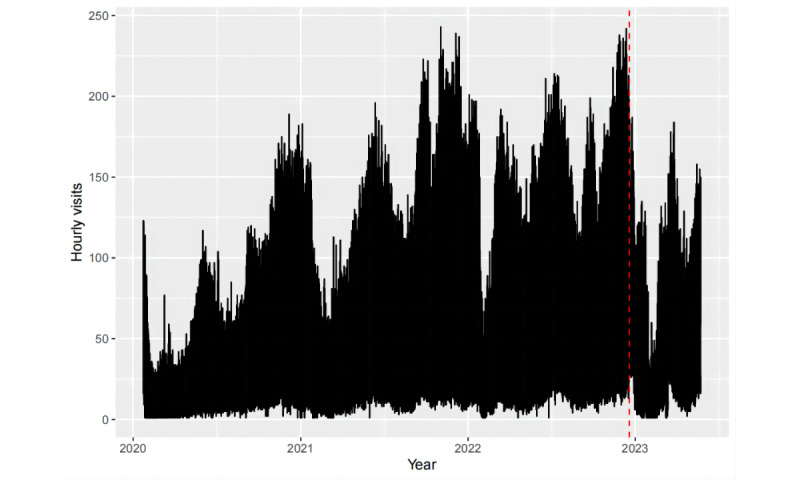
Hourly visits to fever clinics can be characterized as a long-sequence time series in high frequency, which also exhibits distinct patterns due to the particularity of pediatric treatment behavior in an epidemic context. This study aimed to build models to forecast fever clinic visit with outstanding prediction accuracy and robust generalization in forecast horizons. In addition, this study hopes to provide a research paradigm for time-series forecasting problems, which involves an exploratory analysis revealing data patterns before model development.
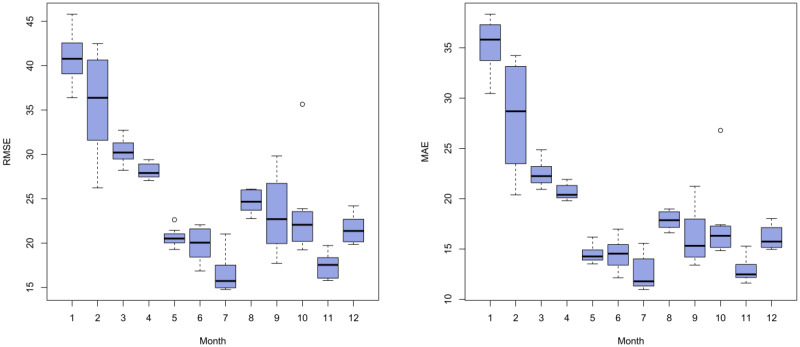
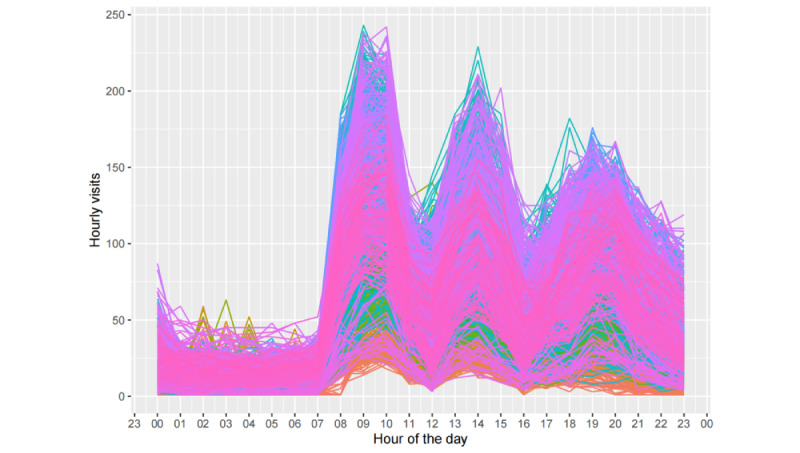
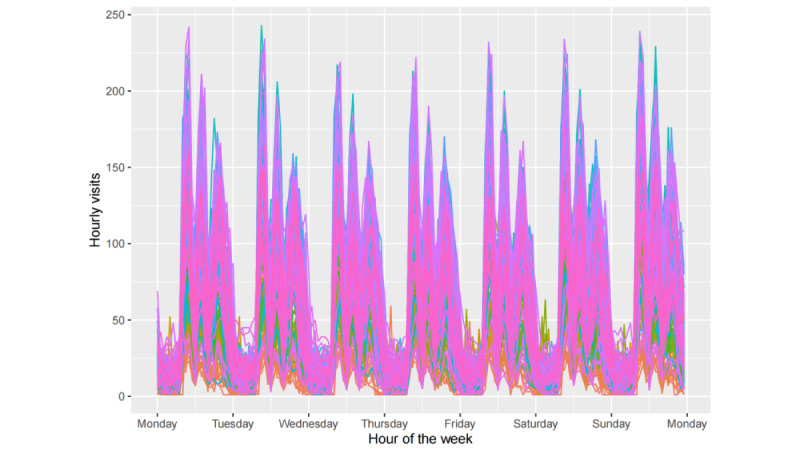
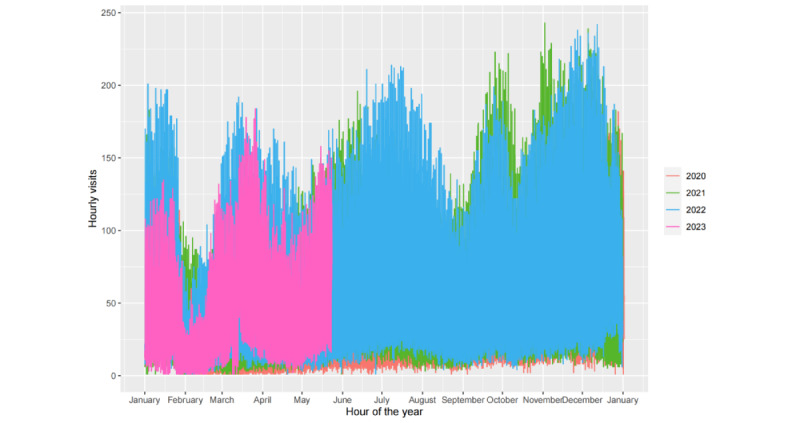
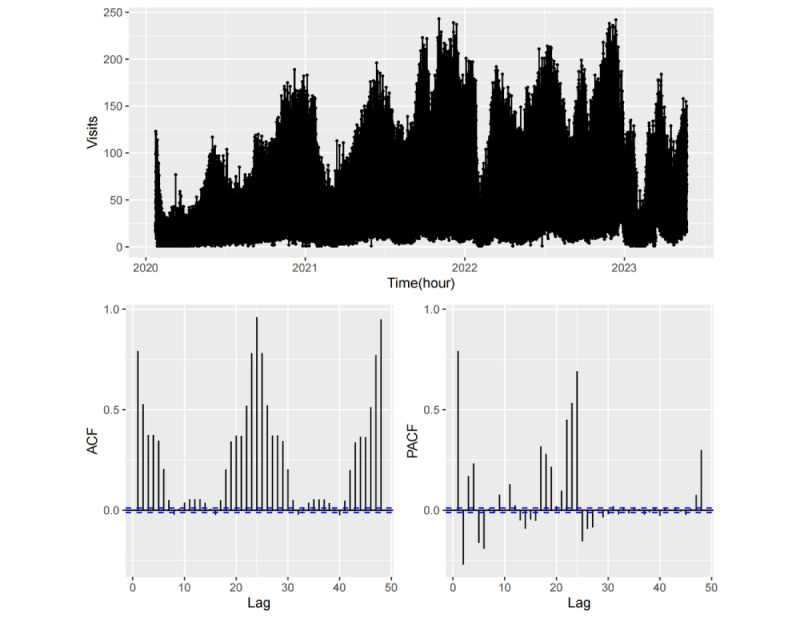
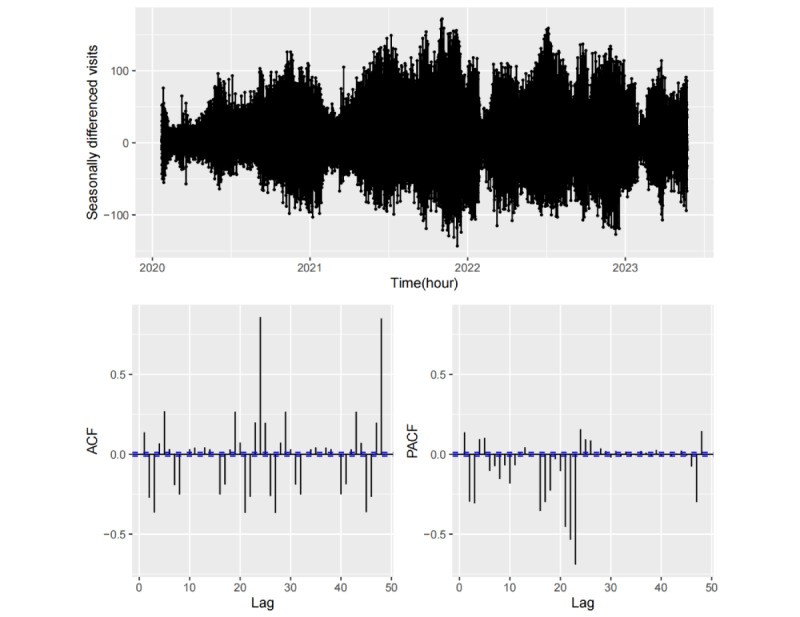
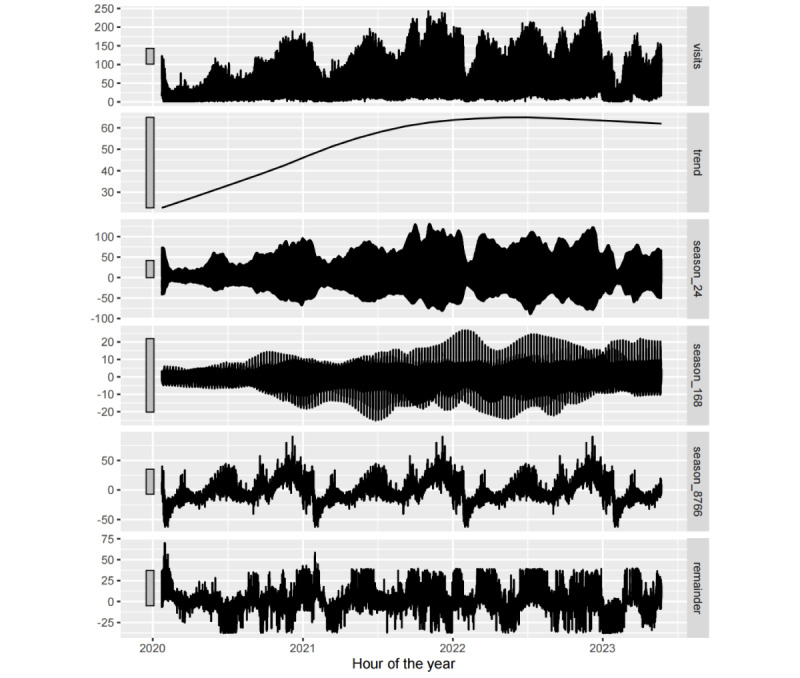
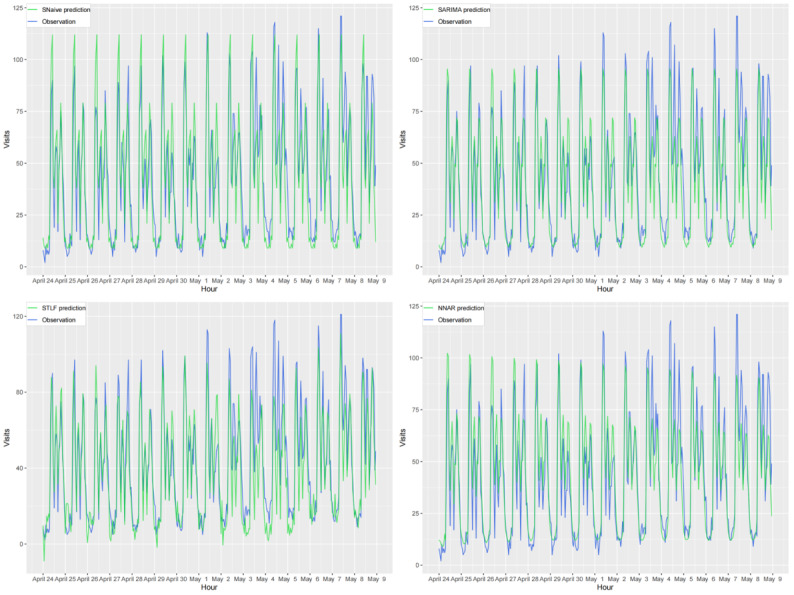
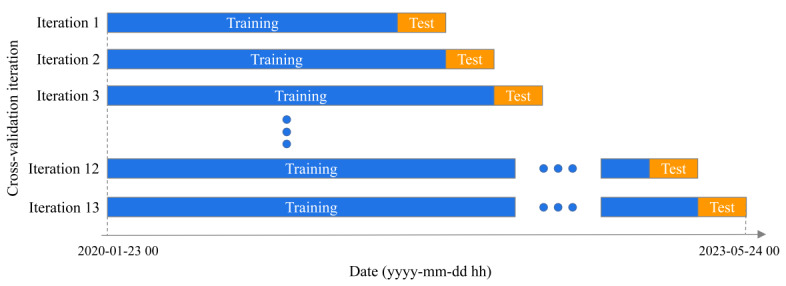
An exploratory analysis, including graphical analysis, autocorrelation analysis, and seasonal-trend decomposition, was conducted to reveal the seasonality and structural patterns of the retrospective fever clinic visit data. The data were found to exhibit multiseasonality and nonlinearity. On the basis of these results, an ensemble of time-series analysis methods, including individual models and their combinations, was validated on the data set. Root mean square error and mean absolute error were used as accuracy metrics, with the cross-validation of rolling forecasting origin conducted across different forecast horizons.
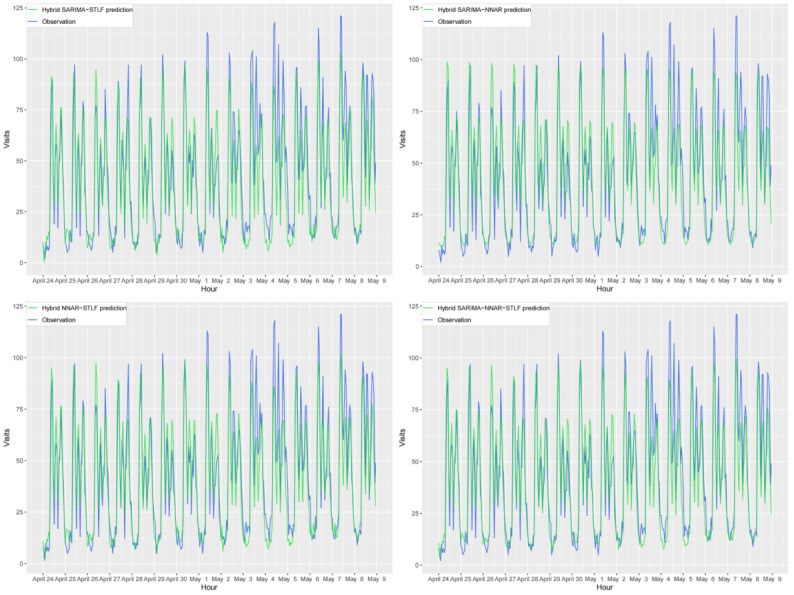
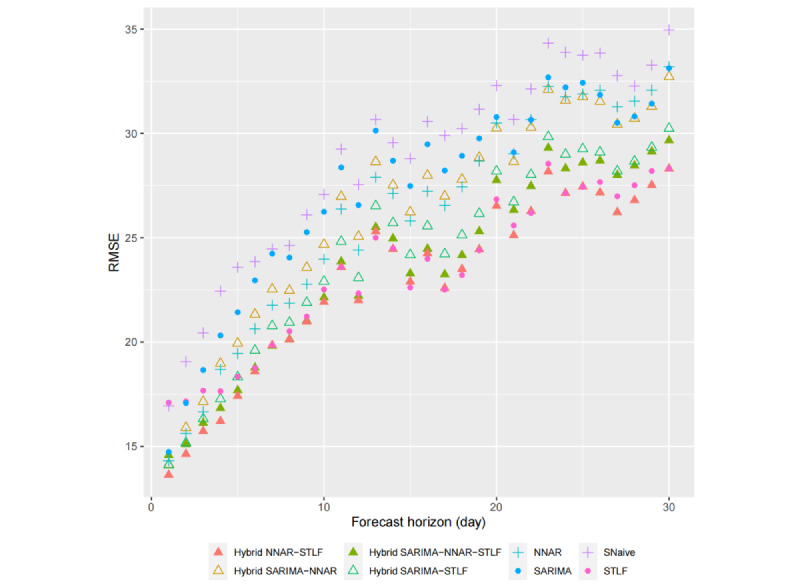
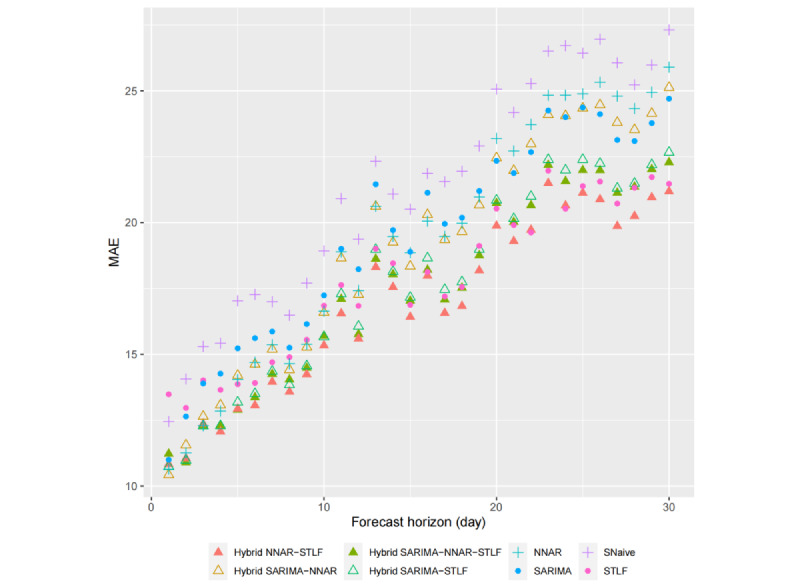
Hybrid models generally outperformed individual models across most forecast horizons. A novel model combination, the hybrid neural network autoregressive (NNAR)-seasonal and trend decomposition using Loess forecasting (STLF), was identified as the optimal model for our forecasting task, with the best performance in all accuracy metrics (root mean square error=20.1, mean absolute error=14.3) for the 15-days-ahead forecasts and an overall advantage for forecast horizons that were 1 to 30 days ahead.
Although forecast accuracy tends to decline with an increasing forecast horizon, the hybrid NNAR-STLF model is applicable for short-, medium-, and long-term forecasts owing to its ability to fit multiseasonality (captured by the STLF component) and nonlinearity (captured by the NNAR component). The model identified in this study is also applicable to hospitals in other regions with similar epidemic outpatient configurations or forecasting tasks whose data conform to long-sequence time series in high frequency exhibiting multiseasonal and nonlinear patterns. However, as external variables and disruptive events were not accounted for, the model performance declined slightly following changes in the COVID-19 containment policy in China. Future work may seek to improve accuracy by incorporating external variables that characterize moving events or other factors as well as by adding data from different organizations to enhance algorithm generalization.
新冠疫情极大地改变了全球卫生和医疗格局。为应对疫情爆发,中国医院设立了24小时发热门诊来为新冠患者服务。这些门诊的出现以及连续疫情的影响导致就诊人数激增,给医院资源分配和排班带来压力。因此,准确预测门诊就诊人数对于医院管理中的明智决策至关重要。
发热门诊的每小时就诊人数可被视为高频的长序列时间序列,由于疫情背景下儿科治疗行为的特殊性,其还呈现出独特模式。本研究旨在构建模型,以在预测范围内实现出色的预测准确性和强大的泛化能力来预测发热门诊就诊人数。此外,本研究希望为时间序列预测问题提供一种研究范式,其中包括在模型开发前进行探索性分析以揭示数据模式。
进行了包括图形分析、自相关分析和季节性趋势分解在内的探索性分析,以揭示回顾性发热门诊就诊数据的季节性和结构模式。发现数据呈现多季节性和非线性。基于这些结果,在数据集上验证了包括单个模型及其组合在内的时间序列分析方法的集合。均方根误差和平均绝对误差用作准确性指标,并在不同预测范围内进行滚动预测原点的交叉验证。
在大多数预测范围内,混合模型通常优于单个模型。一种新颖的模型组合,即混合神经网络自回归(NNAR)-使用局部加权散点平滑法(Loess)预测的季节性和趋势分解(STLF),被确定为我们预测任务的最优模型,在提前15天预测的所有准确性指标(均方根误差=20.1,平均绝对误差=14.3)中表现最佳,并且在提前1至30天的预测范围内具有总体优势。
尽管预测准确性往往会随着预测范围的增加而下降,但混合NNAR-STLF模型因其能够拟合多季节性(由STLF组件捕获)和非线性(由NNAR组件捕获)而适用于短期、中期和长期预测。本研究中确定的模型也适用于其他地区具有类似疫情门诊配置或预测任务的医院,其数据符合呈现多季节性和非线性模式的高频长序列时间序列。然而,由于未考虑外部变量和干扰事件,在中国新冠疫情防控政策变化后,模型性能略有下降。未来的工作可能寻求通过纳入表征动态事件的外部变量或其他因素以及通过添加来自不同机构的数据来提高算法泛化能力,从而提高准确性。