Laboratory of Molecular Biology, National Cancer Institute, National Institutes of Health, Bethesda, MD.
Office of Research Nursing, National Cancer Institute, National Institutes of Health, Bethesda, MD.
Blood Adv. 2023 Dec 12;7(23):7161-7168. doi: 10.1182/bloodadvances.2023011147.
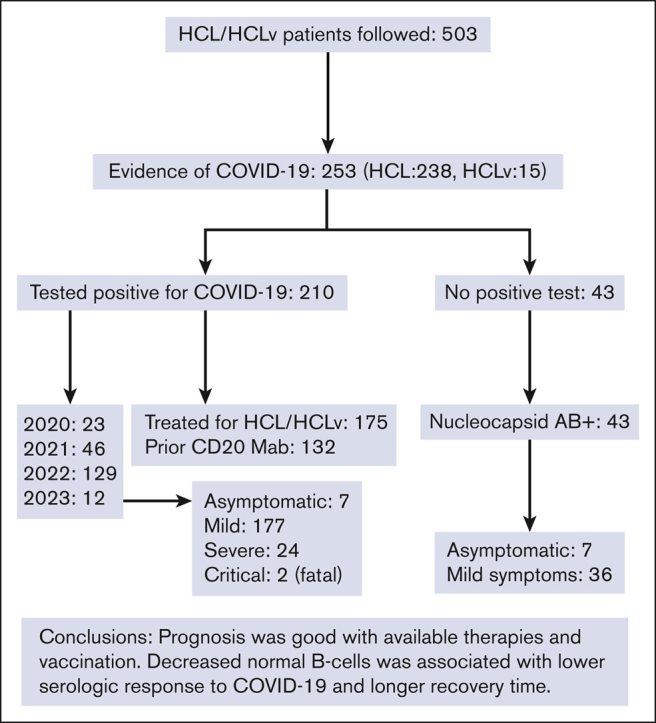
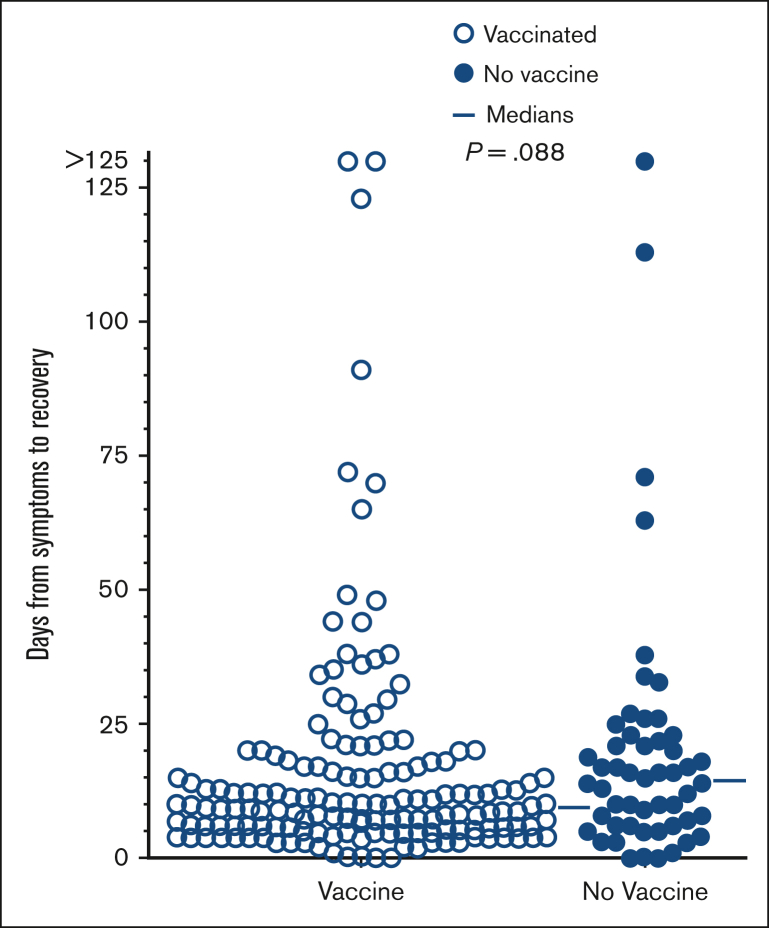
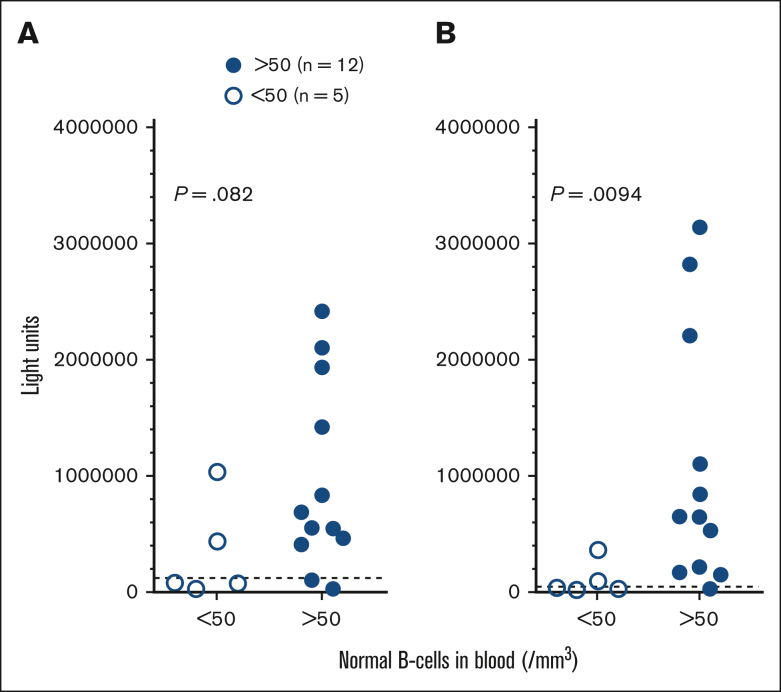
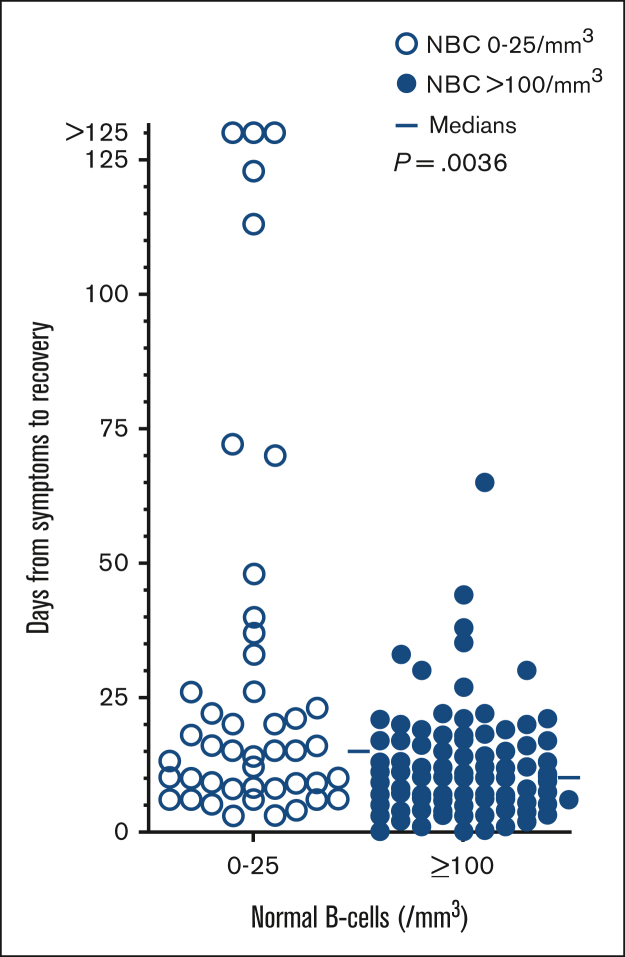
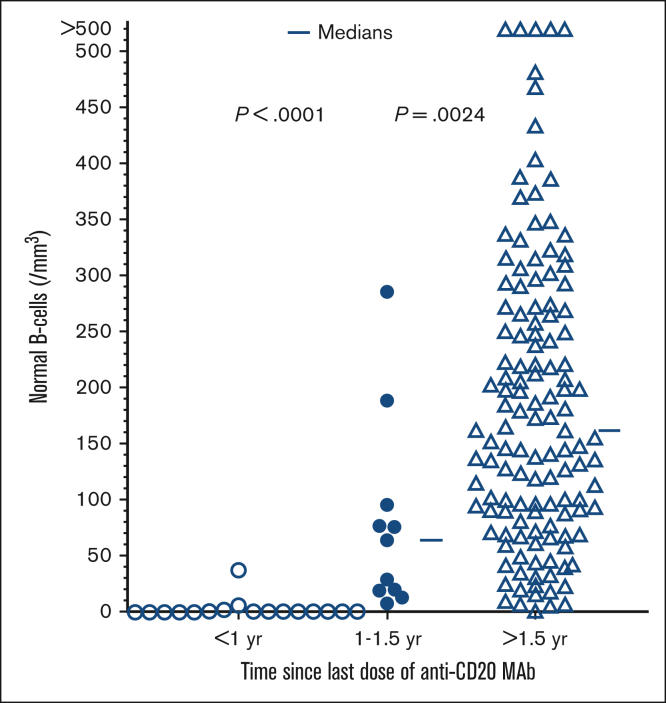
Hairy cell leukemia (HCL), similar to its variant HCLv, is a B-cell malignancy associated with decreased humoral immunity. We prospectively monitored the largest cohort of patients with HCL/HCLv to date (n = 503) for COVID-19 by symptoms, antibody, and polymerase chain reaction (PCR) and/or antigen positivity. Fifty percent (253 of 503) of the patients with HCL/HCLv (238 HCL and 15 HCLv) had evidence of COVID-19, with 210 (83%) testing positive by PCR or rapid-antigen test. Of the 43 patients without positive tests, all had nucleocapsid antibodies indicating COVID-19 exposure, 7 recalled no symptoms, and 36 had mild symptoms. Of the 210 who tested positive, 23, 46, 129, and 12 cases occurred in 2020, 2021, 2022, and 2023, respectively. Among them, 175 began treatment for HCL/HCLv 0.4 to 429 (median, 66) months before, and 132 had their last dose of anti-CD20 monoclonal antibody 0.2 to 229 (median, 63) months before. Two patients died, including a young woman who began rituximab 2 months after first-line cladribine before vaccine availability. Nearly all patients with HCL/HCLv recovered uneventfully from COVID-19 including those without vaccination or those with significant immunosuppression and recent treatment. However, decreased normal B cells from HCL or treatment was associated with lower spike antibody levels as a response to COVID-19 (P = .0094) and longer recovery time (P = .0036). Thus, in a large cohort of patients with HCL/HCLv and in the first to determine relationships between COVID-19 outcome and immune markers, mortality was relatively low (∼1%), sequelae were uncommon, and recovery from COVID-19 was longer if normal B cells were low after recent treatment. The trials are registered at www.clinicaltrials.gov as #NCT01087333 and #NCT04362865.
毛细胞白血病 (HCL) 与其变体 HCLv 相似,是一种与体液免疫降低相关的 B 细胞恶性肿瘤。我们前瞻性地监测了迄今为止最大的 HCL/HCLv 患者队列(n=503),通过症状、抗体、聚合酶链反应(PCR)和/或抗原阳性来监测 COVID-19。50%(503 例 HCL/HCLv 患者中有 253 例)有 COVID-19 的证据,其中 210 例(83%)通过 PCR 或快速抗原检测呈阳性。在 43 例未检测到阳性的患者中,所有患者的核衣壳抗体均呈 COVID-19 感染阳性,7 例患者无回忆症状,36 例患者有轻度症状。在 210 例检测呈阳性的患者中,分别有 23、46、129 和 12 例发生在 2020 年、2021 年、2022 年和 2023 年。其中,175 例在开始 HCL/HCLv 治疗前 0.4 至 429(中位数,66)个月,132 例在开始 HCL/HCLv 治疗前最后一次接受抗 CD20 单克隆抗体治疗 0.2 至 229(中位数,63)个月。有 2 例患者死亡,其中包括一名年轻女性,她在疫苗可用前 2 个月开始使用利妥昔单抗,在一线 cladribine 治疗后。几乎所有患有 HCL/HCLv 的患者都成功地从 COVID-19 中康复,包括未接种疫苗或免疫抑制严重且最近接受治疗的患者。然而,HCL 或治疗导致的正常 B 细胞减少与 COVID-19 反应中的刺突抗体水平较低(P=0.0094)和恢复时间延长(P=0.0036)相关。因此,在一个患有 HCL/HCLv 的大型患者队列中,以及在首次确定 COVID-19 结局与免疫标志物之间的关系的研究中,死亡率相对较低(约 1%),后遗症罕见,最近接受治疗后正常 B 细胞减少的患者 COVID-19 恢复时间较长。这些试验在 www.clinicaltrials.gov 上注册,分别为 #NCT01087333 和 #NCT04362865。