Zhang Jinsen, Feng Yuan, Li Guanghao, Zhang Jianhua, Zhang Xin, Zhang Yi, Qin Zhiyong, Zhuang Dongxiao, Qiu Tianming, Shi Zhifeng, Zhu Wei, Zhang Rui, Wu Yonghe, Liu Haikun, Cao Dandan, Hua Wei, Mao Ying
Department of Neurosurgery, Huashan Hospital, Fudan University, Shanghai, 200040, China.
National Center for Neurological Disorders, Shanghai, 200040, China.
NPJ Precis Oncol. 2023 Sep 23;7(1):97. doi: 10.1038/s41698-023-00453-1.
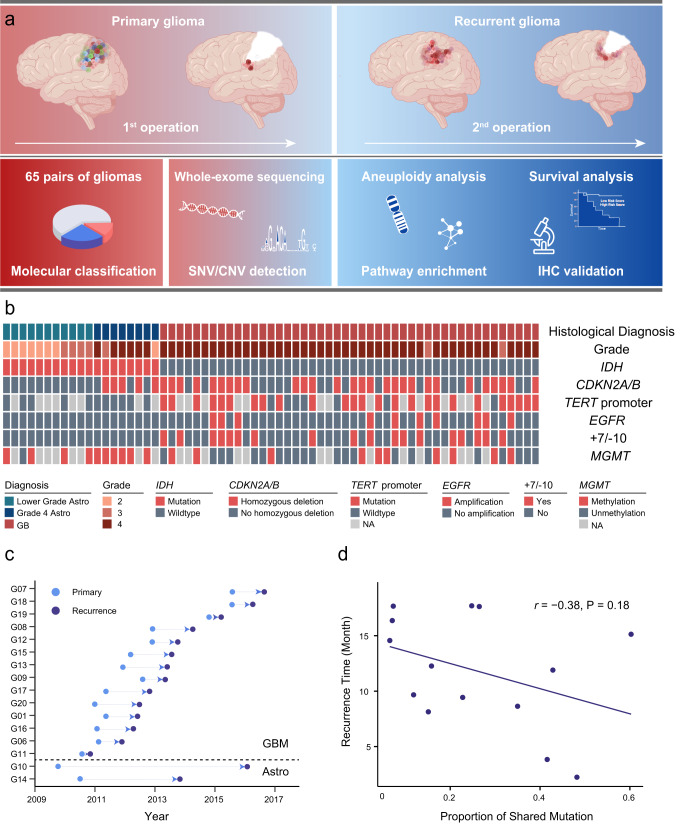
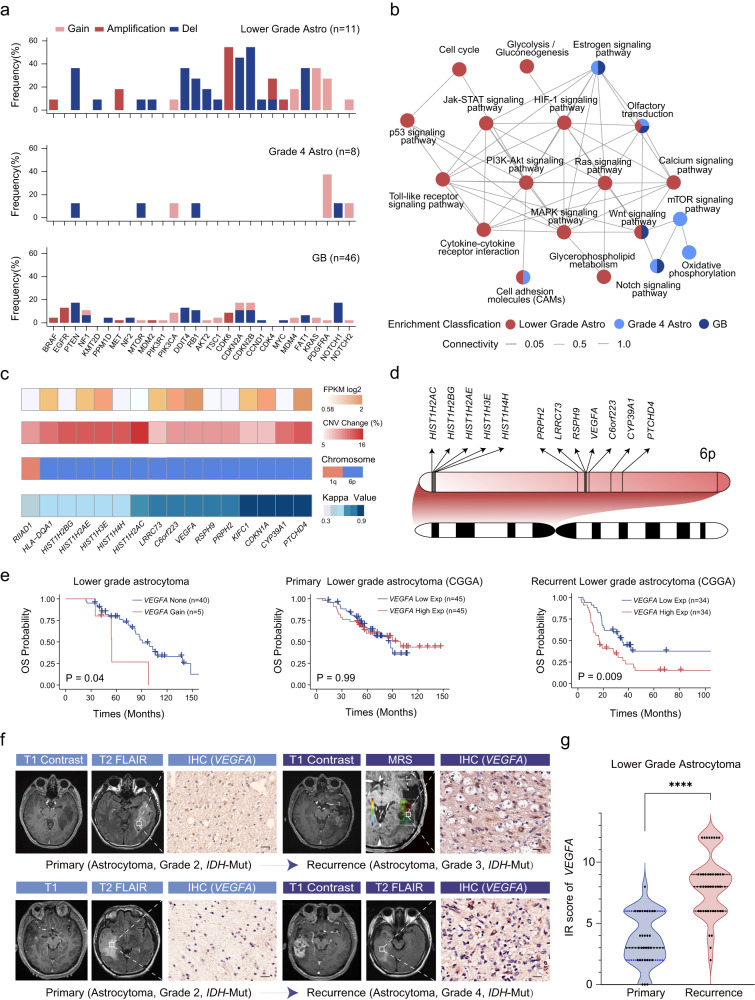
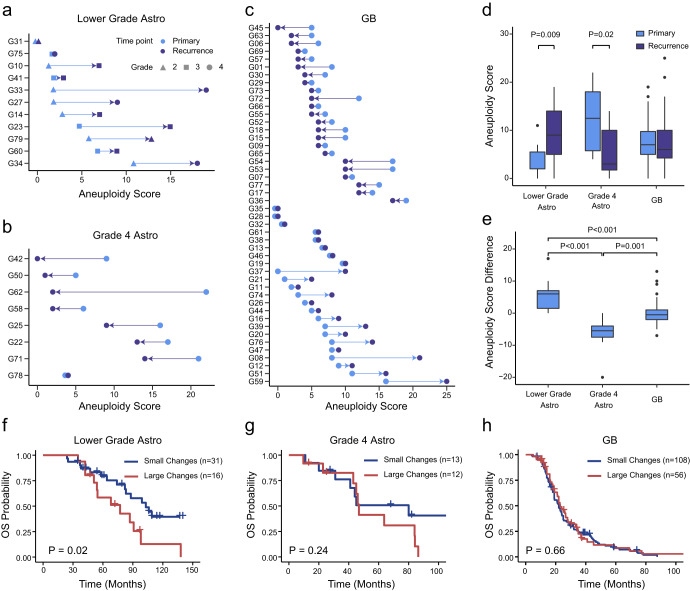
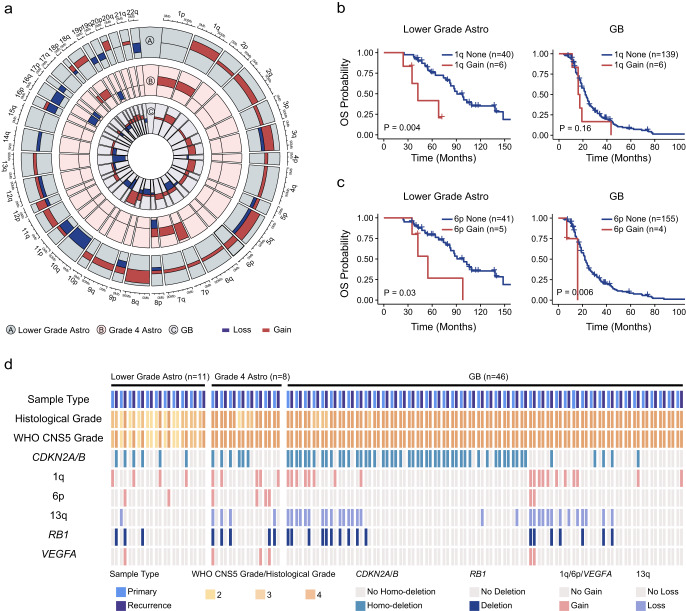
Astrocytoma and glioblastoma (GB) are reclassified subtypes of adult diffuse gliomas based on distinct isocitrate dehydrogenase (IDH) mutation in the fifth edition of the WHO Classification of Tumors of the Central Nervous System. The recurrence of gliomas is a common and inevitable challenge, and analyzing the distinct genomic alterations in astrocytoma and GB could provide insights into their progression. This study conducted a longitudinal investigation, utilizing whole-exome sequencing, on 65 paired primary/recurrent gliomas. It examined chromosome arm aneuploidies, copy number variations (CNVs) of cancer-related genes and pathway enrichments during the relapse. The veracity of these findings was verified through the integration of our data with multiple public resources and by corroborative immunohistochemistry (IHC). The results revealed a greater prevalence of aneuploidy changes and acquired CNVs in recurrent lower grade astrocytoma than in relapsed grade 4 astrocytoma and GB. Larger aneuploidy changes were predictive of an unfavorable prognosis in lower grade astrocytoma (P < 0.05). Further, patients with acquired gains of 1q, 6p or loss of 13q at recurrence had a shorter overall survival in lower grade astrocytoma (P < 0.05); however, these prognostic effects were confined in grade 4 astrocytoma and GB. Moreover, acquired gains of 12 genes (including VEGFA) on 6p during relapse were associated with unfavorable prognosis for lower grade astrocytoma patients. Notably, elevated VEGFA expression during recurrence corresponded to poorer survival, validated through IHC and CGGA data. To summarize, these findings offer valuable insights into the progression of gliomas and have implications for guiding therapeutic approaches during recurrence.
在《世界卫生组织中枢神经系统肿瘤分类》第五版中,星形细胞瘤和胶质母细胞瘤(GB)是根据不同的异柠檬酸脱氢酶(IDH)突变重新分类的成人弥漫性胶质瘤亚型。胶质瘤的复发是一个常见且不可避免的挑战,分析星形细胞瘤和GB中不同的基因组改变有助于深入了解其进展情况。本研究利用全外显子测序对65对原发性/复发性胶质瘤进行了纵向调查。研究了复发期间的染色体臂非整倍性、癌症相关基因的拷贝数变异(CNV)以及通路富集情况。通过将我们的数据与多个公共资源整合以及进行确证性免疫组织化学(IHC)来验证这些发现的准确性。结果显示,复发性低级别星形细胞瘤中非整倍性变化和获得性CNV的发生率高于复发性4级星形细胞瘤和GB。更大的非整倍性变化预示着低级别星形细胞瘤的预后不良(P < 0.05)。此外,复发时获得1q、6p或缺失13q的低级别星形细胞瘤患者总生存期较短(P < 0.05);然而,这些预后影响仅限于4级星形细胞瘤和GB。此外,复发期间6p上12个基因(包括VEGFA)的获得性增加与低级别星形细胞瘤患者的不良预后相关。值得注意的是,复发时VEGFA表达升高与较差的生存率相关,这通过IHC和CGGA数据得到了验证。总之,这些发现为胶质瘤的进展提供了有价值的见解,并对复发期间的治疗方法指导具有重要意义。