Department of Microbiology Immunology and Tropical Medicine, the George Washington University, Washington, DC, United States.
Biostatistics Core, Center for AIDS Research, University of North Carolina at Chapel Hill, Chapel Hill, NC, United States.
Front Immunol. 2023 Sep 6;14:1219250. doi: 10.3389/fimmu.2023.1219250. eCollection 2023.
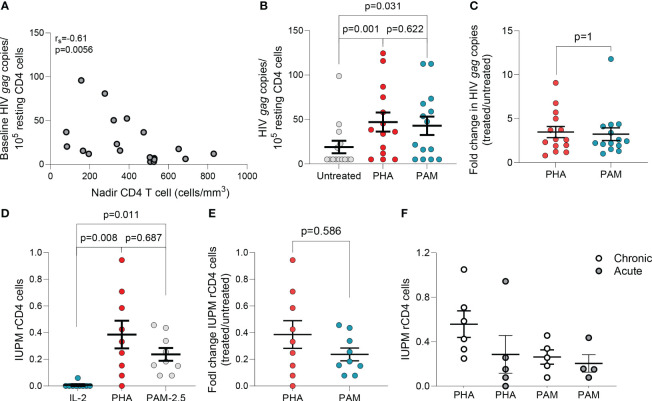
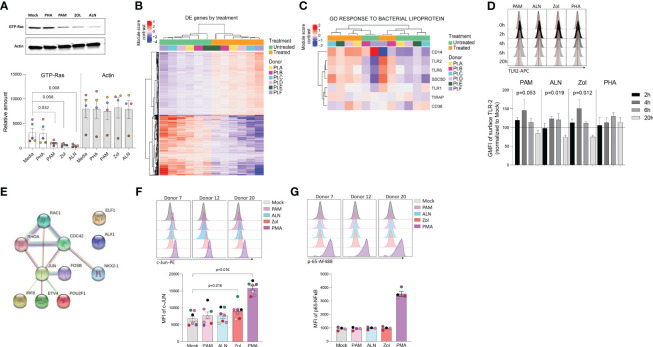
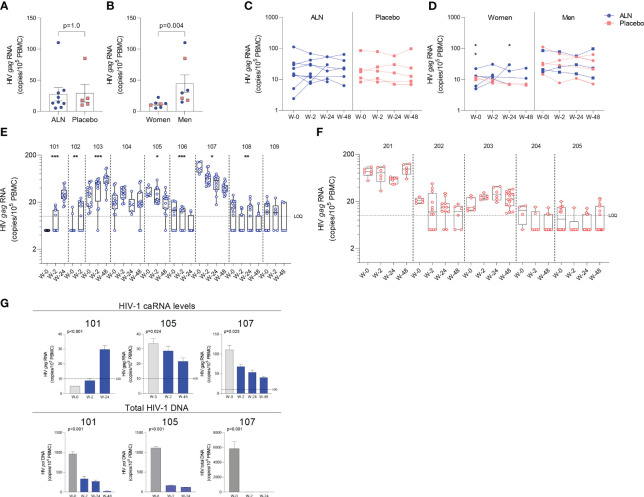
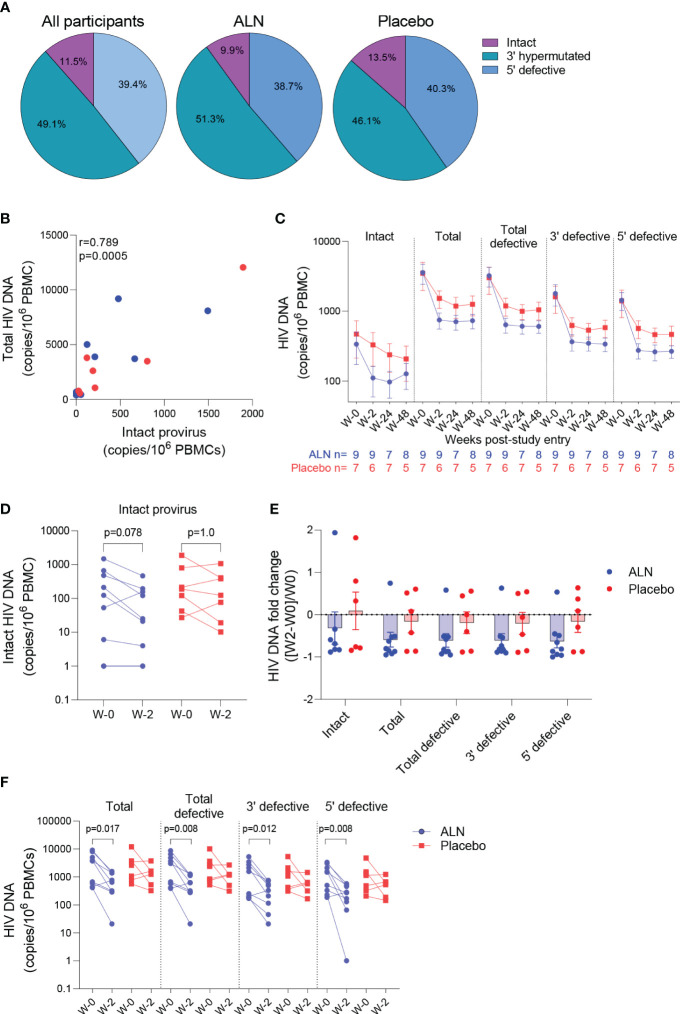
Antiretroviral therapy (ART) is not curative due to the existence of cellular reservoirs of latent HIV-1 that persist during therapy. Current research efforts to cure HIV-1 infection include "shock and kill" strategies to disrupt latency using small molecules or latency-reversing agents (LRAs) to induce expression of HIV-1 enabling cytotoxic immune cells to eliminate infected cells. The modest success of current LRAs urges the field to identify novel drugs with increased clinical efficacy. Aminobisphosphonates (N-BPs) that include pamidronate, zoledronate, or alendronate, are the first-line treatment of bone-related diseases including osteoporosis and bone malignancies. Here, we show the use of N-BPs as a novel class of LRA: we found in assays using primary cells from ART-suppressed people living with HIV-1 that N-BPs induce HIV-1 from latency to levels that are comparable to the T cell activator phytohemagglutinin (PHA). RNA sequencing and mechanistic data suggested that reactivation may occur through activation of the activator protein 1 signaling pathway. Stored samples from a prior clinical trial aimed at analyzing the effect of alendronate on bone mineral density, provided further evidence of alendronate-mediated latency reversal and activation of immune effector cells. Decay of the reservoir measured by IPDA was however not detected. Our results demonstrate the novel use of N-BPs to reverse HIV-1 latency while inducing immune effector functions. This preliminary evidence merits further investigation in a controlled clinical setting possibly in combination with therapeutic vaccination.
抗逆转录病毒疗法(ART)不能治愈,因为在治疗过程中存在潜伏的 HIV-1 细胞储库。目前治愈 HIV-1 感染的研究工作包括“休克和杀伤”策略,使用小分子或潜伏逆转剂(LRAs)破坏潜伏,以诱导 HIV-1 的表达,使细胞毒性免疫细胞能够消除感染细胞。目前 LRA 的适度成功促使该领域寻找具有更高临床疗效的新型药物。包含帕米膦酸盐、唑来膦酸盐或阿仑膦酸盐在内的氨基双膦酸盐(N-BPs)是治疗骨质疏松症和骨恶性肿瘤等骨相关疾病的一线药物。在这里,我们展示了 N-BPs 作为一种新型 LRA 的用途:我们在使用来自接受 ART 抑制的 HIV-1 感染者的原代细胞进行的实验中发现,N-BPs 可诱导 HIV-1 从潜伏状态恢复到与植物血球凝集素(PHA,一种 T 细胞激活剂)相当的水平。RNA 测序和机制数据表明,再激活可能通过激活蛋白 1 信号通路发生。先前一项旨在分析阿仑膦酸盐对骨密度影响的临床试验中存储的样本提供了进一步的证据,证明了阿仑膦酸盐介导的潜伏逆转和免疫效应细胞的激活。然而,未检测到通过 IPDA 测量的储库衰减。我们的结果证明了 N-BPs 可用于逆转 HIV-1 潜伏并诱导免疫效应功能。这一初步证据值得在受控临床环境中进一步研究,可能与治疗性疫苗联合使用。