Miller Micah W C, Lovvorn James R, Graff Nathan R, Stellrecht Neesha C, Plesh Steven P
Department of Zoology and Center for Ecology Southern Illinois University Carbondale Illinois USA.
U.S. Fish and Wildlife Service, Northern Alaska Fish and Wildlife Field Office Fairbanks Alaska USA.
Ecol Evol. 2023 Sep 20;13(9):e10375. doi: 10.1002/ece3.10375. eCollection 2023 Sep.
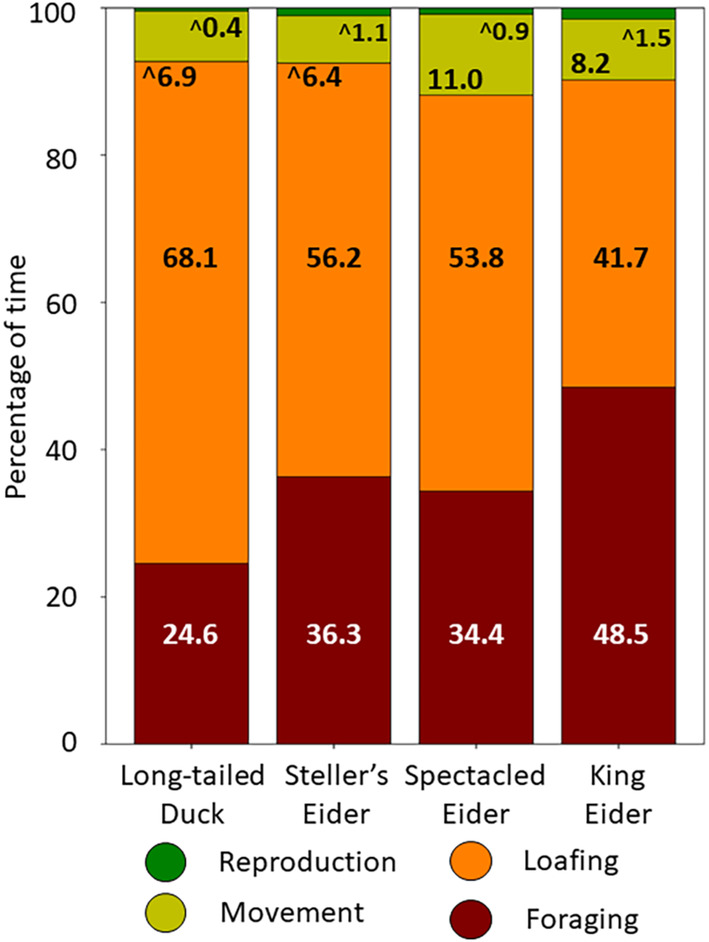
Wetlands in Arctic tundra support abundant breeding waterbirds. Wetland types differing in area, depth, vegetation, and invertebrate biomass density may vary in importance to birds, and in vulnerability to climate change. We studied availability and use of different wetland types by prelaying females of four species of sea ducks (Mergini) breeding on the Arctic Coastal Plain of Alaska, USA: long-tailed ducks () and Steller's (), spectacled (), and king eiders (). All four species preferred shallow vegetated wetlands versus deeper lakes. The ducks spent almost all their active time feeding, but their occurrence in different wetland types was not affected by the relative biomass density of known prey or of all invertebrates that we sampled combined. Sea ducks strongly preferred wetlands dominated by emergent and submersed over those dominated by the sedge , despite the much greater number, total area, and invertebrate biomass density of wetlands. The hens depend heavily on local invertebrate prey for protein to produce eggs; thus, their preference for wetlands likely reflects greater accessibility of prey in the near-surface canopy and detritus of . Such shallow wetlands decreased substantially in number (-17%) and area (-30%) over 62 years before 2013 and appear highly susceptible to further declines with climate warming. Impacts on sea ducks of climate-driven changes in availability of important wetland types will depend on their adaptability in exploiting alternative wetlands.
北极苔原的湿地为大量繁殖水鸟提供了栖息地。面积、深度、植被和无脊椎动物生物量密度不同的湿地类型,对鸟类的重要性以及对气候变化的脆弱性可能存在差异。我们研究了在美国阿拉斯加北极海岸平原繁殖的四种海鸭(秋沙鸭属)的雌鸟在产卵前对不同湿地类型的可利用性和使用情况,这四种海鸭分别是长尾鸭()、斯特勒海鸭()、眼镜鸭()和王绒鸭()。所有这四个物种都更喜欢浅植被湿地而非较深的湖泊。这些鸭子几乎把所有的活动时间都用于觅食,但它们在不同湿地类型中的出现情况不受我们所采样的已知猎物或所有无脊椎动物相对生物量密度的影响。尽管莎草湿地的数量、总面积和无脊椎动物生物量密度要大得多,但海鸭强烈偏好以挺水植物和沉水植物为主的湿地,而非以莎草为主的湿地。雌鸭严重依赖当地的无脊椎动物猎物获取蛋白质来产卵;因此,它们对特定湿地的偏好可能反映出在近地表冠层和特定植物碎屑中更容易获取猎物。在2013年之前的62年里,这类浅湿地的数量(减少了17%)和面积(减少了30%)大幅下降,而且随着气候变暖,它们似乎极易进一步减少。重要湿地类型的可利用性因气候驱动而发生变化,对海鸭的影响将取决于它们利用替代湿地的适应能力。