Independent Clinical Epigenetics Laboratory, Pomeranian Medical University in Szczecin, Unii Lubelskiej 1, 71-252, Szczecin, Poland.
Biobank Laboratory, Department of Oncobiology and Epigenetics, Faculty of Biology and Environmental Protection, University of Lodz, Pomorska 139, 90-237, Lodz, Poland.
Sci Rep. 2023 Sep 26;13(1):16102. doi: 10.1038/s41598-023-43276-7.
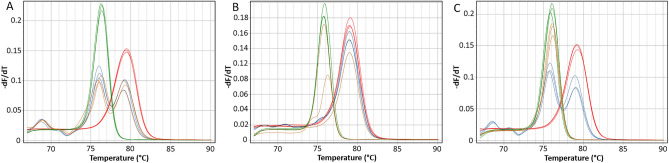
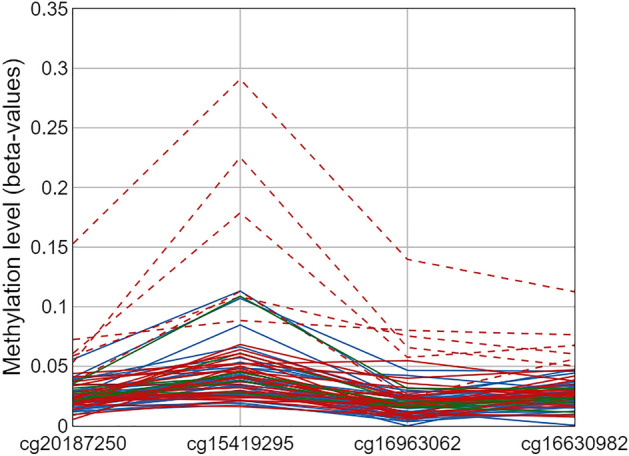
Recent reports based on a substantial number of cases, warrant need for population-based research to determine implications of constitutional methylation of tumor suppressor genes such as BRCA1 occurring in healthy tissue in the prediction of cancer. However, the detection of the constitutional methylation in DNA extracted from blood has already been shown to be technologically challenging, mainly because epimutations appear to be present in blood at a very low level. The analytical sensitivity required for low-level methylation detection can be provided by NGS, but this technique is still labor and cost-intensive. We assessed if PCR-based MS-HRM and BeadChip microarray technologies, which are standardized and cost-effective technologies for methylation changes screening, provide a sufficient level of analytical sensitivity for constitutional BRCA1 methylation detection in blood samples. The study included whole blood samples from 67 healthy women, 35 with previously confirmed and 32 with no detectable BRCA1 promoter methylation for which we performed both MS-HRM based BRCA1 gene methylation screening and genome wide methylation profiling with EPIC microarray. Our results shown, that low-level BRCA1 methylation can be effectively detected in DNA extracted from blood by PCR-based MS-HRM. At the same time, EPIC microarray does not provide conclusive results to unambiguously determine the presence of BRCA1 constitutional methylation in MS-HRM epimutation positive samples. The analytical sensitivity of MS-HRM is sufficient to detect low level BRCA1 constitutional epimutation in DNA extracted from blood and BeadChip technology-based microarrays appear not to provide that level of analytical sensitivity.
最近基于大量案例的报告表明,需要进行基于人群的研究,以确定在健康组织中发生的肿瘤抑制基因如 BRCA1 的结构甲基化对癌症预测的影响。然而,已经表明从血液中提取的 DNA 中检测到结构甲基化在技术上具有挑战性,主要是因为表观遗传改变似乎以非常低的水平存在于血液中。用于低水平甲基化检测的分析灵敏度可以通过 NGS 提供,但该技术仍然需要大量的劳动力和成本。我们评估了基于 PCR 的 MS-HRM 和 BeadChip 微阵列技术是否为甲基化变化筛查提供了标准化且具有成本效益的技术,是否为血液样本中 BRCA1 结构甲基化检测提供了足够的分析灵敏度。该研究包括 67 名健康女性的全血样本,其中 35 名先前已确认,32 名无可检测的 BRCA1 启动子甲基化,我们对其进行了基于 MS-HRM 的 BRCA1 基因甲基化筛查和全基因组甲基化分析。我们的结果表明,基于 PCR 的 MS-HRM 可有效检测血液中提取的低水平 BRCA1 甲基化。同时,EPIC 微阵列不能提供明确的结果,无法确定 MS-HRM 中 BRCA1 结构甲基化的存在。MS-HRM 的分析灵敏度足以检测血液中提取的低水平 BRCA1 结构外遗传改变,而基于 BeadChip 技术的微阵列似乎无法提供该水平的分析灵敏度。