Xia Tianqi, Zhang Mingming, Wang Shaohong
Fan Gongxiu Honors College, Faculty of Science, Beijing University of Technology, Beijing 100124, China.
Key Laboratory of Modern Measurement and Control Technology, Beijing Information Science and Technology University, Beijing 100192, China.
Biomimetics (Basel). 2023 Sep 13;8(5):424. doi: 10.3390/biomimetics8050424.
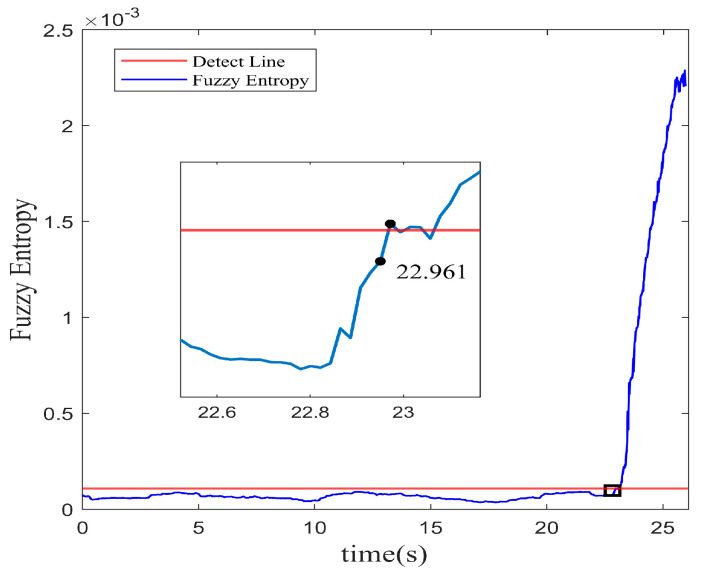
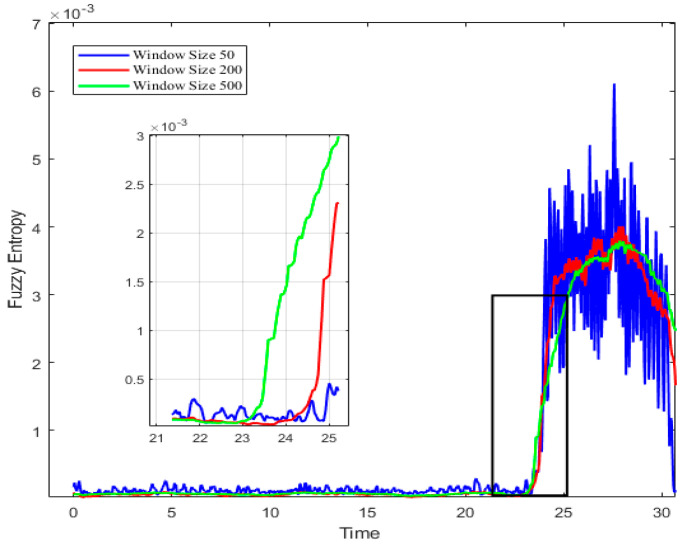
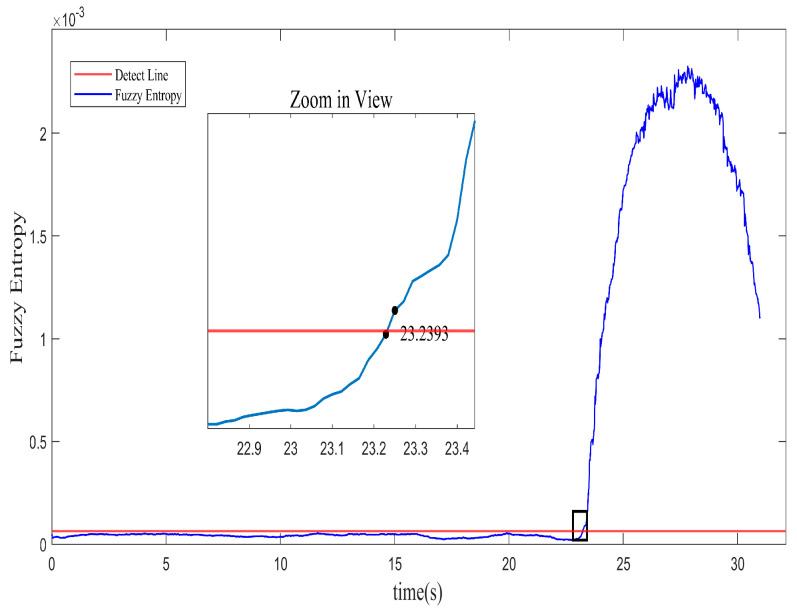
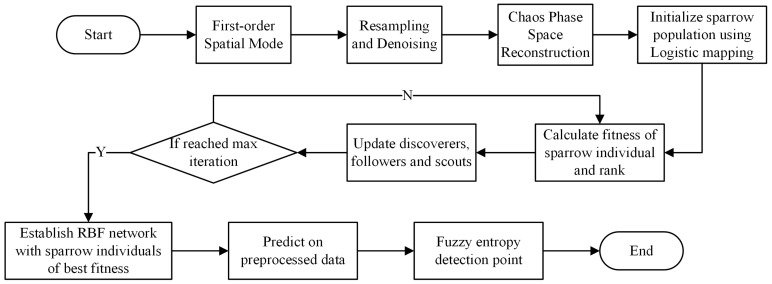
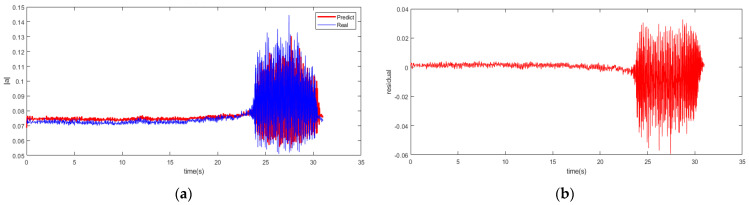
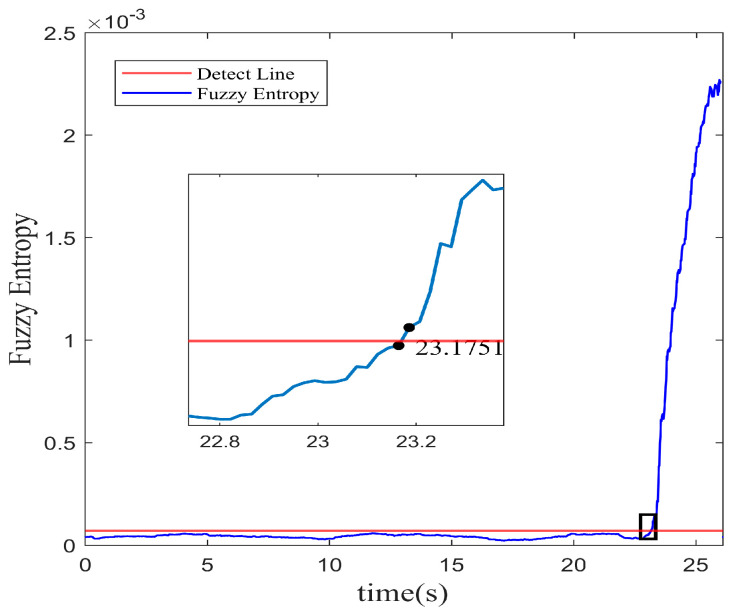
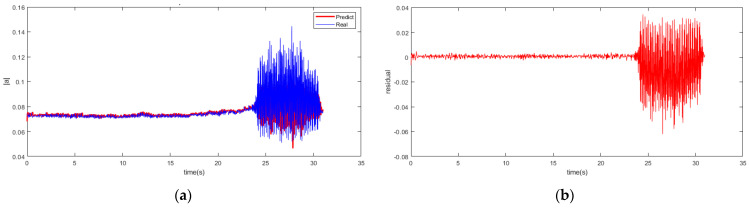
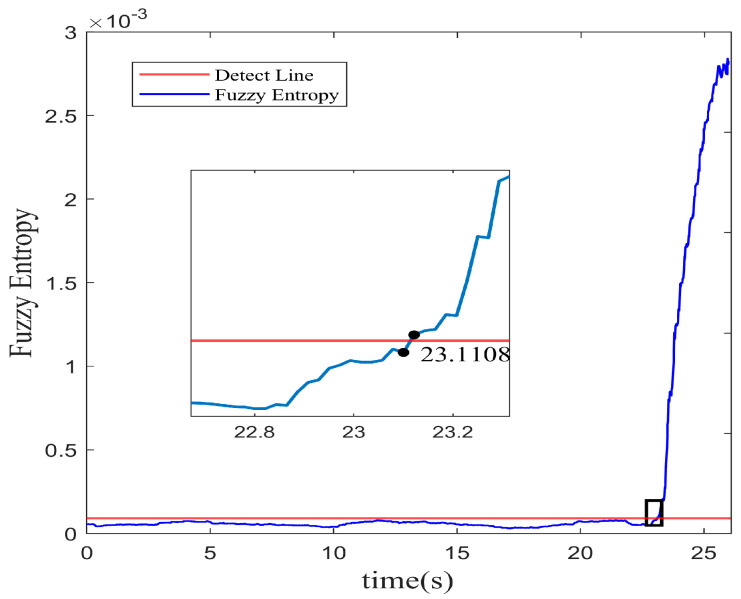
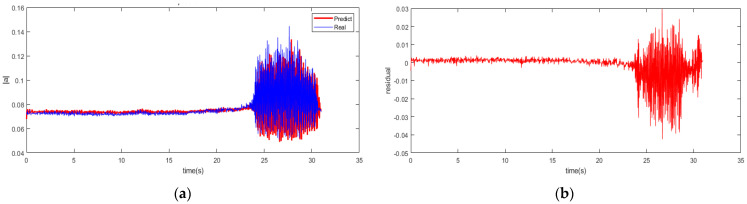
Aiming at the accurate prediction of the inception of instability in a compressor, a dynamic system stability model is proposed based on a sparrow-inspired meta-heuristic optimization algorithm in this article. To achieve this goal, a spatial mode is employed for flow field feature extraction and modeling object acquisition. The nonlinear characteristic presented in the system is addressed using fuzzy entropy as the identification strategy to provide a basis for instability determination. Using Sparrow Search Algorithm (SSA) optimization, a Radial Basis Function Neural Network (RBFNN) is achieved for the performance prediction of system status. A Logistic SSA solution is first established to seek the optimal parameters of the RBFNN to enhance prediction accuracy and stability. On the basis of the RBFNN-LSSA hybrid model, the stall inception is detected about 35.8 revolutions in advance using fuzzy entropy identification. To further improve the multi-step network model, a Tent SSA is introduced to promote the accuracy and robustness of the model. A wider range of potential solutions within the TSSA are explored by incorporating the Tent mapping function. The TSSA-based optimization method proves a suitable adaptation for complex nonlinear dynamic modeling. And this method demonstrates superior performance, achieving 42 revolutions of advance warning with multi-step prediction. This RBFNN-TSSA model represents a novel and promising approach to the application of system modeling. These findings contribute to enhancing the abnormal warning capability of dynamic systems in compressors.
本文旨在准确预测压缩机失稳的起始点,基于一种受麻雀启发的元启发式优化算法提出了一种动态系统稳定性模型。为实现这一目标,采用空间模态进行流场特征提取和建模对象获取。利用模糊熵作为识别策略来处理系统中呈现的非线性特征,为失稳判定提供依据。通过麻雀搜索算法(SSA)优化,实现了用于系统状态性能预测的径向基函数神经网络(RBFNN)。首先建立逻辑麻雀搜索算法解来寻找RBFNN的最优参数,以提高预测精度和稳定性。基于RBFNN-LSSA混合模型,利用模糊熵识别提前约35.8转检测到失速起始点。为进一步改进多步网络模型,引入帐篷麻雀搜索算法(Tent SSA)来提高模型的准确性和鲁棒性。通过结合帐篷映射函数探索了TSSA内更广泛的潜在解。基于TSSA的优化方法被证明适用于复杂的非线性动态建模。该方法表现出卓越性能,通过多步预测实现了42转的提前预警。这种RBFNN-TSSA模型代表了一种新颖且有前景的系统建模应用方法。这些发现有助于提高压缩机动态系统的异常预警能力。