Theofilis Panagiotis, Oikonomou Evangelos, Chasikidis Christos, Tsioufis Konstantinos, Tousoulis Dimitris
1st Department of Cardiology, "Hippokration" General Hospital, National and Kapodistrian University of Athens, 11527 Athens, Greece.
3rd Department of Cardiology, Thoracic Diseases General Hospital "Sotiria", National and Kapodistrian University of Athens, 11527 Athens, Greece.
Pharmaceuticals (Basel). 2023 Aug 28;16(9):1211. doi: 10.3390/ph16091211.
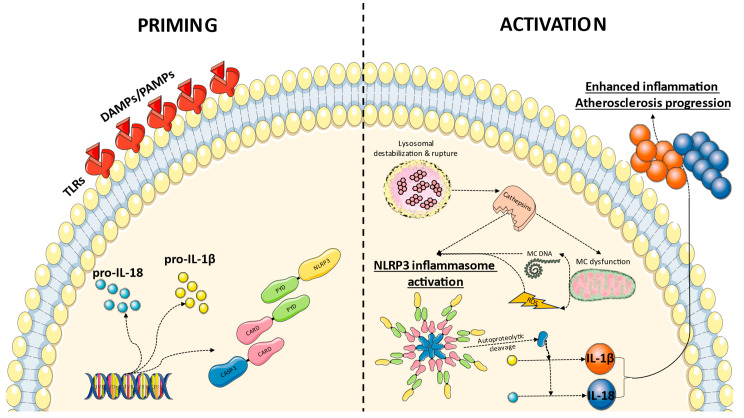
Atherosclerosis, a chronic inflammatory disease characterized by arterial plaque accumulation, remains a significant global health challenge. In recent years, inflammasomes, the intracellular multiprotein complexes crucial for initiating innate immune responses, have emerged as key players in atherosclerosis pathophysiology. This review article aims to provide a comprehensive overview of the current understanding of inflammasome activation and its impact on atherosclerosis development and progression. We explore the intricate interplay between traditional cardiovascular risk factors and inflammasome activation, leading to the perpetuation of inflammatory cascades that drive plaque formation and instability. The review focuses on the molecular mechanisms underlying inflammasome activation, including the role of pattern recognition receptors and cytokines in this process. Moreover, we discuss the contribution of inflammasomes to endothelial dysfunction, foam cell formation, and vascular inflammation. Additionally, recent advances in therapeutic strategies targeting inflammasomes are examined, including pharmacological agents and potential immunomodulatory approaches. By collating and analyzing the current evidence, this review provides valuable insights into the potential of inflammasome-targeted therapies for atherosclerosis management and treatment. Understanding the pivotal role of inflammasomes in atherosclerosis pathophysiology offers promising prospects for developing effective and personalized therapeutic interventions that can mitigate the burden of this prevalent cardiovascular disorder and improve patient outcomes.
动脉粥样硬化是一种以动脉斑块积聚为特征的慢性炎症性疾病,仍然是一项重大的全球健康挑战。近年来,炎性小体作为细胞内多蛋白复合物,对于启动先天性免疫反应至关重要,已成为动脉粥样硬化病理生理学的关键因素。这篇综述文章旨在全面概述目前对炎性小体激活及其对动脉粥样硬化发生和发展影响的理解。我们探讨传统心血管危险因素与炎性小体激活之间的复杂相互作用,导致驱动斑块形成和不稳定的炎症级联反应持续存在。该综述聚焦于炎性小体激活的分子机制,包括模式识别受体和细胞因子在此过程中的作用。此外,我们讨论炎性小体对内皮功能障碍、泡沫细胞形成和血管炎症的作用。此外,还研究了针对炎性小体的治疗策略的最新进展,包括药物制剂和潜在的免疫调节方法。通过整理和分析当前证据,本综述为炎性小体靶向治疗在动脉粥样硬化管理和治疗中的潜力提供了有价值的见解。了解炎性小体在动脉粥样硬化病理生理学中的关键作用,为开发有效且个性化的治疗干预措施提供了广阔前景,这些措施可以减轻这种常见心血管疾病的负担并改善患者预后。