Lloyd R V, Landefeld T D
Am J Pathol. 1986 Oct;125(1):35-44.
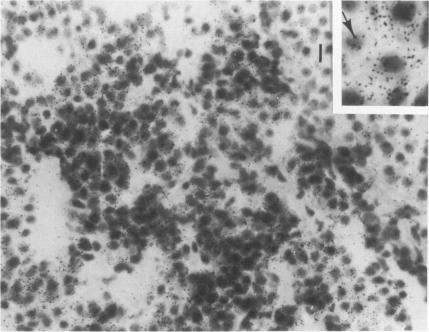
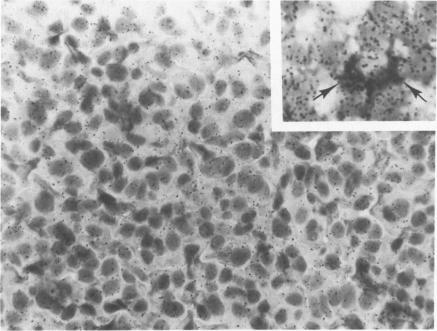
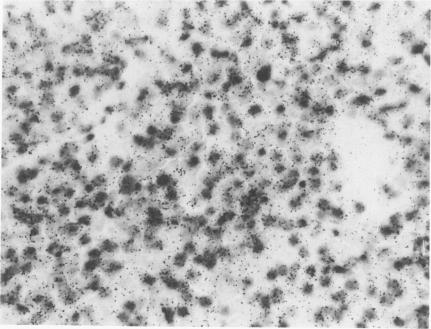
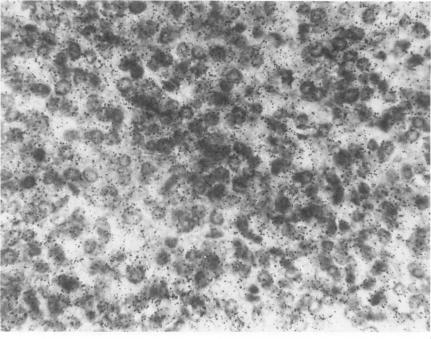
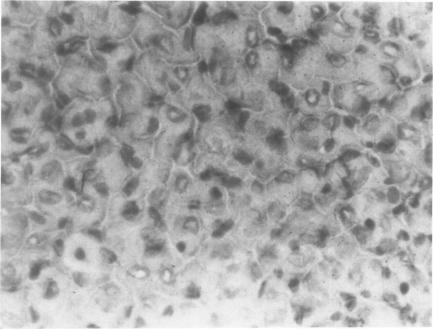
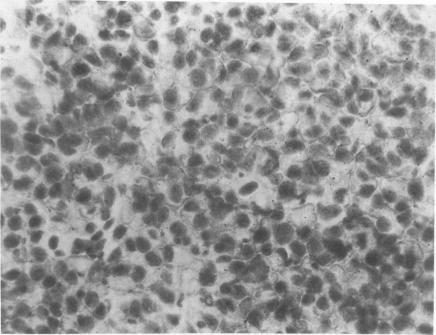
The effects of chronic diethylstilbestrol treatment on rat prolactin mRNA was analyzed by in situ hybridization histochemistry. Forty-day-old female rats were treated with 10 mg diethylstilbestrol in Silastic tubes for 3, 6, and 9 weeks. Estrogen treatment for 9 weeks increased pituitary wet weight (51.6 +/- 2.4 versus 7.9 +/- 0.31 mg for controls), serum prolactin (4155 +/- 571 versus 47.1 +/- 8.9 ng/ml for controls), and the percentage of immunoreactive prolactin cells (69% +/- 3% versus 34% +/- 2% for controls). In situ hybridization studies showed an increase in rat prolactin mRNA with increasing duration of estrogen treatment. After 9 weeks of estrogen treatment, there was a 2.3-fold increase in rat prolactin mRNA. 3H-cDNA was distributed diffusely throughout the anterior pituitary in both normal and hyperplastic pituitaries. There were no separate foci of adenomatous pituitary with increased labeling or with increased immunoreactive PRL cells. Although transplantable pituitary MtT/W15 tumors secreted very large amounts of PRL, compared with pituitaries from DES-treated rats, rat prolactin mRNA as evaluated by mean grain counts was considerably less in the MtT/W15 tumor than in DES-treated pituitary cells. These results show that in situ hybridization histochemistry can be used to detect changes in rat prolactin mRNA in tissue sections from the anterior pituitary with chronic estrogen treatment and that these pituitaries show a diffuse increase in immunoreactive prolactin cells and cellular prolactin mRNA, rather than distinct adenomatous areas within the glands.
通过原位杂交组织化学分析了慢性己烯雌酚处理对大鼠催乳素mRNA的影响。40日龄雌性大鼠在硅橡胶管中用10mg己烯雌酚处理3周、6周和9周。雌激素处理9周可增加垂体湿重(对照组为7.9±0.31mg,处理组为51.6±2.4mg)、血清催乳素(对照组为47.1±8.9ng/ml,处理组为4155±571ng/ml)以及免疫反应性催乳素细胞的百分比(对照组为34%±2%,处理组为69%±3%)。原位杂交研究表明,随着雌激素处理时间的延长,大鼠催乳素mRNA增加。雌激素处理9周后,大鼠催乳素mRNA增加了2.3倍。3H-cDNA在正常和增生性垂体的整个垂体前叶中呈弥漫性分布。没有腺瘤性垂体的单独病灶出现标记增加或免疫反应性PRL细胞增加。尽管可移植的垂体MtT/W15肿瘤分泌大量PRL,但与己烯雌酚处理大鼠的垂体相比,通过平均颗粒计数评估的大鼠催乳素mRNA在MtT/W15肿瘤中比在己烯雌酚处理的垂体细胞中要少得多。这些结果表明,原位杂交组织化学可用于检测慢性雌激素处理的垂体前叶组织切片中大鼠催乳素mRNA的变化,并且这些垂体显示免疫反应性催乳素细胞和细胞催乳素mRNA弥漫性增加,而不是腺体内有明显的腺瘤区域。