National Key Laboratory of Crop Genetic Improvement, Hubei Hongshan Laboratory, Huazhong Agricultural University, Wuhan, 430070, China.
Hubei Key Laboratory of Agricultural Bioinformatics, College of Informatics, Huazhong Agricultural University, Wuhan, 430070, China.
BMC Biol. 2023 Sep 29;21(1):202. doi: 10.1186/s12915-023-01705-z.
Brassica napus is an important oilseed crop providing high-quality vegetable oils for human consumption and non-food applications. However, the regulation between embryo and seed coat for the synthesis of oil and phenylpropanoid compounds remains largely unclear.
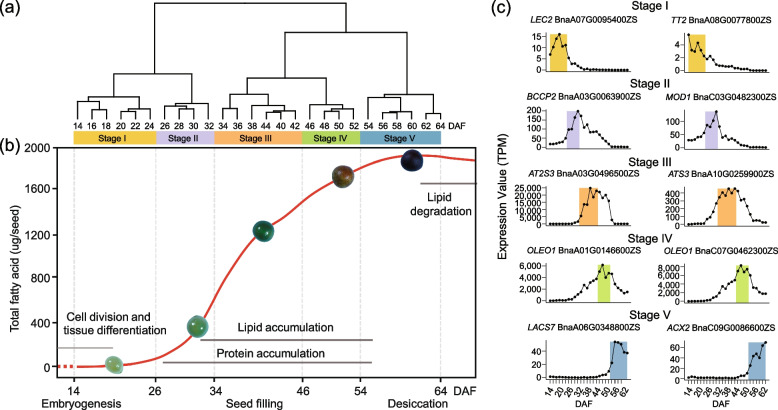
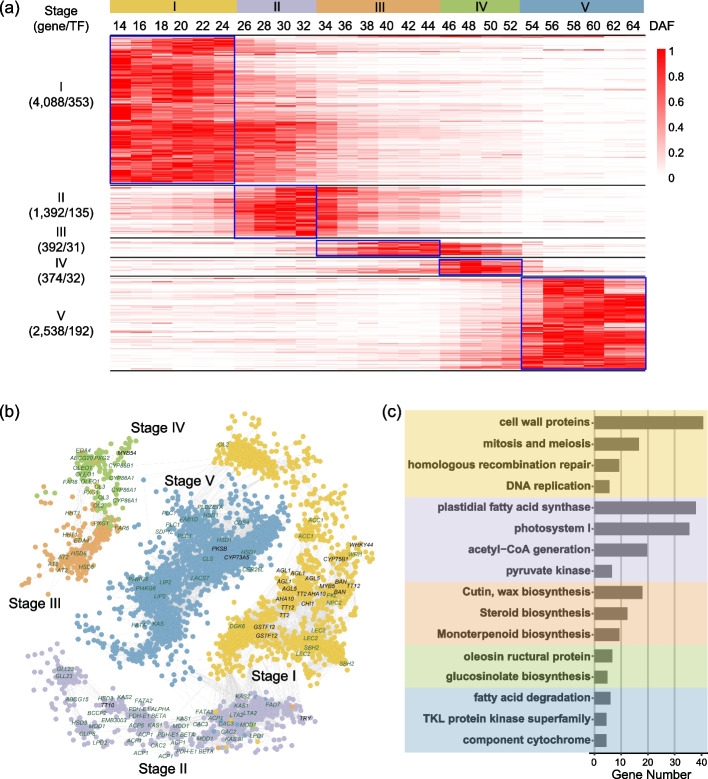
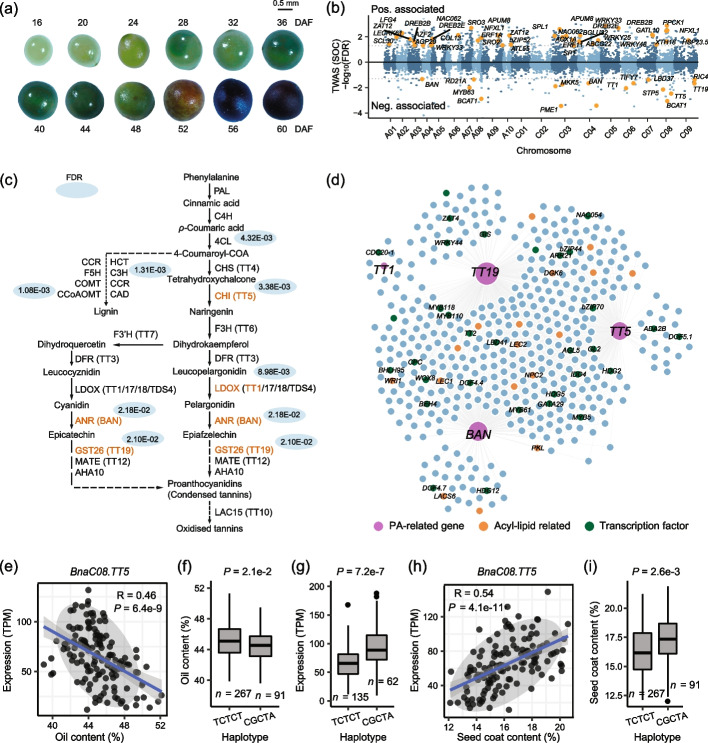
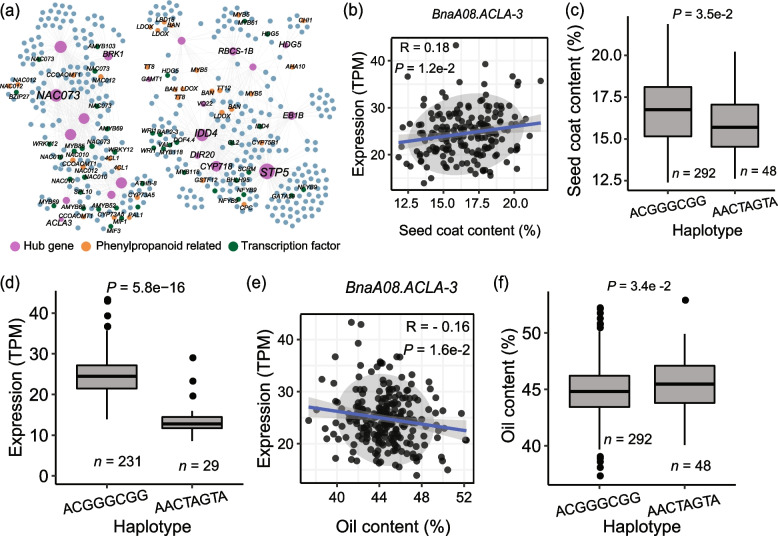
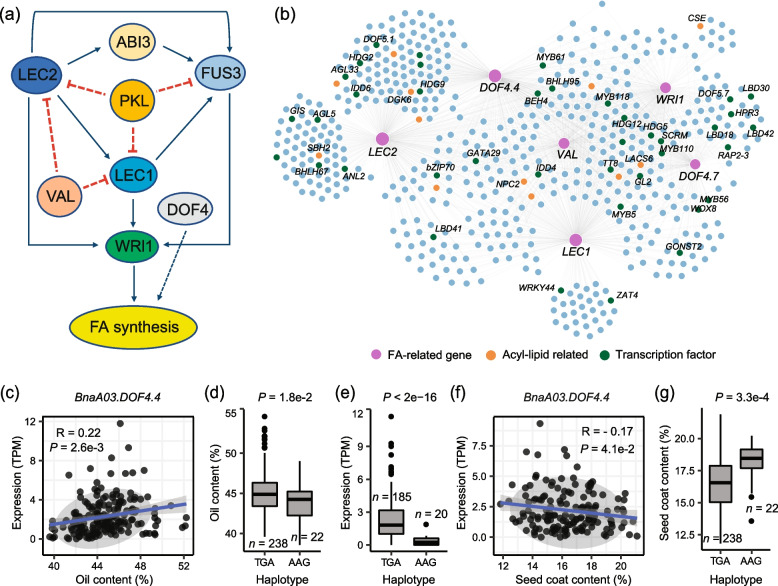
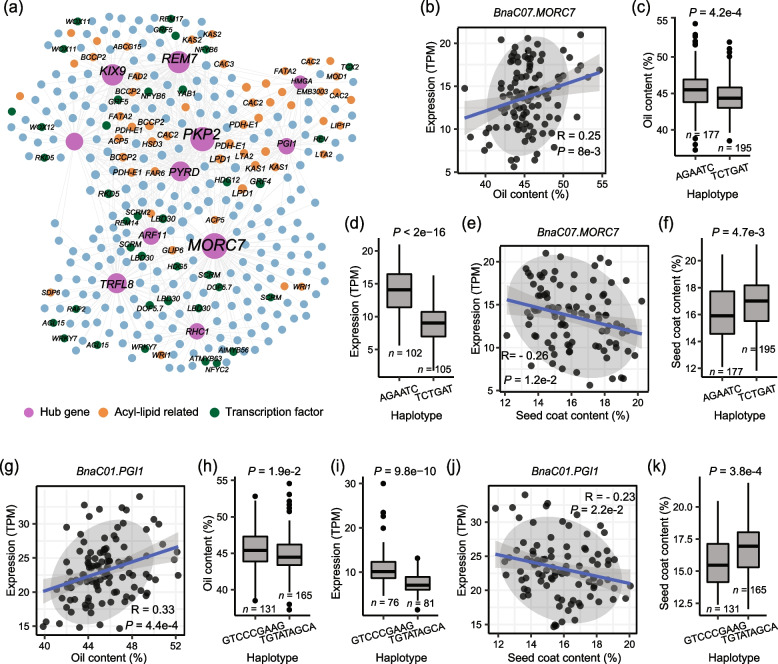
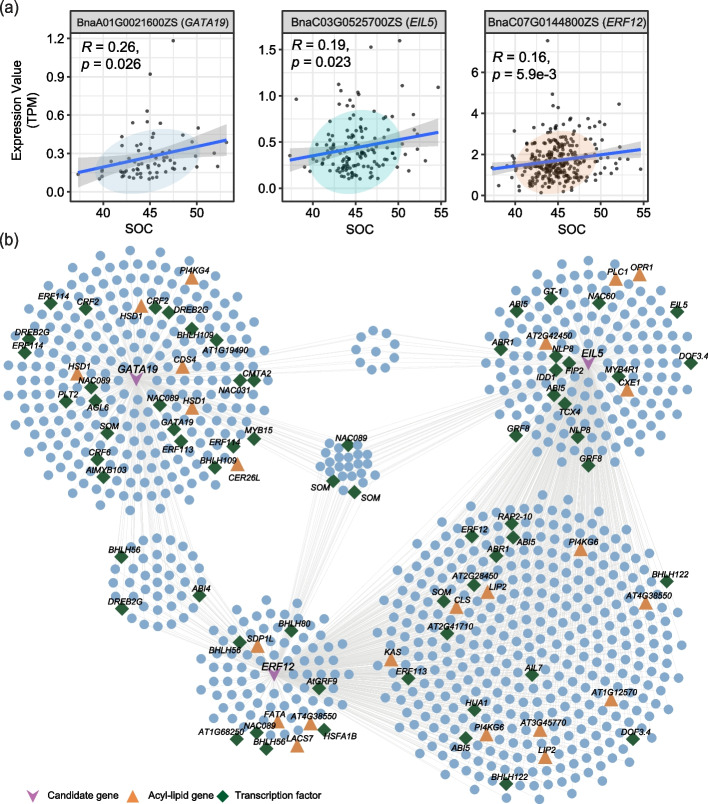
Here, we analyzed the transcriptomes in developing seeds at 2-day intervals from 14 days after flowering (DAF) to 64 DAF. The 26 high-resolution time-course transcriptomes are clearly clustered into five distinct groups from stage I to stage V. A total of 2217 genes including 136 transcription factors, are specifically expressed in the seed and show high temporal specificity by being expressed only at certain stages of seed development. Furthermore, we analyzed the co-expression networks during seed development, which mainly included master regulatory transcription factors, lipid, and phenylpropane metabolism genes. The results show that the phenylpropane pathway is prominent during seed development, and the key enzymes in the phenylpropane metabolic pathway, including TT5, BAN, and the transporter TT19, were directly or indirectly related to many key enzymes and transcription factors involved in oil accumulation. We identified candidate genes that may regulate seed oil content based on the co-expression network analysis combined with correlation analysis of the gene expression with seed oil content and seed coat content.
Overall, these results reveal the transcriptional regulation between lipid and phenylpropane accumulation during B. napus seed development. The established co-expression networks and predicted key factors provide important resources for future studies to reveal the genetic control of oil accumulation in B. napus seeds.
油菜是一种重要的油料作物,为人类食用和非食用用途提供高品质的植物油。然而,胚和种皮之间对于油脂和苯丙烷类化合物合成的调控机制在很大程度上仍不清楚。
在此,我们分析了从开花后 14 天(DAF)到 64 DAF 每隔 2 天发育种子的转录组。这 26 个高分辨率时间过程转录组清楚地从第 I 期到第 V 期分为五个不同的组。共有 2217 个基因,包括 136 个转录因子,在种子中特异性表达,并且通过仅在种子发育的某些阶段表达而具有高时间特异性。此外,我们分析了种子发育过程中的共表达网络,主要包括主调控转录因子、脂质和苯丙烷代谢基因。结果表明,苯丙烷途径在种子发育过程中很突出,苯丙烷代谢途径中的关键酶,包括 TT5、BAN 和转运蛋白 TT19,直接或间接地与许多参与油脂积累的关键酶和转录因子有关。我们基于共表达网络分析结合基因表达与种子油含量和种皮含量的相关性分析,鉴定了可能调节种子油含量的候选基因。
总体而言,这些结果揭示了油菜种子发育过程中脂质和苯丙烷积累之间的转录调控。建立的共表达网络和预测的关键因子为进一步研究揭示油菜种子油脂积累的遗传调控提供了重要资源。