Girolametti Federico, Illuminati Silvia, Annibaldi Anna, Ajdini Behixhe, Fanelli Matteo, Truzzi Cristina
Department of Life and Environmental Sciences, Università Politecnica delle Marche, Via Brecce Bianche, 60131 Ancona, Italy.
Heliyon. 2023 Sep 28;9(10):e20502. doi: 10.1016/j.heliyon.2023.e20502. eCollection 2023 Oct.
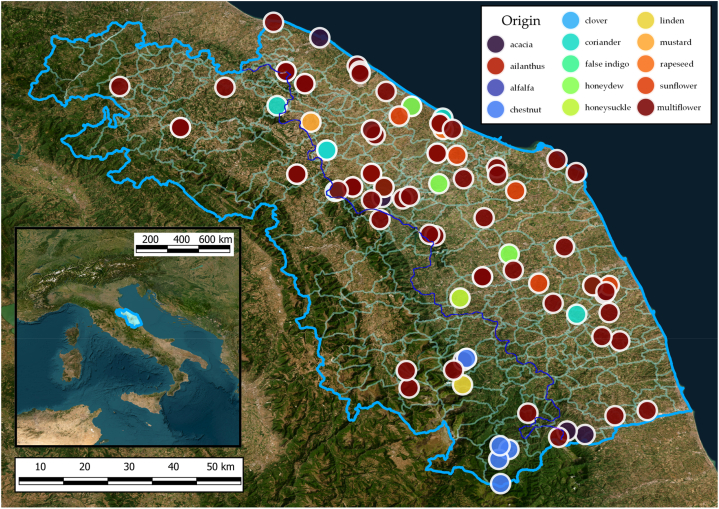
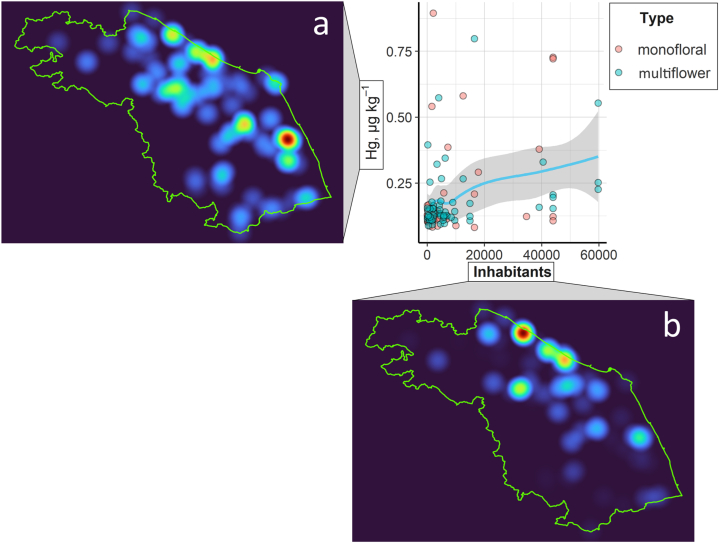
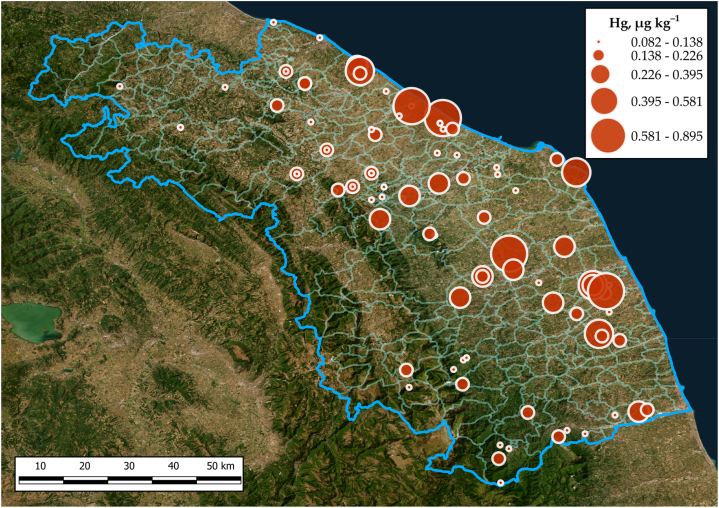
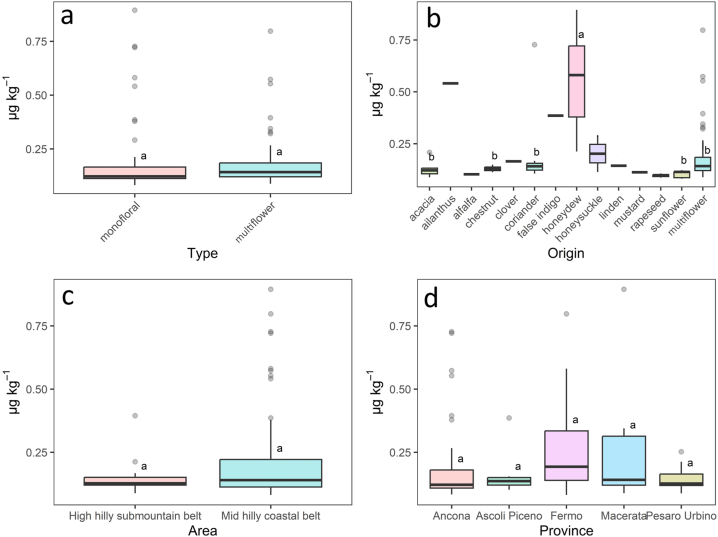
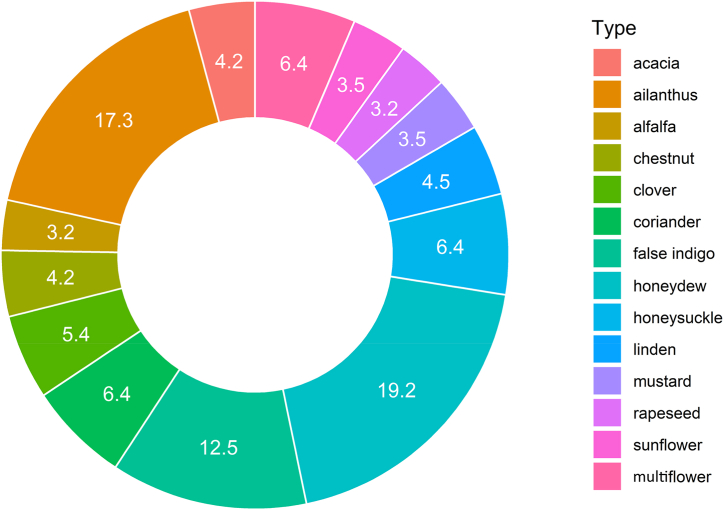
Honey is a natural product made by honeybees () from nectar or honeydew. It is a very popular and appreciated product all over the world as it represents a rapidly available energy source and exerts several beneficial properties for humans. However, it has been demonstrated that honey can be contaminated by potentially toxic elements (PTEs) of natural or anthropogenic origin. Among them, mercury (Hg) represents one of the most dangerous for its toxicity and its capacity to biomagnify along the trophic web. In the present study, 100 honey samples from the Marche Region (Central Italy) produced in the year 2021, were analyzed by thermal decomposition amalgamation atomic absorption spectrometry to determine the Hg content. The overall mean concentration was 0.2 ± 0.2 μg kg. The results showed that no statistically significant differences were found in Hg content among honey from different pollen origin, but honeydew had a significantly higher Hg content with respect to all other honey samples (0.6 ± 0.3 μg kg). The Hg content in honey depends mainly on local pollution, while geographical origin did not play a key role. Furthermore, considering the regulatory limits and provisional tolerable weekly intake (PTWIs) identified by FAO/WHO, the Hg Hazard Quotient (HQ) measurement revealed that this product is safe for human consumption.
蜂蜜是蜜蜂用花蜜或蜜露制成的天然产物。它在全世界都是一种非常受欢迎且备受青睐的产品,因为它是一种快速可得的能量来源,并且对人类具有多种有益特性。然而,已有研究表明,蜂蜜可能会受到天然或人为来源的潜在有毒元素(PTEs)的污染。其中,汞(Hg)因其毒性以及在营养网中生物放大的能力,成为最危险的元素之一。在本研究中,采用热分解汞齐化原子吸收光谱法对2021年意大利中部马尔凯地区生产的100份蜂蜜样本进行分析,以测定汞含量。总体平均浓度为0.2±0.2μg/kg。结果表明,不同花粉来源的蜂蜜中汞含量在统计学上没有显著差异,但与所有其他蜂蜜样本相比,甘露蜜的汞含量显著更高(0.6±0.3μg/kg)。蜂蜜中的汞含量主要取决于当地污染,而地理来源并未起到关键作用。此外,考虑到粮农组织/世界卫生组织确定的监管限值和暂定每周耐受摄入量(PTWIs),汞危害商数(HQ)测量结果表明,该产品对人类消费是安全的。