Faculty of Medicine and Health, Brain and Mind Centre, School of Medical Sciences, University of Sydney, Level 2, M02G, 100 Mallett St, Camperdown, Sydney, NSW, 2050, Australia.
J Neurol. 2024 Jan;271(1):606-617. doi: 10.1007/s00415-023-12000-w. Epub 2023 Oct 4.
Recent consensus research criteria have identified a 'psychiatric onset' form of prodromal dementia with Lewy bodies (DLB) characterised by prominent late-onset psychiatric symptoms. Although recognised as important to raise the index of diagnostic suspicion, evidence regarding this cohort was deemed too limited to impose formal criteria. We reviewed the published literature on psychiatric-onset DLB to identify key clinical characteristics and evidence gaps to progress our understanding of this entity.
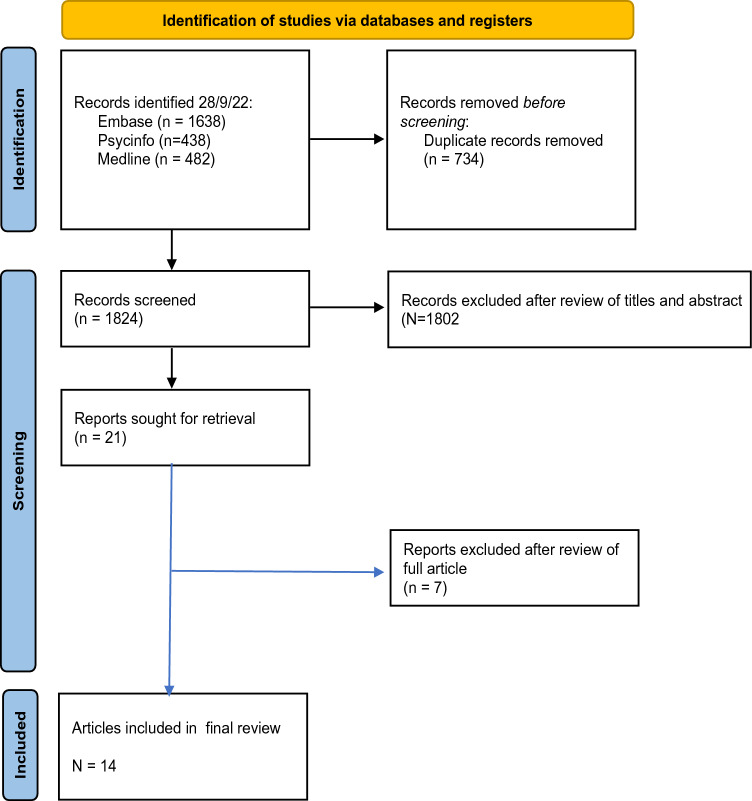
Medline, PubMed and Embase were searched for relevant articles containing longitudinal follow-up of patients initially presenting with a psychiatric illness who subsequently developed DLB according to the diagnostic criteria available at the time.
Two cohort studies (18 and 21 patients) along with 12 case series (13 cases) were identified totalling 52 patients (63% female). Initial psychiatric presentation occurred at a mean of 63 years (range 53-88), with depression being the most frequently reported psychiatric presentation (88%). Psychotic presentations were less common on presentation (11%) but became more prevalent throughout the prodromal period before the diagnosis of DLB (83%). Relapses of the psychiatric disease were common occurring in 94% (32/34) of patients. Parkinsonism, cognitive fluctuations, visual hallucinations, and REM sleep behaviour disorder were uncommonly reported at initial presentation (3.8%).
Psychiatric-onset DLB is characterized by a female predominant relapsing-remitting psychiatric illness presenting with affective symptoms but later developing psychotic features prior to the onset of DLB. Additional prospective studies including other neurodegenerative cohorts with harmonised assessments are required to inform definitive diagnostic criteria for this condition.
最近的共识研究标准确定了一种具有路易体(DLB)的前驱痴呆的“精神病学发作”形式,其特征为突出的晚发性精神病症状。尽管被认为对提高诊断怀疑指数很重要,但由于这一队列的证据有限,因此无法强加正式标准。我们回顾了关于精神病学发作 DLB 的已发表文献,以确定关键的临床特征和证据差距,从而加深我们对该实体的理解。
在 Medline、PubMed 和 Embase 上搜索包含纵向随访的相关文章,这些患者最初表现为精神病,随后根据当时可用的诊断标准发展为 DLB。
确定了两项队列研究(18 例和 21 例患者)以及 12 项病例系列研究(13 例),总共 52 例患者(63%为女性)。最初的精神病表现发生在平均 63 岁(范围 53-88 岁),最常报告的精神病表现为抑郁症(88%)。精神病表现的发生率较低(11%),但在 DLB 诊断前的前驱期更普遍(83%)。精神病的复发很常见,94%(32/34)的患者发生了这种情况。帕金森病、认知波动、视幻觉和 REM 睡眠行为障碍在初始表现时很少见(3.8%)。
精神病学发作 DLB 的特征是女性为主的复发性缓解性精神病,表现为情感症状,但随后在 DLB 发作前出现精神病特征。需要进行包括其他神经退行性疾病队列的前瞻性研究,并进行协调一致的评估,以便为这种情况提供明确的诊断标准。