Tang Yong-Fei, Qiao Bin, Huang Ya-Bing, Wang Ming
Department of Pathology, Renmin Hospital of Wuhan University, Wuhan, China.
Department of Clinical Laboratory, Renmin Hospital of Wuhan University, Wuhan, China.
Front Mol Biosci. 2023 Sep 19;10:1202524. doi: 10.3389/fmolb.2023.1202524. eCollection 2023.
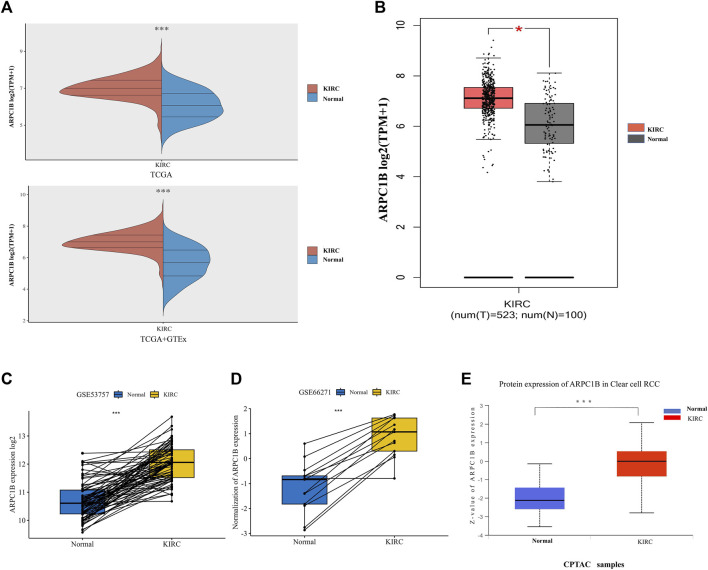
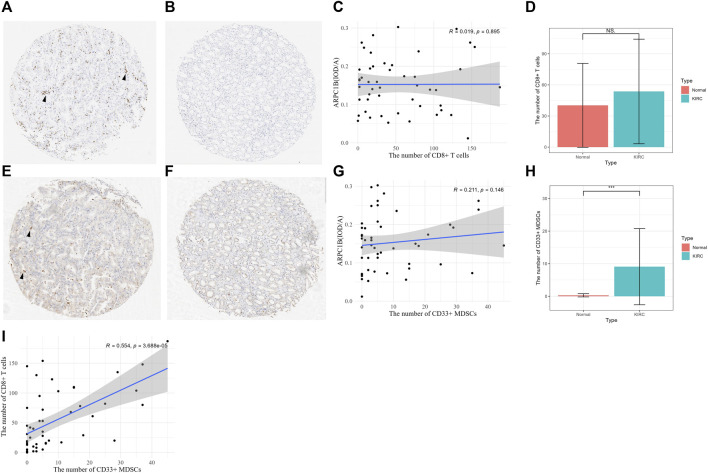
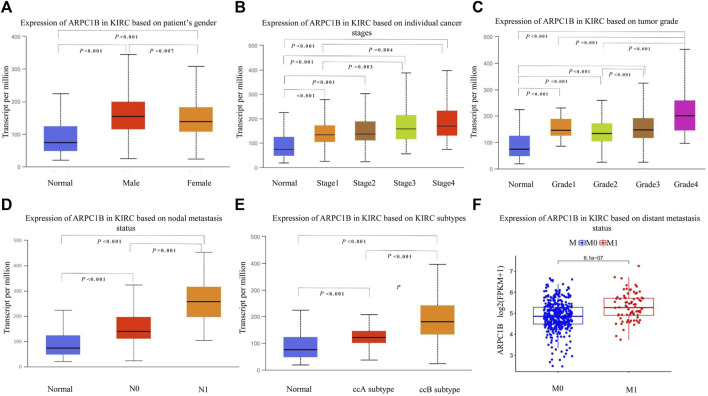
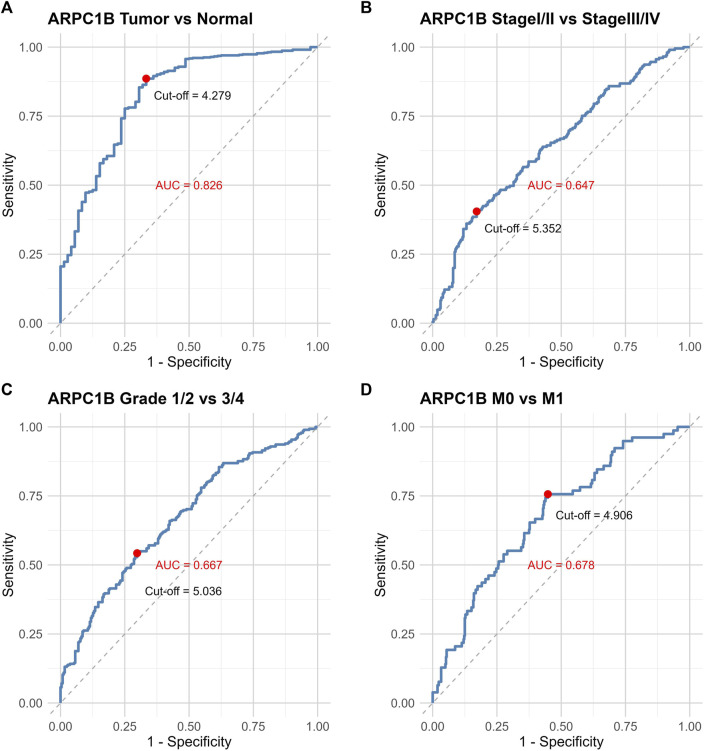
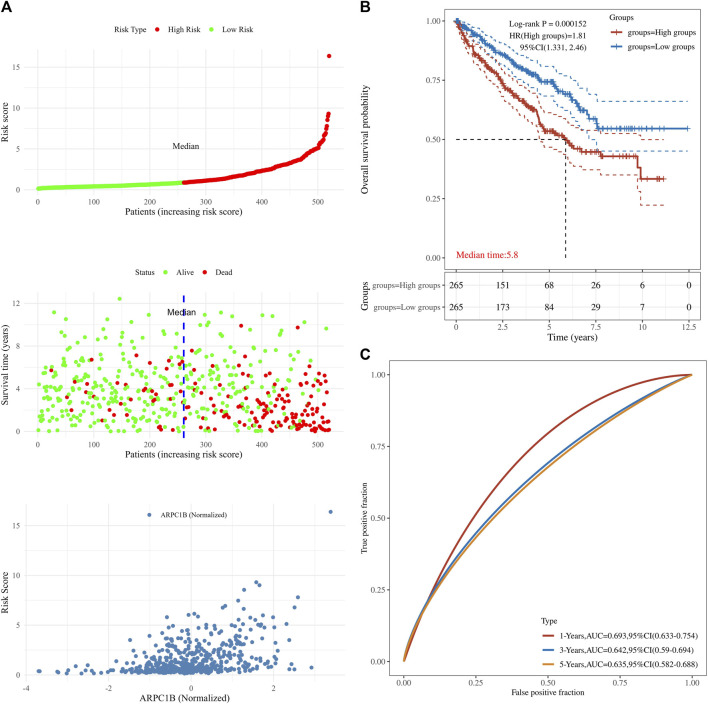
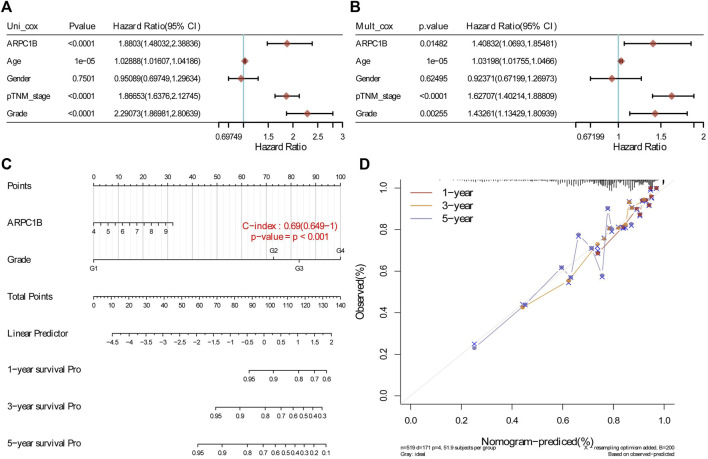
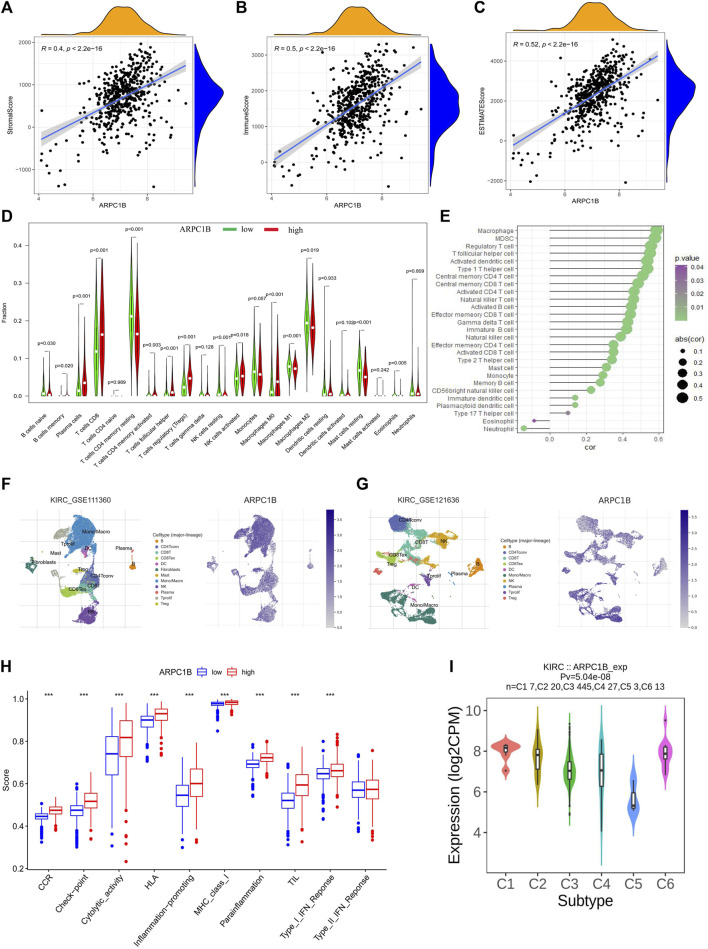
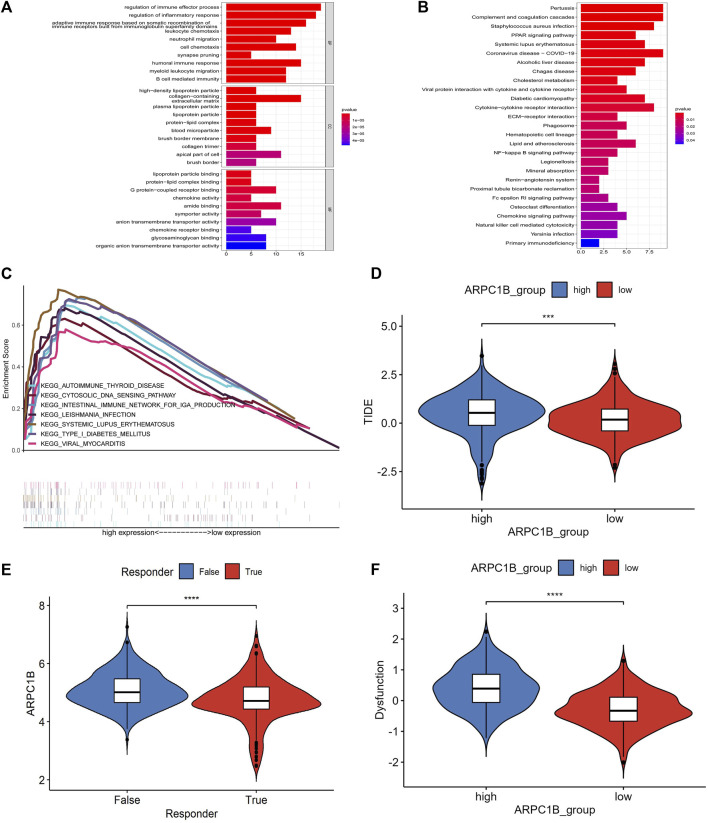
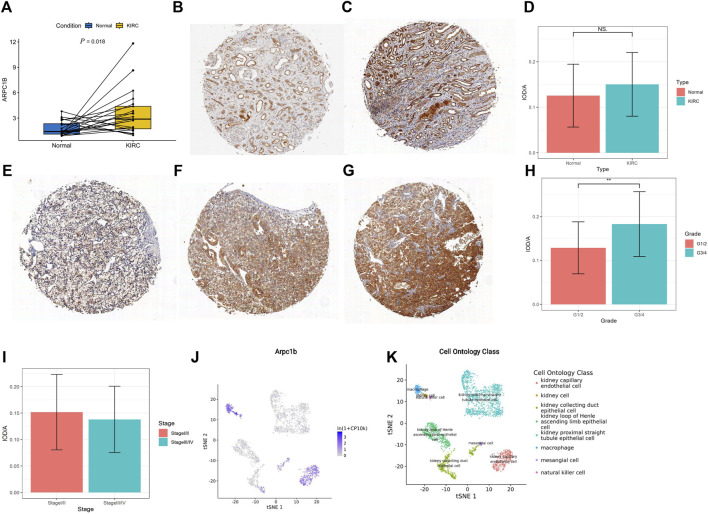
Actin-related protein 2/3 complex subunit 1B (ARPC1B) is reported to be involved in tumorigenesis and progression. However, its role in kidney renal clear cell carcinoma (KIRC), correlation with tumor-infiltrating immune cells, and prognostic significance remain unclear. Data sets from the TCGA, GTEx, GEPIA, GEO, UALCAN, and CPTAC databases were extracted and analyzed to investigate the expression difference, prognosis, and clinicopathological features of ARPC1B. Single-sample Gene Set Enrichment Analysis (ssGSEA), CIBERSORT, and TISCH2 analysis were used to examine the relationship between ARPC1B expression and tumor immune infiltration in KIRC. The potential function of ARPC1B in KIRC was explored by GO functional annotation and KEGG pathway analysis. The TIDE algorithm was used to predict and analyze the relationship between ARPC1B expression and response to immune checkpoint blockade (ICB). The expression of ARPC1B was further validated by using quantitative real-time polymerase chain reaction (qRT-PCR) and immunohistochemistry (IHC). The study showed that ARPC1B expression was an independent prognostic factor of KIRC, with high ARPC1B expression being associated with poor overall survival (OS). Enrichment of GO annotation and pathway analysis showed multiple immune-related functional pathways affected by ARPC1B such as regulation of immune effector process, inflammatory response regulation, antigen processing and presentation, asthma, autoimmune thyroid disease, graft versus host disease, intestinal immune network for IgA production, and type I diabetic mellitus. Moreover, ARPC1B expression positively correlated with infiltrating levels of myeloid-derived suppressor cells (MDSCs) and regulatory T cells (Tregs) in KIRC. Importantly, high ARPC1B expression predicted a low response to ICB in KIRC. This study indicates that ARPC1B expression is an independent prognostic biomarker for OS in KIRC patients. High ARPC1B expression is closely associated with MDSCs and Tregs infiltration. These findings suggest that ARPC1B may serve as a biomarker for prognosis and immune infiltration in KIRC, potentially aiding in the development of novel treatment strategies to improve the survival outcomes for KIRC patients.
据报道,肌动蛋白相关蛋白2/3复合体亚基1B(ARPC1B)参与肿瘤发生和进展。然而,其在肾透明细胞癌(KIRC)中的作用、与肿瘤浸润免疫细胞的相关性以及预后意义仍不清楚。提取并分析来自TCGA、GTEx、GEPIA、GEO、UALCAN和CPTAC数据库的数据集,以研究ARPC1B的表达差异、预后及临床病理特征。采用单样本基因集富集分析(ssGSEA)、CIBERSORT和TISCH2分析来检测KIRC中ARPC1B表达与肿瘤免疫浸润之间的关系。通过GO功能注释和KEGG通路分析探索ARPC1B在KIRC中的潜在功能。使用TIDE算法预测和分析ARPC1B表达与免疫检查点阻断(ICB)反应之间的关系。通过定量实时聚合酶链反应(qRT-PCR)和免疫组织化学(IHC)进一步验证ARPC1B的表达。研究表明,ARPC1B表达是KIRC的独立预后因素,ARPC1B高表达与总生存期(OS)较差相关。GO注释和通路分析的富集显示,ARPC1B影响多个免疫相关功能通路,如免疫效应过程调节、炎症反应调节、抗原加工和呈递、哮喘、自身免疫性甲状腺疾病、移植物抗宿主病、IgA产生的肠道免疫网络和I型糖尿病。此外,ARPC1B表达与KIRC中髓系来源抑制细胞(MDSCs)和调节性T细胞(Tregs)的浸润水平呈正相关。重要的是,ARPC1B高表达预示着KIRC对ICB的反应较低。这项研究表明,ARPC1B表达是KIRC患者OS的独立预后生物标志物。ARPC1B高表达与MDSCs和Tregs浸润密切相关。这些发现表明,ARPC1B可能作为KIRC预后和免疫浸润的生物标志物,潜在地有助于开发新的治疗策略以改善KIRC患者的生存结果。