In vitro Toxicology and Biomedicine, Dept inaugurated by the Doerenkamp-Zbinden foundation, University of Konstanz, 78457 Konstanz, Germany.
Department of Chemistry, Konstanz Research School Chemical Biology, Zukunftskolleg, University of Konstanz, 78457 Konstanz, Germany.
Environ Int. 2023 Oct;180:108229. doi: 10.1016/j.envint.2023.108229. Epub 2023 Sep 23.
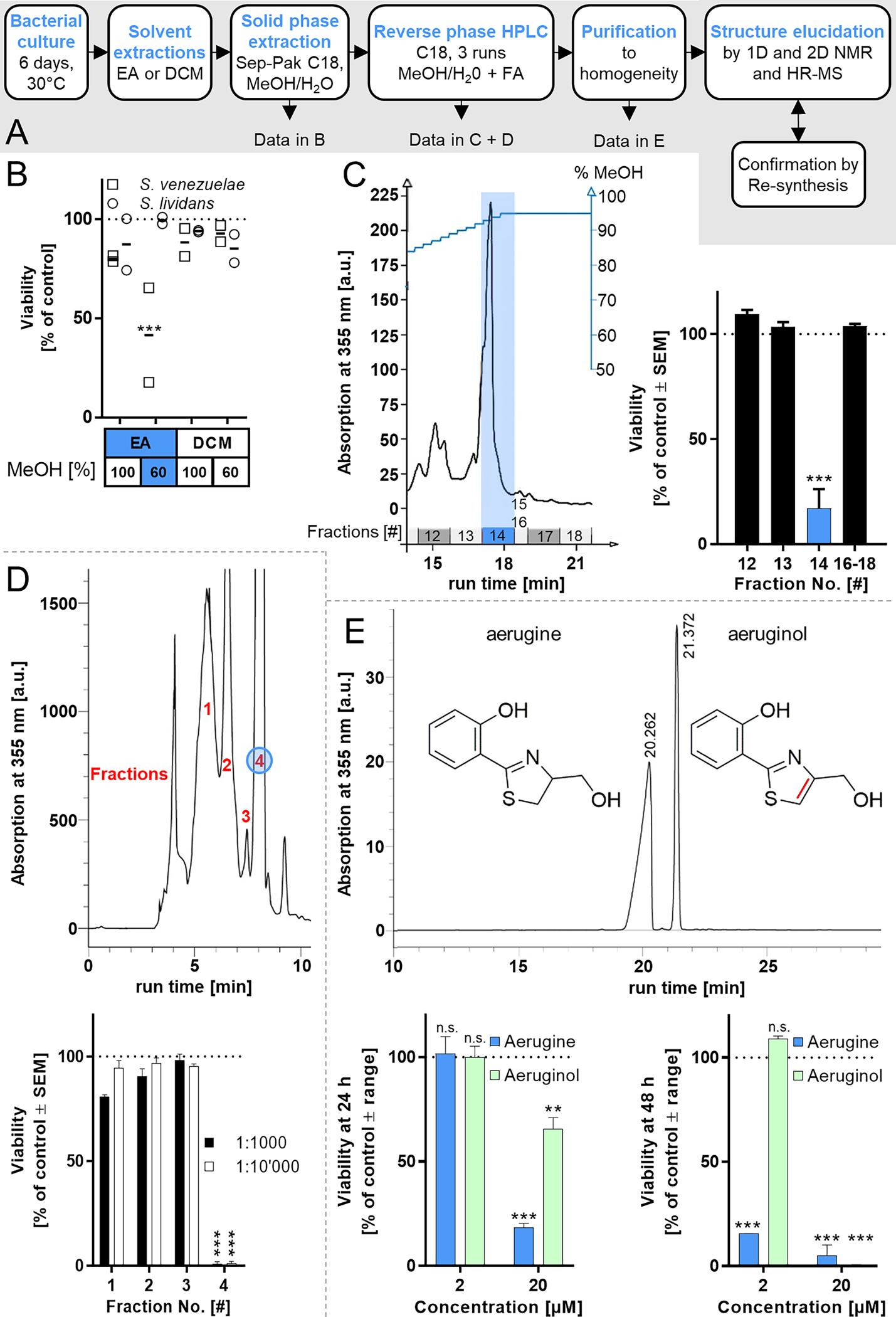
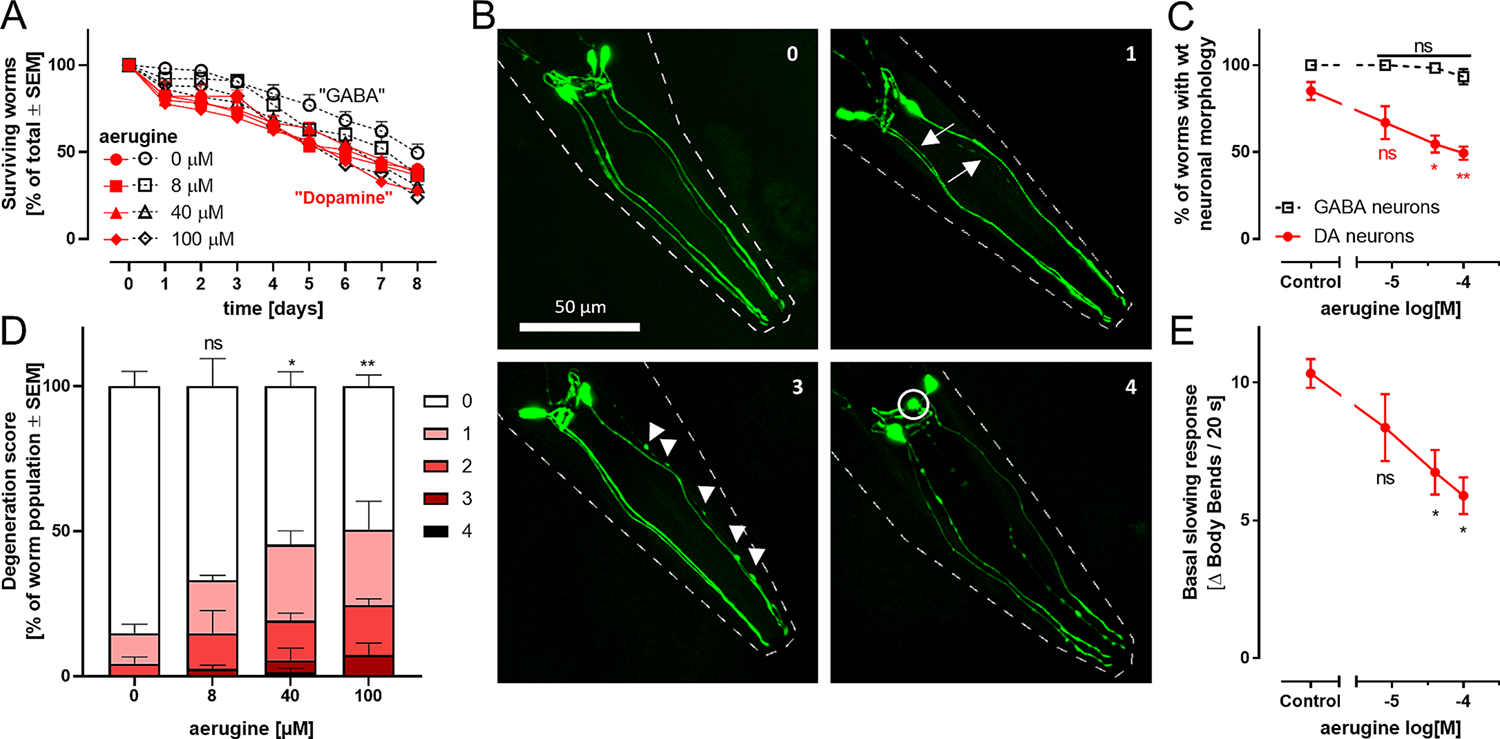
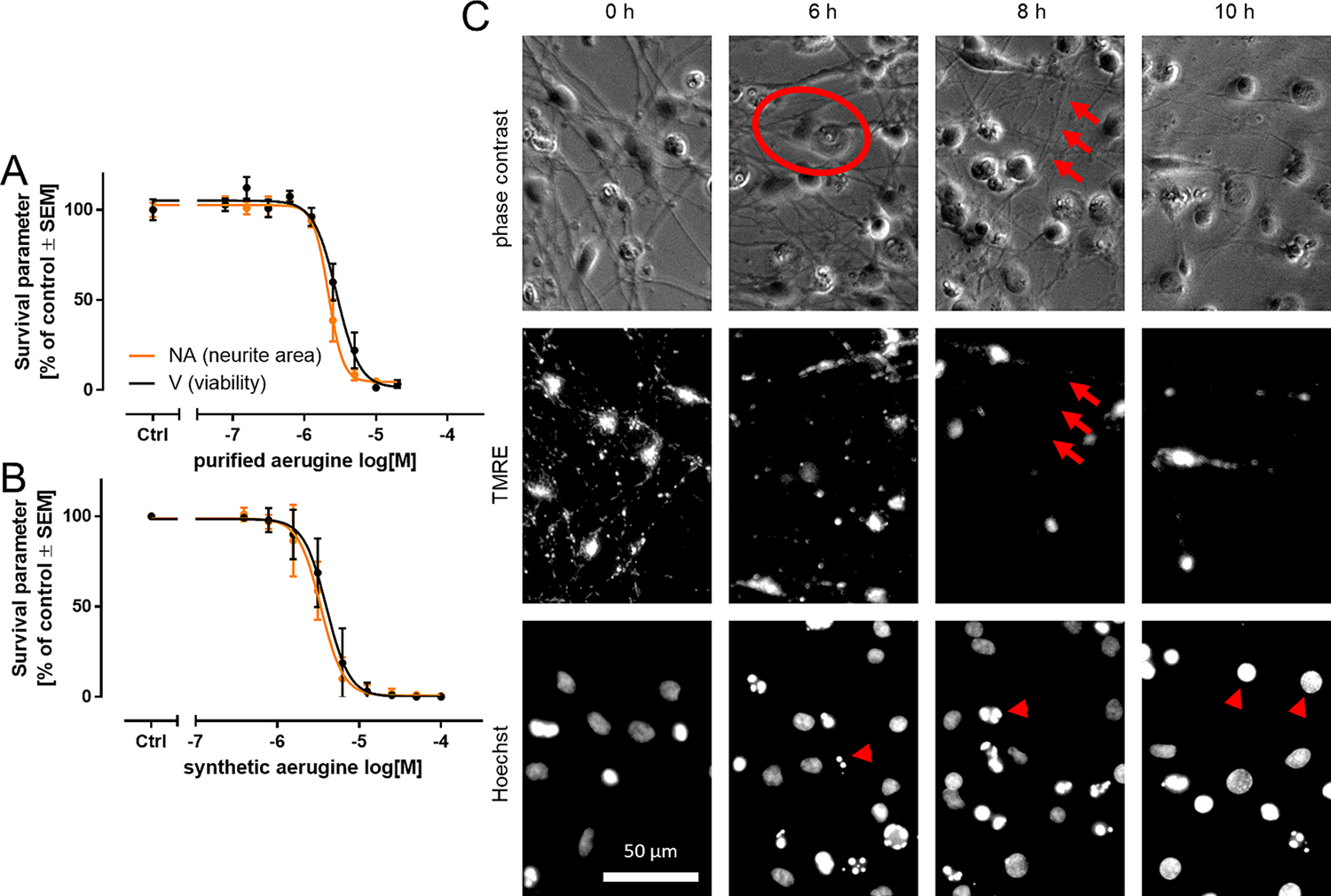
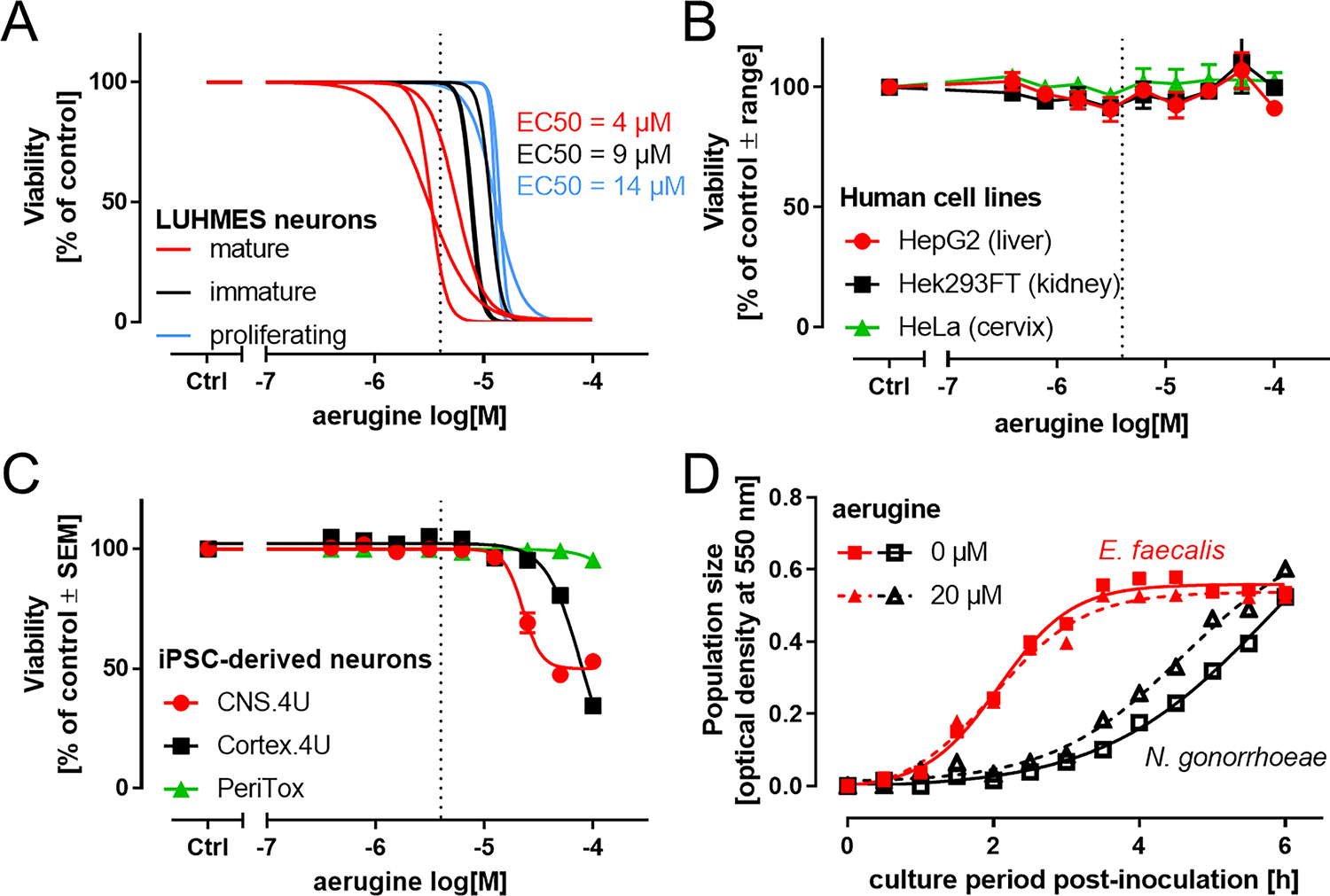
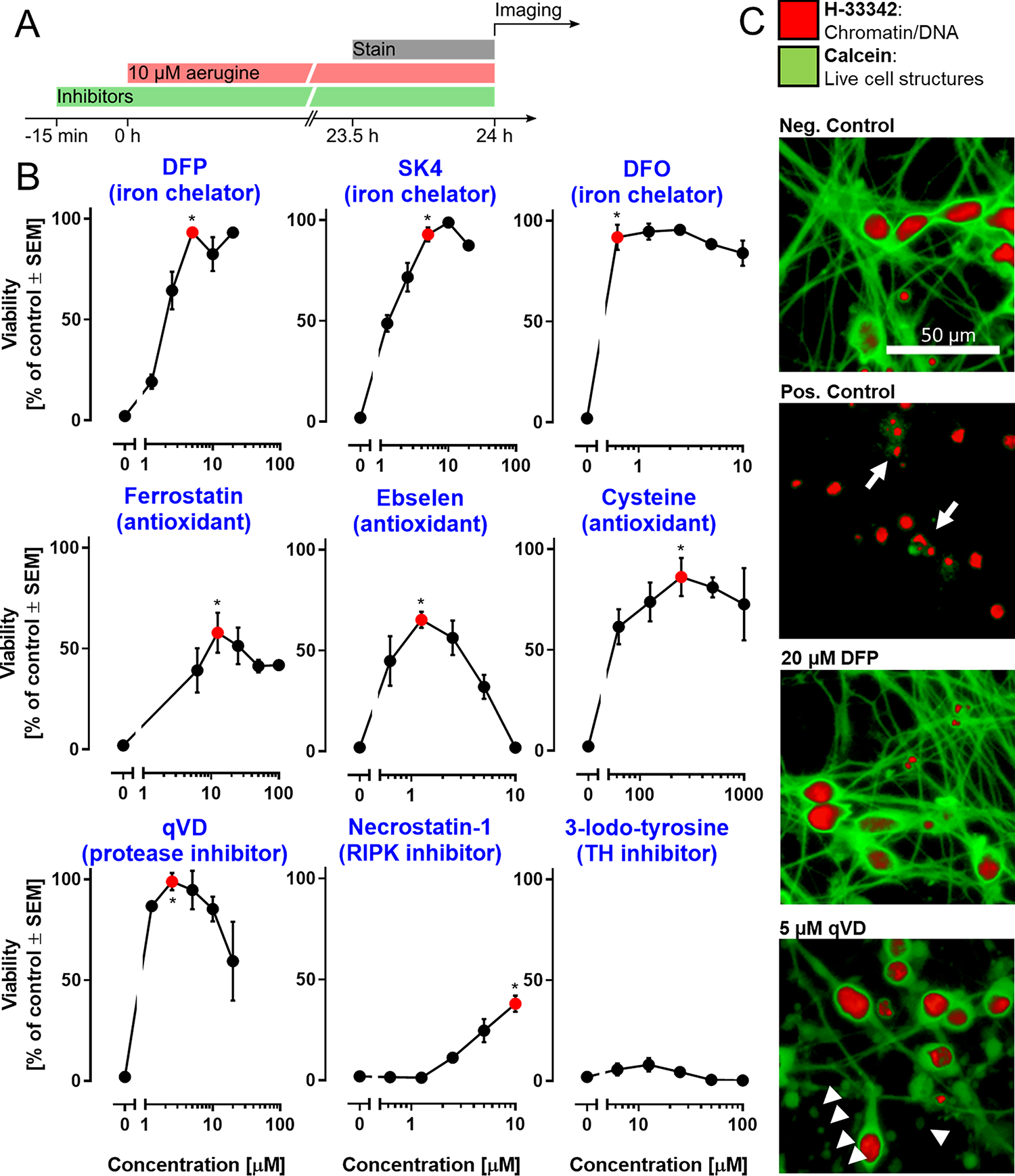
The causes of nigrostriatal cell death in idiopathic Parkinson's disease are unknown, but exposure to toxic chemicals may play some role. We followed up here on suggestions that bacterial secondary metabolites might be selectively cytotoxic to dopaminergic neurons. Extracts from Streptomyces venezuelae were found to kill human dopaminergic neurons (LUHMES cells). Utilizing this model system as a bioassay, we identified a bacterial metabolite known as aerugine (CHNOS; 2-[4-(hydroxymethyl)-4,5-dihydro-1,3-thiazol-2-yl]phenol) and confirmed this finding by chemical re-synthesis. This 2-hydroxyphenyl-thiazoline compound was previously shown to be a product of a wide-spread biosynthetic cluster also found in the human microbiome and in several pathogens. Aerugine triggered half-maximal dopaminergic neurotoxicity at 3-4 µM. It was less toxic for other neurons (10-20 µM), and non-toxic (at <100 µM) for common human cell lines. Neurotoxicity was completely prevented by several iron chelators, by distinct anti-oxidants and by a caspase inhibitor. In the Caenorhabditis elegans model organism, general survival was not affected by aerugine concentrations up to 100 µM. When transgenic worms, expressing green fluorescent protein only in their dopamine neurons, were exposed to aerugine, specific neurodegeneration was observed. The toxicant also exerted functional dopaminergic toxicity in nematodes as determined by the "basal slowing response" assay. Thus, our research has unveiled a bacterial metabolite with a remarkably selective toxicity toward human dopaminergic neurons in vitro and for the dopaminergic nervous system of Caenorhabditis elegans in vivo. These findings suggest that microbe-derived environmental chemicals should be further investigated for their role in the pathogenesis of Parkinson's disease.
特发性帕金森病中黑质纹状体细胞死亡的原因尚不清楚,但接触有毒化学物质可能起一定作用。我们在这里进一步研究了细菌次级代谢产物是否可能对多巴胺能神经元具有选择性细胞毒性的假说。我们发现委内瑞拉链霉菌(Streptomyces venezuelae)的提取物可以杀死人多巴胺能神经元(LUHMES 细胞)。我们利用该模型系统作为生物测定法,鉴定出一种已知的细菌代谢产物,称为 aerugine(CHNOS;2-[4-(羟甲基)-4,5-二氢-1,3-噻唑-2-基]苯酚),并通过化学重合成证实了这一发现。这种 2-羟基苯基噻唑啉化合物以前是一种广泛存在的生物合成簇的产物,该生物合成簇也存在于人类微生物组和几种病原体中。Aerugine 在 3-4 μM 时即可引发多巴胺能神经毒性的半数最大效应。对于其他神经元,它的毒性较小(10-20 μM),对常见的人类细胞系无毒性(<100 μM)。几种铁螯合剂、不同的抗氧化剂和半胱天冬酶抑制剂可完全阻止神经毒性。在秀丽隐杆线虫(Caenorhabditis elegans)模式生物中,aerugine 浓度高达 100 μM 时不会影响其总体存活率。当表达绿色荧光蛋白仅在其多巴胺神经元中的转基因线虫暴露于 aerugine 时,观察到特定的神经退行性变。该毒素还通过“基础减速反应”测定法在线虫中发挥了功能性的多巴胺毒性。因此,我们的研究揭示了一种细菌代谢产物,其对体外人多巴胺能神经元和体内秀丽隐杆线虫的多巴胺能神经系统具有显著的选择性毒性。这些发现表明,应进一步研究微生物衍生的环境化学物质在帕金森病发病机制中的作用。