Guerrero Andres S, O'Dowd Paul D, Pigg Hannah C, Alley Katelyn R, Griffith Darren M, DeRose Victoria J
Department of Chemistry and Biochemistry, University of Oregon Eugene OR USA
Department of Chemistry, RCSI Dublin Ireland.
RSC Chem Biol. 2023 Aug 16;4(10):785-793. doi: 10.1039/d3cb00055a. eCollection 2023 Oct 4.
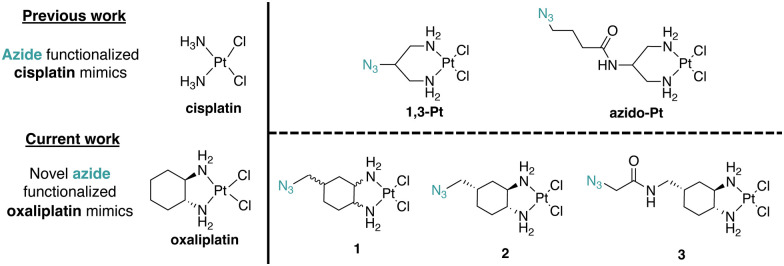
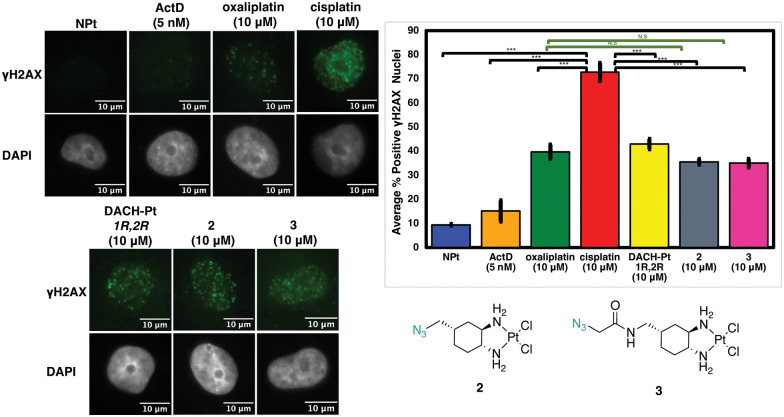
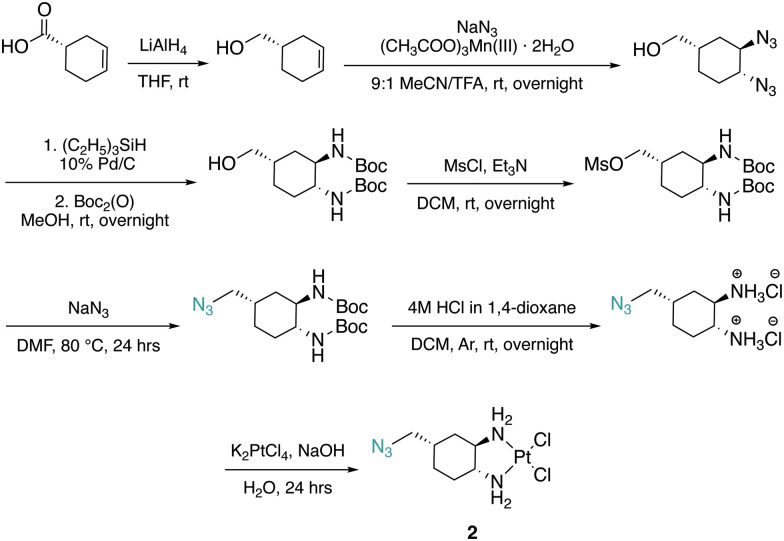
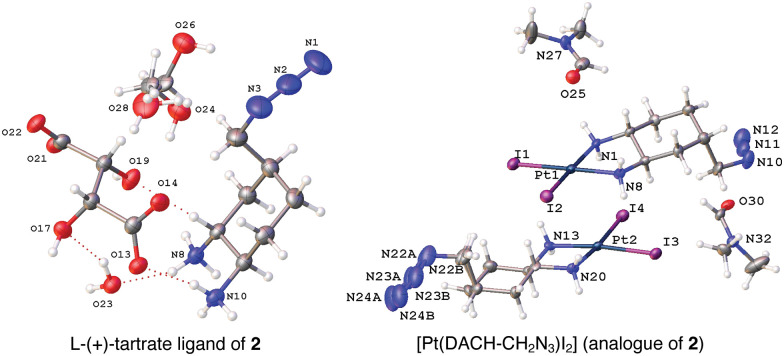
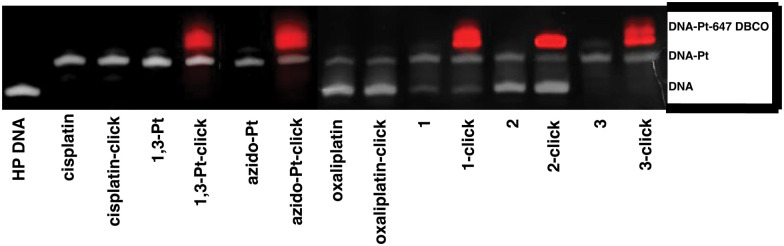
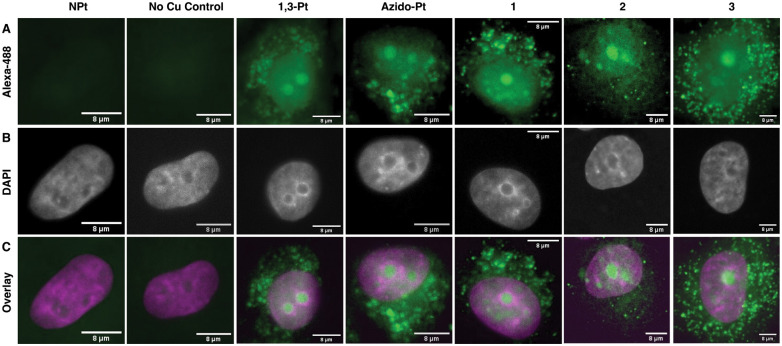
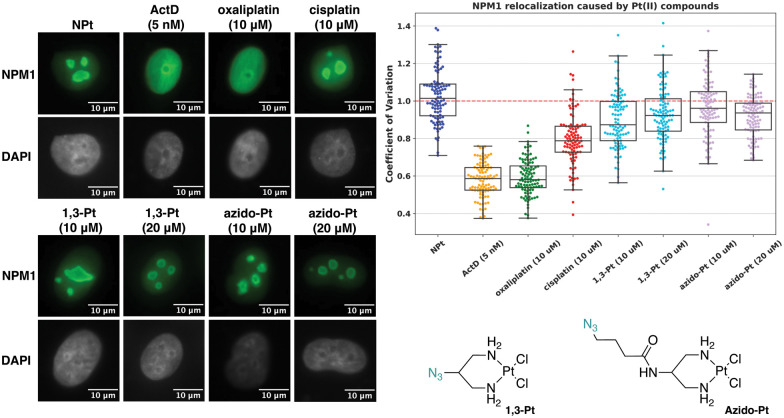
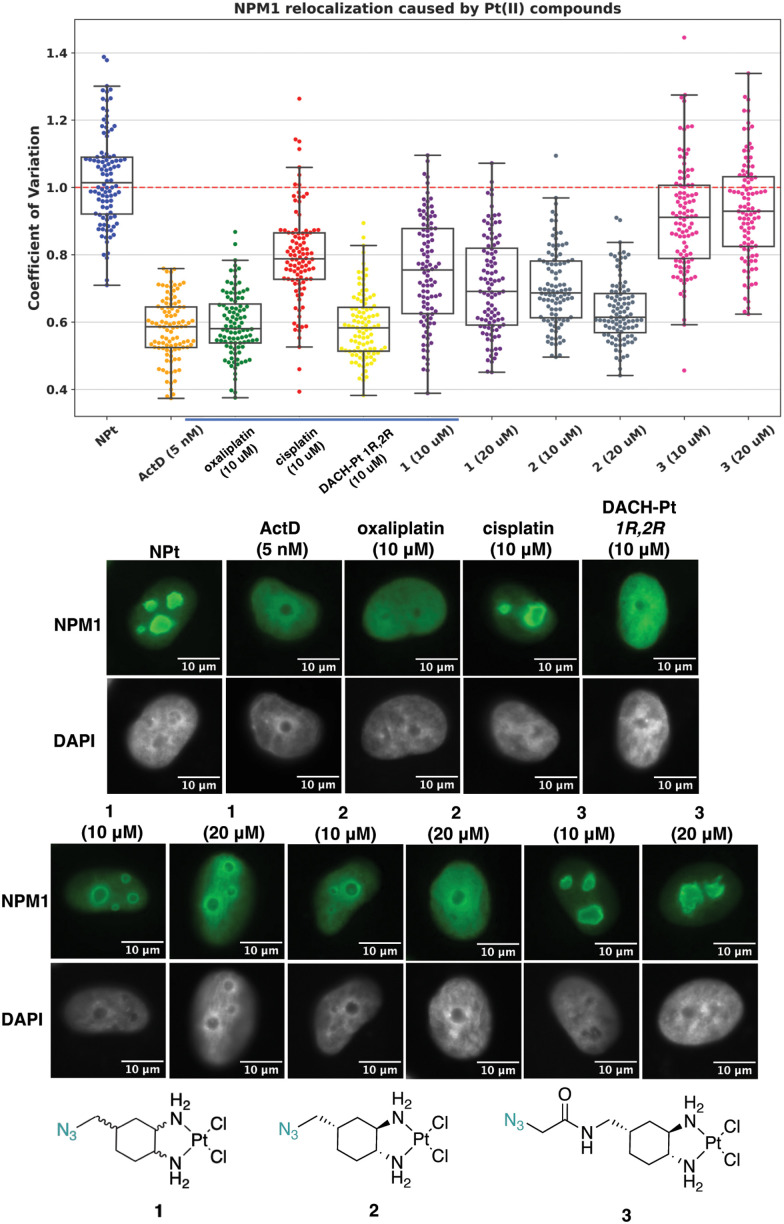
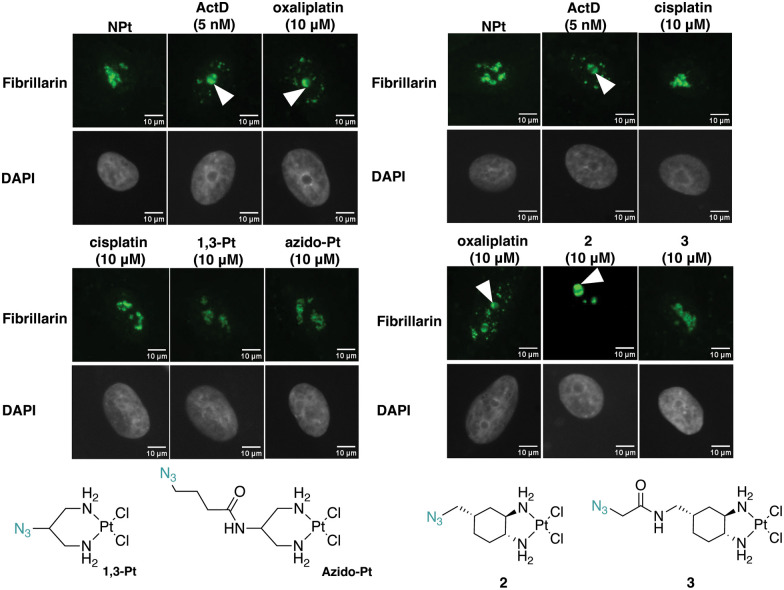
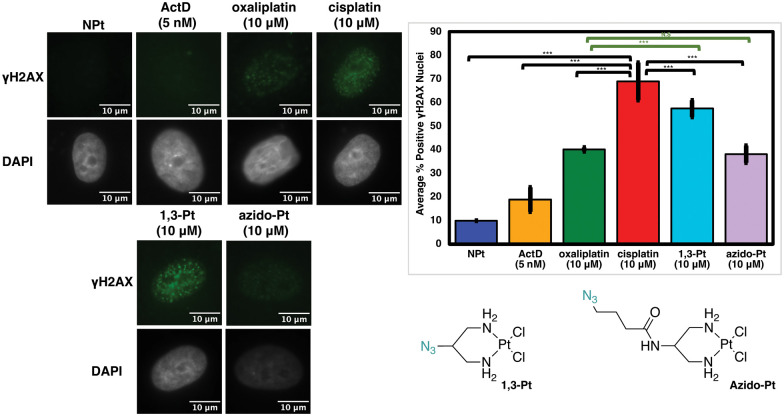
Pt(ii) chemotherapeutic complexes have been used as predominant anticancer drugs for nearly fifty years. Currently there are three FDA-approved chemotherapeutic Pt(ii) complexes: cisplatin, carboplatin, and oxaliplatin. Until recently, it was believed that all three complexes induced cellular apoptosis through the DNA damage response pathway. Studies within the last decade, however, suggest that oxaliplatin may instead induce cell death through a unique nucleolar stress pathway. Pt(ii)-induced nucleolar stress is not well understood and further investigation of this pathway may provide both basic knowledge about nucleolar stress as well as insight for more tunable Pt(ii) chemotherapeutics. Through a previous structure-function analysis, it was determined that nucleolar stress induction is highly sensitive to modifications at the 4-position of the 1,2-diaminocyclohexane (DACH) ring of oxaliplatin. Specifically, more flexible and less rigid substituents (methyl, ethyl, propyl) induce nucleolar stress, while more rigid and bulkier substituents (isopropyl, acetamide) do not. These findings suggest that a click-capable functional group can be installed at the 4-position of the DACH ring while still inducing nucleolar stress. Herein, we report novel click-capable azide-modified oxaliplatin mimics that cause nucleolar stress. Through NPM1 relocalization, fibrillarin redistribution, and γH2AX studies, key differences have been identified between previously studied click-capable cisplatin mimics and these novel click-capable oxaliplatin mimics. These complexes provide new tools to identify cellular targets and localization through post-treatment Cu-catalyzed azide-alkyne cycloaddition and may help to better understand Pt(ii)-induced nucleolar stress. To our knowledge, these are the first reported oxaliplatin mimics to include an azide handle, and -[(1,2,4) 4-methylazido-1,2-cyclohexanediamine]dichlorido platinum(ii) is the first azide-functionalized oxaliplatin derivative to induce nucleolar stress.
近五十年来,铂(II)化疗配合物一直作为主要的抗癌药物使用。目前有三种获得美国食品药品监督管理局(FDA)批准的铂(II)化疗配合物:顺铂、卡铂和奥沙利铂。直到最近,人们还认为这三种配合物都是通过DNA损伤反应途径诱导细胞凋亡的。然而,过去十年的研究表明,奥沙利铂可能通过一种独特的核仁应激途径诱导细胞死亡。铂(II)诱导的核仁应激尚未得到充分了解,对该途径的进一步研究可能会提供有关核仁应激的基础知识,并为更具可调性的铂(II)化疗药物提供见解。通过先前的结构-功能分析,已确定核仁应激诱导对奥沙利铂1,2-二氨基环己烷(DACH)环4位的修饰高度敏感。具体而言,更灵活、刚性更小的取代基(甲基、乙基、丙基)会诱导核仁应激,而刚性更大、体积更大的取代基(异丙基、乙酰胺)则不会。这些发现表明,可以在DACH环的4位安装一个具有点击功能的官能团,同时仍能诱导核仁应激。在此,我们报告了新型的具有点击功能的叠氮化物修饰的奥沙利铂模拟物,它们会引起核仁应激。通过核仁磷酸蛋白1(NPM1)重新定位、纤维蛋白原重新分布和γH2AX研究,已确定先前研究的具有点击功能的顺铂模拟物与这些新型的具有点击功能的奥沙利铂模拟物之间的关键差异。这些配合物提供了新的工具,可通过处理后铜催化的叠氮化物-炔烃环加成来识别细胞靶点和定位,并可能有助于更好地理解铂(II)诱导的核仁应激。据我们所知,这些是首次报道的包含叠氮化物手柄的奥沙利铂模拟物,并且-[(1,2,4) 4-甲基叠氮基-1,2-环己二胺]二氯铂(II)是第一种诱导核仁应激的叠氮化物功能化奥沙利铂衍生物。