Department of Thoracic Surgery, Zhongshan Hospital Xiamen University, Xiamen.
Department of Thoracic Surgery, Fujian Medical University Union Hospital, Fuzhou, China.
Int J Surg. 2024 Jan 1;110(1):490-506. doi: 10.1097/JS9.0000000000000816.
The application of neoadjuvant immune checkpoint inhibitors combined with chemotherapy (NICT) in treating locally advanced oesophageal squamous cell carcinoma (ESCC) is a subject of considerable research interest. In light of this, we undertook a comprehensive meta-analysis aiming to compare the efficacy and safety of this novel approach with conventional neoadjuvant chemotherapy (NCT) in the management of ESCC.
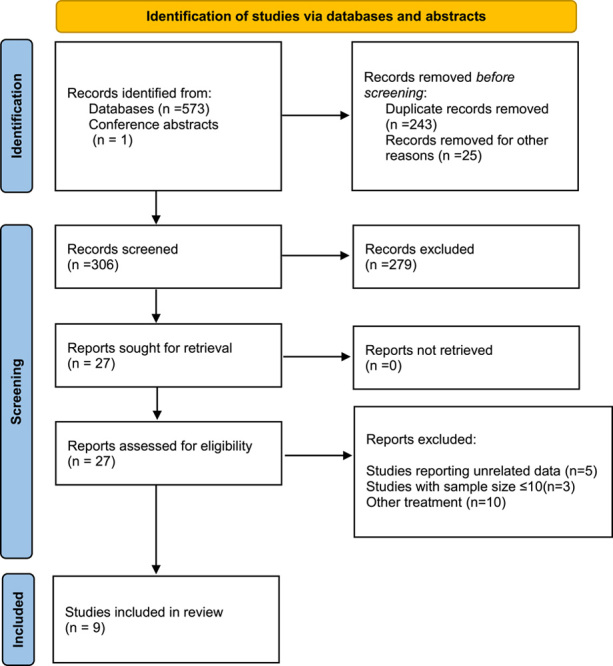
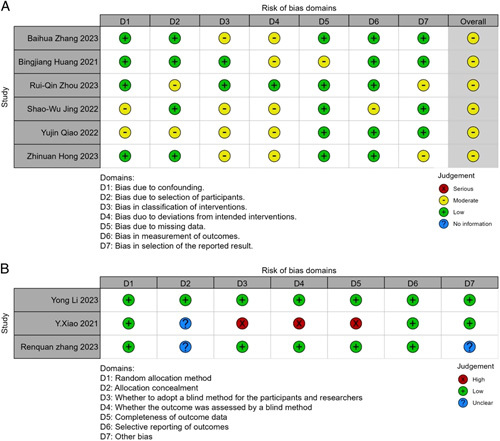
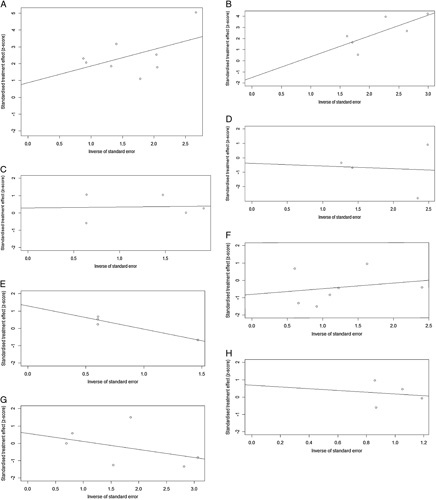
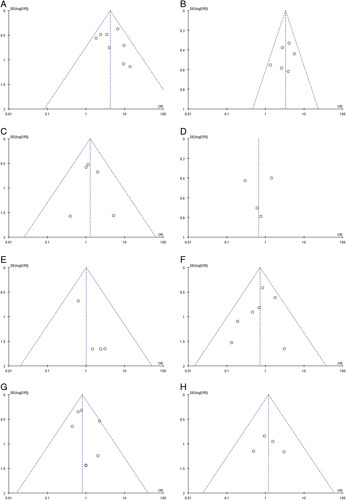
A systematic search was conducted in PubMed, Embase, Cochrane Library, and Web of Science to gather relevant literature on the efficacy and safety of NICT compared to conventional NCT in locally advanced ESCC published before June 2023. Effect indicators, including odds ratios (ORs) with associated 95% CIs, were employed to evaluate the safety and efficacy outcomes. The risk of bias was assessed using the Cochrane bias risk assessment tool, and s ubgroup analysis and sensitivity analysis were conducted to investigate the findings further.
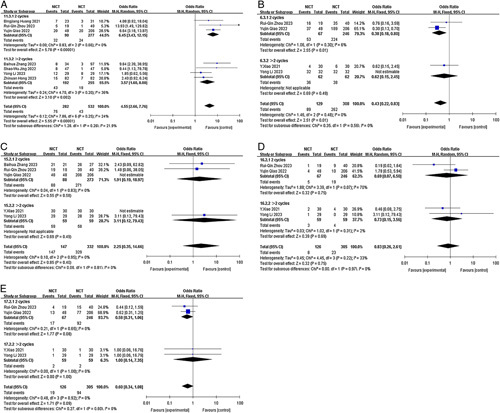
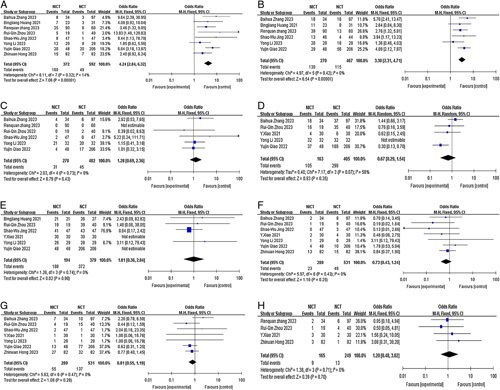
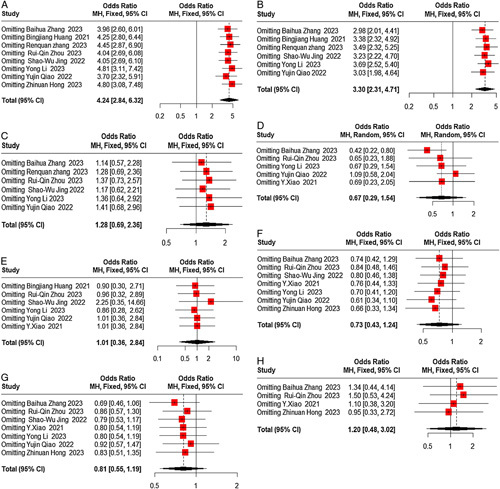
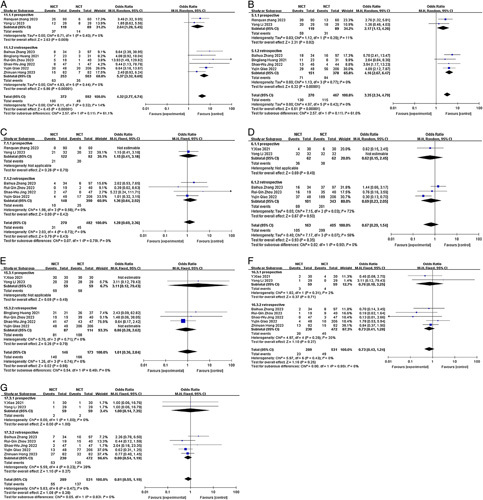
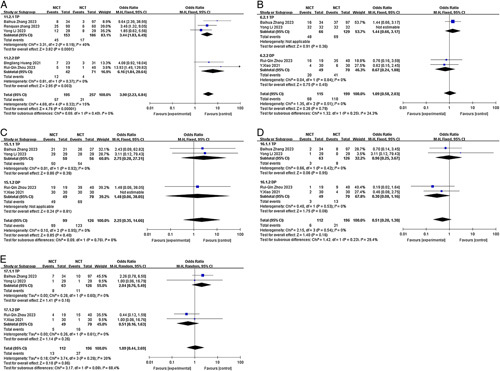
A total of nine studies qualified for the meta-analysis, all of which investigated the efficacy and safety of NICT compared to conventional NCT. The pooled rates of pathologic complete response and major pathologic response in the NICT group were significantly higher compared to the NCT group, with values of 26.9% versus 8.3% ( P <0.00001) and 48.1% versus 24.6% ( P <0.00001), respectively. The ORs for achieving pathologic complete response and major pathologic response were 4.24 (95% CI, 2.84-6.32, I 2 =14%) and 3.30 (95% CI, 2.31-4.71, I 2 =0%), respectively, indicating a significant advantage for the NICT group. Regarding safety outcomes, the pooled incidences of treatment-related adverse events and serious adverse events in the NICT group were 64.4% and 11.5%, respectively, compared to 73.8% and 9.3% in the NCT group. However, there were no significant differences observed between the two groups in terms of treatment-related adverse events (OR=0.67, 95% CI, 0.29-1.54, P =0.35, I 2 =58%) or serious adverse events (OR=1.28, 95% CI, 0.69-2.36, P =0.43, I 2 =0%). Furthermore, no significant differences were found between the NICT and NCT groups regarding R0 resection rates, anastomotic leakage, pulmonary infection, and postoperative hoarseness.
Neoadjuvant immune checkpoint inhibitors combined with chemotherapy demonstrate efficacy and safety in treating resectable oesophageal squamous cell carcinoma. Nevertheless, additional randomized trials are required to confirm the optimal treatment regimen.
新辅助免疫检查点抑制剂联合化疗(NICT)在治疗局部晚期食管鳞状细胞癌(ESCC)中的应用是一个备受关注的研究课题。有鉴于此,我们进行了一项全面的荟萃分析,旨在比较这种新方法与传统新辅助化疗(NCT)在 ESCC 治疗中的疗效和安全性。
系统检索了 PubMed、Embase、Cochrane 图书馆和 Web of Science 数据库,以收集截至 2023 年 6 月关于 NICT 与常规 NCT 在局部晚期 ESCC 中的疗效和安全性的相关文献。使用比值比(OR)及其相关 95%置信区间(CI)评估安全性和疗效结局的效应指标。使用 Cochrane 偏倚风险评估工具评估偏倚风险,并进行亚组分析和敏感性分析以进一步探讨研究结果。
共有 9 项研究符合荟萃分析的纳入标准,均探讨了 NICT 与常规 NCT 相比的疗效和安全性。NICT 组的病理完全缓解和主要病理缓解率显著高于 NCT 组,分别为 26.9%与 8.3%(P<0.00001)和 48.1%与 24.6%(P<0.00001)。达到病理完全缓解和主要病理缓解的 OR 分别为 4.24(95%CI,2.84-6.32,I²=14%)和 3.30(95%CI,2.31-4.71,I²=0%),表明 NICT 组具有显著优势。关于安全性结局,NICT 组的治疗相关不良事件和严重不良事件发生率分别为 64.4%和 11.5%,而 NCT 组分别为 73.8%和 9.3%。然而,两组之间在治疗相关不良事件(OR=0.67,95%CI,0.29-1.54,P=0.35,I²=58%)或严重不良事件(OR=1.28,95%CI,0.69-2.36,P=0.43,I²=0%)方面无显著差异。此外,NICT 组与 NCT 组在 R0 切除率、吻合口漏、肺部感染和术后声音嘶哑方面无显著差异。
新辅助免疫检查点抑制剂联合化疗在治疗可切除的食管鳞状细胞癌中具有疗效和安全性。然而,需要进一步的随机试验来确认最佳治疗方案。