Oral and Craniofacial Biomedicine Program, Adams School of Dentistry, University of North Carolina at Chapel Hill, Chapel Hill, NC 27599, USA; Division of Orthodontics, The Ohio State University College of Dentistry, Columbus, OH 43210, USA.
Division of Biosciences, The Ohio State University College of Dentistry, Columbus, OH 43210, USA.
Bone. 2023 Dec;177:116929. doi: 10.1016/j.bone.2023.116929. Epub 2023 Oct 5.
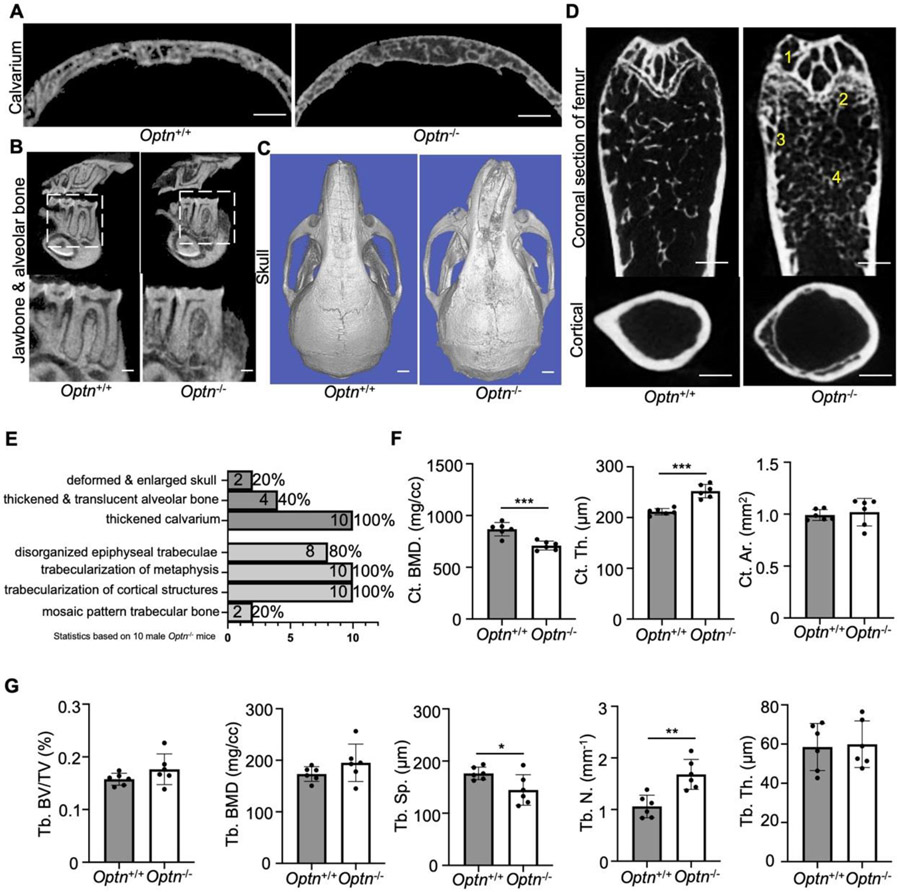
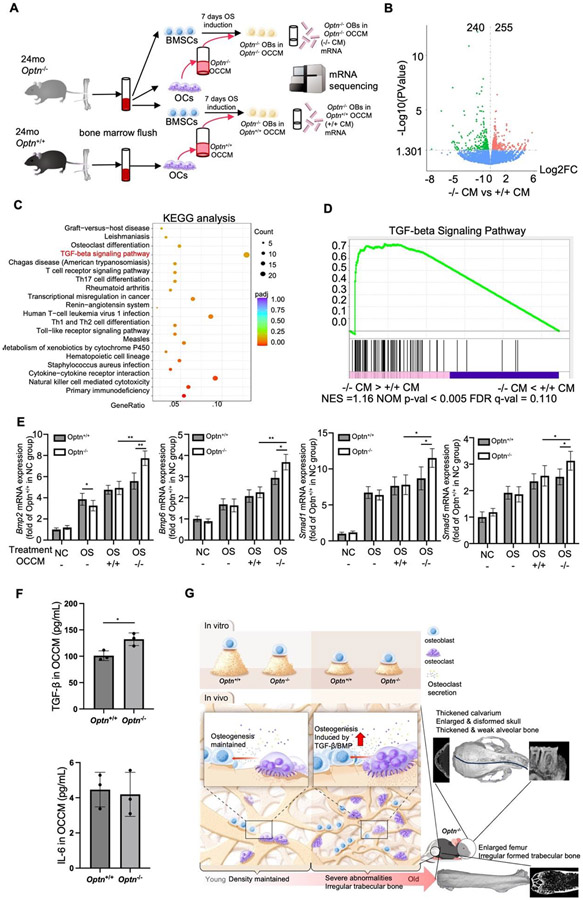
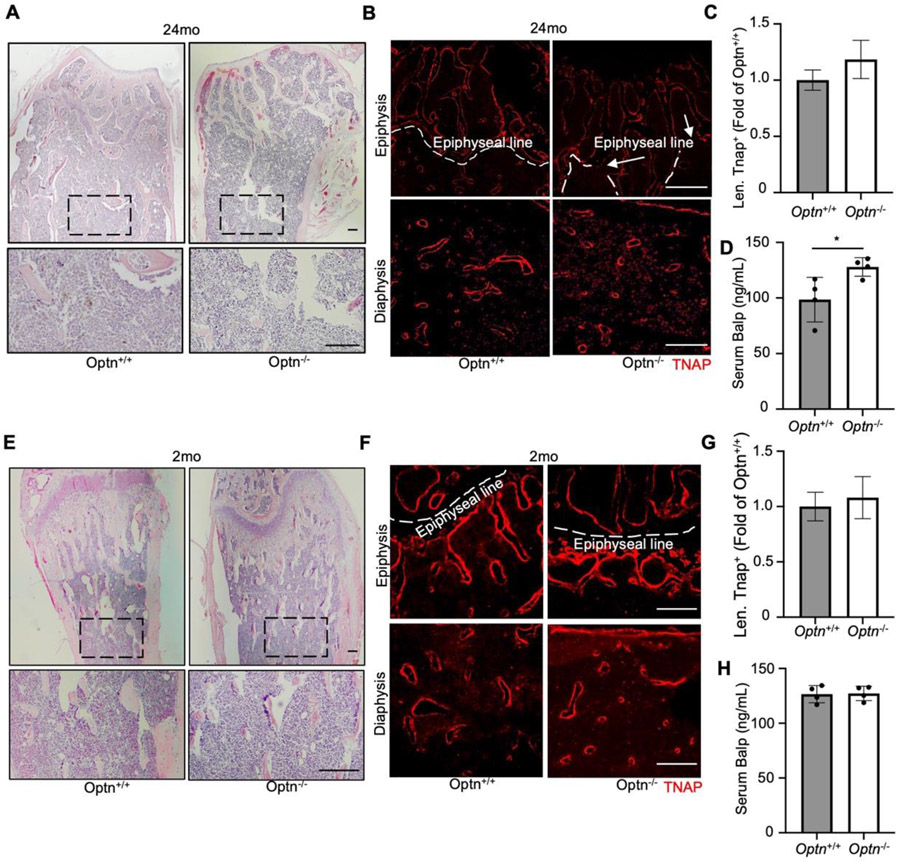
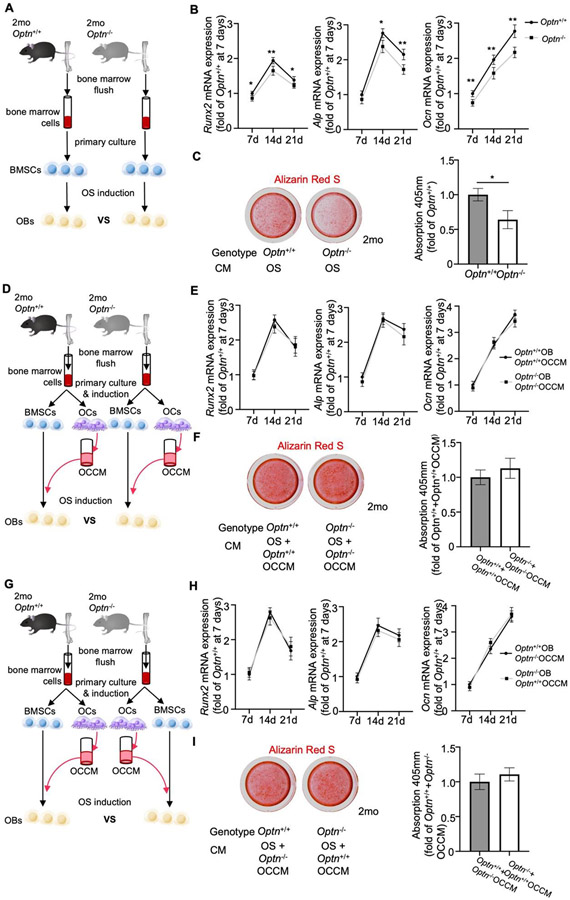
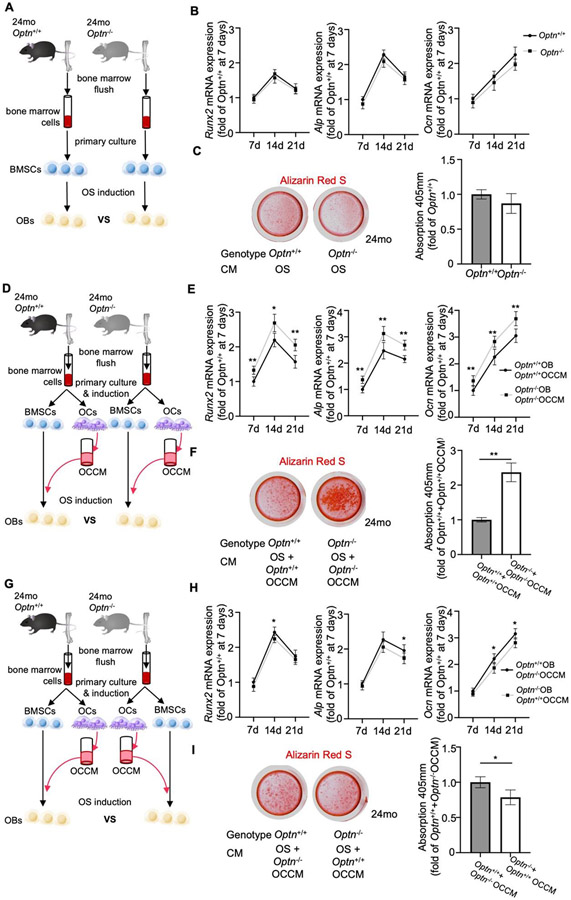
Paget's disease of bone (PDB) is a degenerative disorder affecting the skull and bones. Hyperactive osteoclasts (OCs) initiate bone degradation in the early stage, followed by increased bone formation by osteoblasts (OBs) in trabecular bones during the advanced stage. This OB-OC uncoupling results in bone deformations and irregular trabecular bone patterns. Current mouse models poorly replicate the advanced-stage characteristics of PDB. Optineurin (Gene: OPTN in humans, Optn in mice, protein: OPTN) has been implicated in PDB by genetic analyses. We identified PDB-like cortical lesions associated with OC hyperactivation in an Optn knockout (Optn) mouse model. However, the effects of OPTN dysfunction on OBs and trabecular bone in advanced PDB remain unclear. In this study, we used the Optn mouse model to investigate trabecular bone abnormalities and OB activity in PDB. Micro-computed tomography analysis revealed severe pagetic alterations in craniofacial bones and femurs of aged Optn mice, resembling clinical manifestations of PDB. Altered OB activity was observed in aged Optn mice, implicating compensatory OB response in trabecular bone anomalies. To elucidate the role of OC-OB interactions in PDB, we conducted in vitro experiments using OC conditioned media (CM) to examine the effects on OB osteogenic potential. We found OC CM restored compromised osteogenic induction of Optn bone marrow stromal cells (BMSCs) from young mice, suggesting OCs maintain OB activity through secreted factors. Strikingly, OC CM from aged Optn mice significantly enhanced osteogenic capability of Optn BMSCs, providing evidence for increased OB activity in advanced stages of PDB. We further identified TGF-β/BMP signaling pathway in mediating the effects of OC CM on OBs. Our findings provide insights into Optn's role in trabecular bone abnormalities and OB activity in PDB. This enhances understanding of PDB pathogenesis and may contribute to potential therapeutic strategies for PDB and related skeletal disorders.
佩吉特氏骨病(PDB)是一种影响颅骨和骨骼的退行性疾病。破骨细胞(OCs)的异常活跃在早期引发骨降解,随后在晚期阶段成骨细胞(OBs)在小梁骨中增加骨形成。这种 OB-OC 解偶联导致骨骼变形和不规则的小梁骨模式。目前的小鼠模型难以复制 PDB 的晚期特征。视神经萎缩症相关蛋白(基因:人类中的 OPTN,小鼠中的 Optn,蛋白:OPTN)通过遗传分析被牵连到 PDB 中。我们在 Optn 敲除(Optn)小鼠模型中发现了与 OC 过度激活相关的 PDB 样皮质病变。然而,OPTN 功能障碍对晚期 PDB 中 OBs 和小梁骨的影响仍不清楚。在这项研究中,我们使用 Optn 小鼠模型研究了 PDB 中的小梁骨异常和 OB 活性。微计算机断层扫描分析显示,年龄较大的 Optn 小鼠的颅面骨和股骨出现严重的 pagetic 改变,类似于 PDB 的临床表现。在年龄较大的 Optn 小鼠中观察到 OB 活性改变,提示在小梁骨异常中存在代偿性 OB 反应。为了阐明 OC-OB 相互作用在 PDB 中的作用,我们使用 OC 条件培养基(CM)进行了体外实验,以研究其对 OB 成骨潜能的影响。我们发现 OC CM 恢复了来自年轻小鼠的 Optn 骨髓基质细胞(BMSCs)受损的成骨诱导,表明 OCs 通过分泌因子维持 OB 活性。引人注目的是,来自年龄较大的 Optn 小鼠的 OC CM 显著增强了 Optn BMSCs 的成骨能力,为 PDB 晚期 OB 活性增加提供了证据。我们进一步确定 TGF-β/BMP 信号通路在介导 OC CM 对 OBs 的影响中起作用。我们的研究结果提供了 Optn 在 PDB 中小梁骨异常和 OB 活性中的作用的见解。这增强了对 PDB 发病机制的理解,并可能为 PDB 和相关骨骼疾病的潜在治疗策略做出贡献。