Department of Life Sciences, Ben-Gurion University of the Negev, Beer-Sheva, Israel.
Department of Mathematics, Dartmouth College, 27 N Main St, Hanover, NH, 03755, USA.
Nat Commun. 2023 Oct 7;14(1):6277. doi: 10.1038/s41467-023-41906-2.
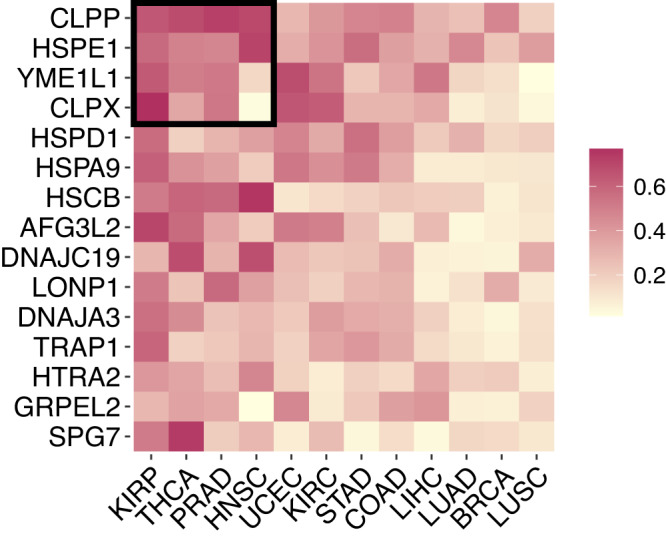
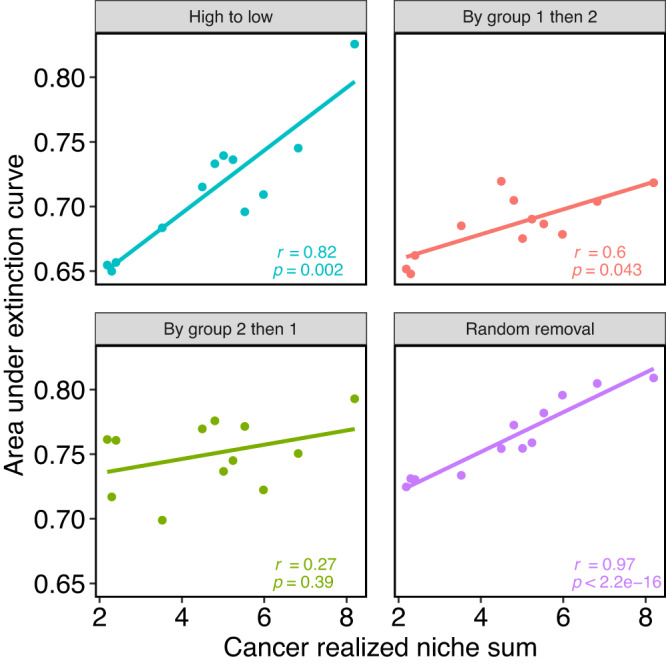
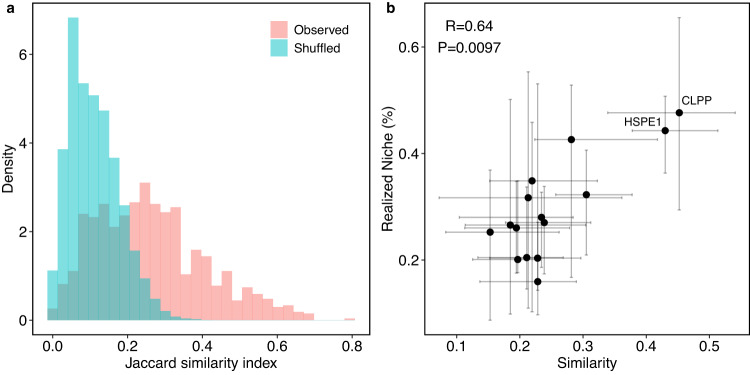
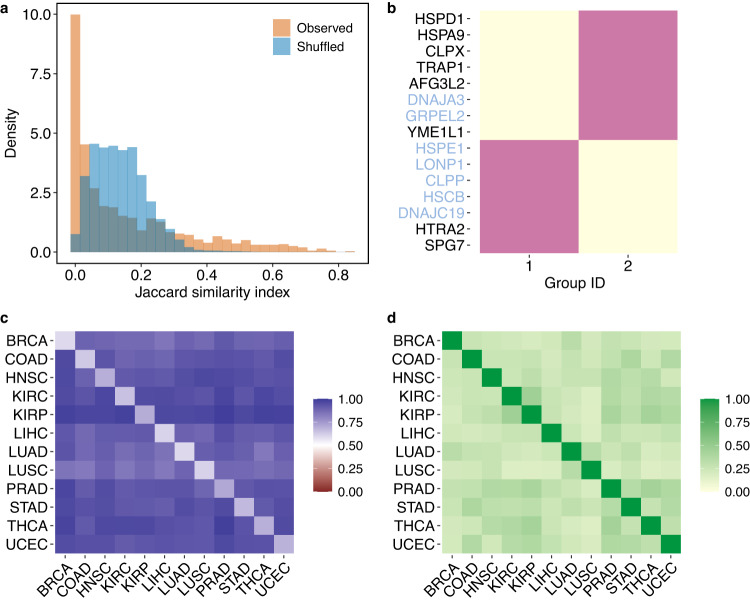
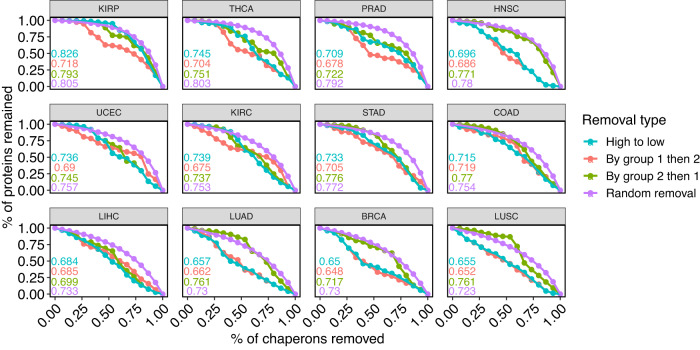
Cancer cells alter the expression levels of metabolic enzymes to fuel proliferation. The mitochondrion is a central hub of metabolic reprogramming, where chaperones service hundreds of clients, forming chaperone-client interaction networks. How network structure affects its robustness to chaperone targeting is key to developing cancer-specific drug therapy. However, few studies have assessed how structure and robustness vary across different cancer tissues. Here, using ecological network analysis, we reveal a non-random, hierarchical pattern whereby the cancer type modulates the chaperones' ability to realize their potential client interactions. Despite the low similarity between the chaperone-client interaction networks, we highly accurately predict links in one cancer type based on another. Moreover, we identify groups of chaperones that interact with similar clients. Simulations of network robustness show that this group structure affects cancer-specific response to chaperone removal. Our results open the door for new hypotheses regarding the ecology and evolution of chaperone-client interaction networks and can inform cancer-specific drug development strategies.
癌细胞改变代谢酶的表达水平以促进增殖。线粒体是代谢重编程的中心枢纽,在这里伴侣蛋白为数百个客户提供服务,形成伴侣蛋白-客户相互作用网络。网络结构如何影响其对伴侣蛋白靶向的稳健性是开发针对癌症的特异性药物治疗的关键。然而,很少有研究评估不同癌症组织中结构和稳健性的变化。在这里,我们使用生态网络分析揭示了一种非随机的层次模式,即癌症类型调节伴侣蛋白实现其潜在客户相互作用的能力。尽管伴侣蛋白-客户相互作用网络之间的相似性很低,但我们可以非常准确地根据一种癌症类型预测另一种癌症类型的链接。此外,我们确定了与相似客户相互作用的伴侣蛋白组。对网络稳健性的模拟表明,这种群组结构会影响针对伴侣蛋白去除的癌症特异性反应。我们的研究结果为伴侣蛋白-客户相互作用网络的生态学和进化提供了新的假设,并为针对癌症的药物开发策略提供了信息。