
胶原 VII 缺陷皮肤中炎症介导的成纤维细胞活化和免疫失调。
Inflammation-mediated fibroblast activation and immune dysregulation in collagen VII-deficient skin.
机构信息
Department of Pediatrics, New York Medical College, Valhalla, NY, United States.
Department of Cell Biology and Anatomy, New York Medical College, Valhalla, NY, United States.
出版信息
Front Immunol. 2023 Sep 20;14:1211505. doi: 10.3389/fimmu.2023.1211505. eCollection 2023.
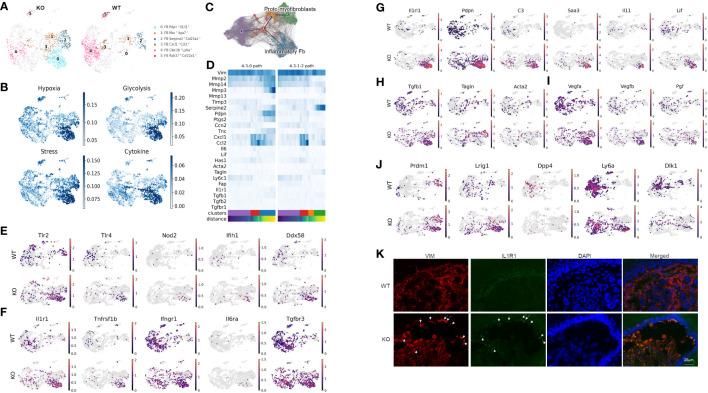
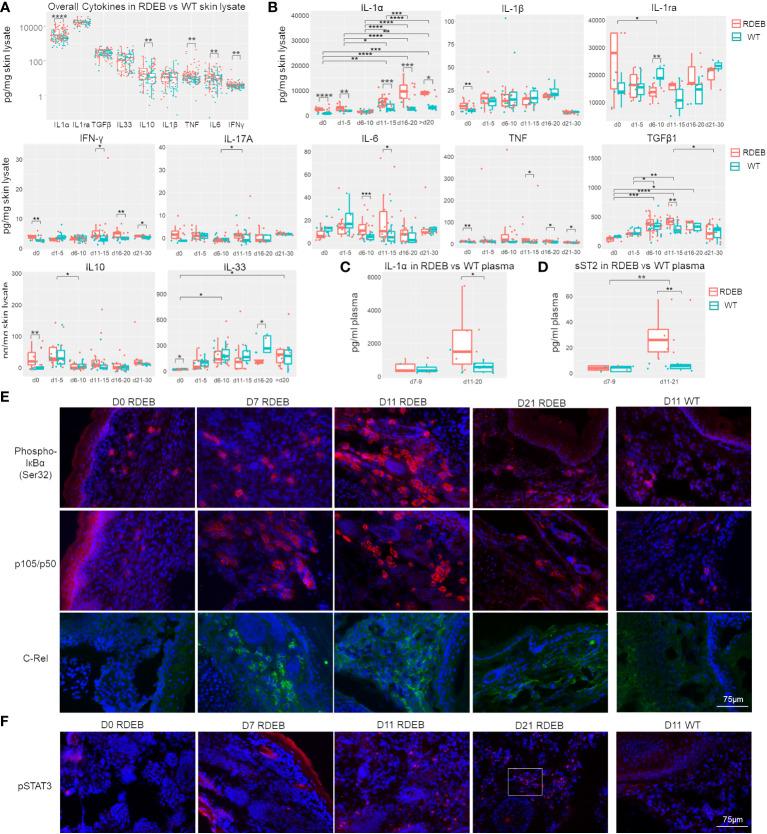
Inflammation is known to play a critical role in all stages of tumorigenesis; however, less is known about how it predisposes the tissue microenvironment preceding tumor formation. Recessive dystrophic epidermolysis bullosa (RDEB), a skin-blistering disease secondary to mutations and associated with chronic wounding, inflammation, fibrosis, and cutaneous squamous cell carcinoma (cSCC), models this dynamic. Here, we used single-cell RNA sequencing (scRNAseq) to analyze gene expression patterns in skin cells from a mouse model of RDEB. We uncovered a complex landscape within the RDEB dermal microenvironment that exhibited altered metabolism, enhanced angiogenesis, hyperproliferative keratinocytes, infiltration and activation of immune cell populations, and inflammatory fibroblast priming. We demonstrated the presence of activated neutrophil and Langerhans cell subpopulations and elevated expression of PD-1 and PD-L1 in T cells and antigen-presenting cells, respectively. Unsupervised clustering within the fibroblast population further revealed two differentiation pathways in RDEB fibroblasts, one toward myofibroblasts and the other toward a phenotype that shares the characteristics of inflammatory fibroblast subsets in other inflammatory diseases as well as the IL-1-induced inflammatory cancer-associated fibroblasts (iCAFs) reported in various cancer types. Quantitation of inflammatory cytokines indicated dynamic waves of IL-1α, TGF-β1, TNF, IL-6, and IFN-γ concentrations, along with dermal NF-κB activation preceding JAK/STAT signaling. We further demonstrated the divergent and overlapping roles of these cytokines in inducing inflammatory phenotypes in RDEB patients as well as RDEB mouse-derived fibroblasts together with their healthy controls. In summary, our data have suggested a potential role of inflammation, driven by the chronic release of inflammatory cytokines such as IL-1, in creating an immune-suppressed dermal microenvironment that underlies RDEB disease progression.
炎症被认为在肿瘤发生的所有阶段都起着关键作用;然而,人们对它如何使肿瘤形成前的组织微环境易于发生的了解较少。隐性营养不良性大疱性表皮松解症(RDEB)是一种由 突变引起的皮肤水疱病,与慢性创伤、炎症、纤维化和皮肤鳞状细胞癌(cSCC)有关,该疾病模型体现了这种动态变化。在这里,我们使用单细胞 RNA 测序(scRNAseq)分析 RDEB 小鼠模型皮肤细胞中的基因表达模式。我们揭示了 RDEB 真皮微环境中的一个复杂景观,该环境表现出代谢改变、增强的血管生成、过度增殖的角质形成细胞、免疫细胞群体的浸润和激活以及炎症性成纤维细胞的激活。我们证明了激活的中性粒细胞和朗格汉斯细胞亚群的存在,以及 T 细胞和抗原呈递细胞中 PD-1 和 PD-L1 的表达分别升高。在成纤维细胞群体中的无监督聚类进一步揭示了 RDEB 成纤维细胞中的两种分化途径,一种是向肌成纤维细胞,另一种是向一种表型,该表型与其他炎症性疾病中的炎症性成纤维细胞亚群以及各种癌症类型中报道的 IL-1 诱导的炎症性癌症相关成纤维细胞(iCAFs)的特征相似。炎症细胞因子的定量表明,IL-1α、TGF-β1、TNF、IL-6 和 IFN-γ 浓度的动态波动以及真皮 NF-κB 激活先于 JAK/STAT 信号传导。我们进一步证明了这些细胞因子在诱导 RDEB 患者以及 RDEB 小鼠来源的成纤维细胞及其健康对照的炎症表型中的不同和重叠作用。总之,我们的数据表明,由炎症细胞因子(如 IL-1)的慢性释放驱动的炎症可能在创造一个免疫抑制的真皮微环境中发挥作用,该环境是 RDEB 疾病进展的基础。





 Zotero 插件